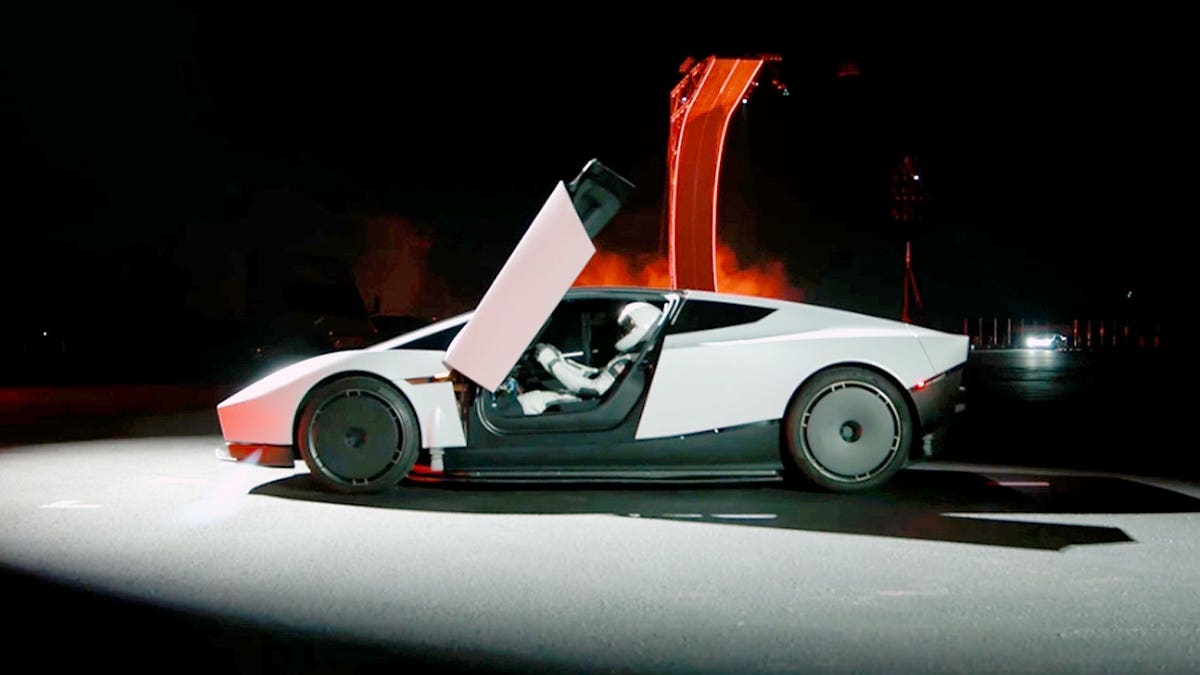
Elon Musk has introduced a new chapter in automotive technology with the unveiling of the Tesla Roadster flying car prototype. This reveal was a collaboration between Tesla and SpaceX, taking place at SpaceX’s rocket testing facility in McGregor, Texas.
Key Demonstrations
During the event, the Tesla Roadster demonstrated impressive capabilities previously associated with aircraft technology. It accelerated up a large curved ramp using a suction system that kept the vehicle attached while upside down. At the ramp’s peak, compressed-gas thrusters launched the car into the air, where it executed a controlled flip before landing back on its wheels.
Adding to the spectacle, the Roadster also performed an airborne maneuver over a lineup of other Tesla models, including the Cybertruck and Tesla Semi. These high-risk stunts were carried out without a driver inside, as automated controls ensured safety.
Advanced Engineering
The engineering of Tesla’s Roadster is distinct. It integrates a system of cold-gas thrusters to create thrust without burning fuel. This system redirects highly compressed gas through nozzles, assisting with the car’s movement and accelerating its speed. The Roadster is also equipped with electric fans to enhance suction, keeping the car stable even during extreme maneuvers.
The vehicle includes several advanced configurations. The Performance version targets road use, while the Thrust and Rocket versions push performance with added thrusters. Yet, these features remain strictly for demonstration, and Tesla has not secured legal road use rights for them.
Impressive Speed Claims
At the center of Tesla’s performance claims is the thruster-assisted acceleration. The Roadster aims to reach 60 mph in about 0.81 seconds, although this has not been independently confirmed. Future aspirations include a top speed nearing half the speed of sound.
However, practical limitations exist. Refilling the gas storage needed for these thrusters currently requires significant time, which Tesla aims to reduce significantly.
Pioneering Driving Experience
Tesla has employed a modern approach to driving with features like a steer-by-wire yoke. By using lightweight materials and Track Mode, the Roadster optimizes performance and handling. Still, this focus on driver involvement contrasts with Tesla’s broader goal of autonomous driving technology.
Pricing and Reservation Details
Initially quoted at $200,000 in 2017, the Roadster’s pricing has yet to be announced. However, Tesla reopened reservations for a substantial deposit. The Performance model requires $50,000 upfront, while the Thrust version needs a $250,000 commitment. The Rocket version remains invitation-only.
Tesla’s terms emphasize that the vehicle remains in development, with no guaranteed delivery timeline. This uncertainty represents a substantial commitment from potential buyers.
Implications and Future Outlook
This project is a glimpse into future automotive advancements. Its technology, especially the suction mechanisms and thruster systems, sets a new standard for electric performance cars. Yet, it also highlights challenges, such as the practicality and legal implications of these capabilities.
Kurt Knutsson, known as CyberGuy, notes the innovation as remarkable yet underscores the risks of pre-ordering a vehicle without set guarantees. As exciting as the technology is, potential buyers should recognize the accompanying uncertainties.
Leave a Reply