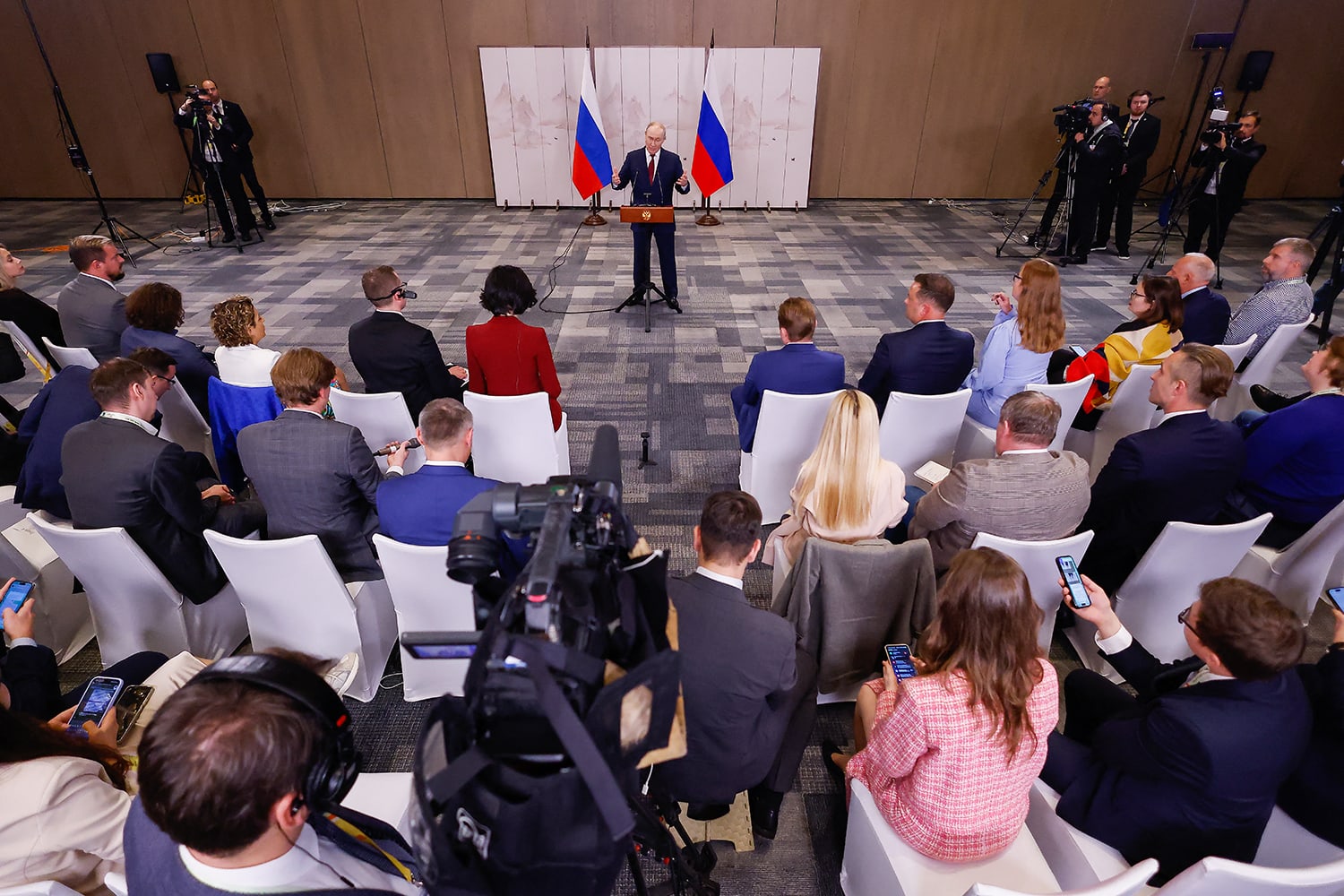
Journalists Face Media Restrictions at APEC Events
During the APEC summit, journalists encountered several restrictions. Key moments of the summit were inaccessible for video coverage, including high-profile meetings involving leaders like Putin and Trump. Russian officials blocked two journalists from attending a private discussion between Putin and Trump. Meanwhile, during Trump’s meeting with Xi, he expressed regret over the limited media presence, remarking on the precision of every move at the summit.
After the meeting with Xi, a Chinese decision barred a Bloomberg reporter access to a trilateral meeting. The reporter had shouted a question about Jensen Huang, which Chinese officials deemed discourteous. The U.S. practice of shouting questions is common but was met with resistance. The White House intervened to allow the journalist’s entry, but Chinese officials stood firm.
Ukraine’s Security Concerns Amid Talks
Putin asserted Ukraine’s right to secure its interests, provided Russia’s security is not compromised. This was discussed at a news conference shortly after trilateral talks at the APEC summit. President Trump indicated that global interest in ending the Ukrainian conflict remained high. Putin emphasized the conflict’s resolution hinged on Ukrainian willingness to compromise.
Russia’s Approach to European Security
Putin highlighted the need for Russia to grasp Europe’s security issues better. He acknowledged the importance of European involvement in security discussions and noted the absence of set dates to continue dialogue.
Putin’s Image Rehabilitated at Summit
Putin, previously isolated following the 2022 invasion of Ukraine, appeared to improve his standing by participating with the leaders of the world’s largest economies. Jointly issued statements by China and Russia suggested enhanced cooperation in energy production, potentially benefiting Russia’s oil-driven economy, though the U.S. did not release a similar statement.
Focus on U.N., ICC, Oil, and Nuclear Weapons
A joint statement by China and Russia outlined four key agreements with Trump: reforming the United Nations, boosting petroleum production and supply, cautioning the International Criminal Court against abusing power, and reducing nuclear war risks. The statement titled ‘China-Russia-U.S. Declaration on Peace’ did not specify how U.N. reforms would transpire.
The leaders stressed their commitment to strategic stability and security.
Nuclear Weapons Outlined as Major Threat
At the summit in Shenzhen, Xi described nuclear weapons as a ‘sword of Damocles’ threatening humanity. He advocated for a world free of nuclear weapons and urged the U.S., Russia, and China to prevent nuclear conflict, uphold the Non-Proliferation Treaty, and maintain stability.
Similar sentiments were echoed by Putin, emphasizing shared responsibility for global peace.
Ukraine Dominates Trump-Putin Discussions
Yuri Ushakov, a Russian aide, reported that discussions between Trump and Putin primarily focused on Ukraine. The meeting aimed at preparing for the trilateral summit and examining bilateral relations. No significant declarations emerged from the session.
Three-Way Nuclear Deal Advocated by Trump
Trump prioritized nonproliferation during discussions with Xi and Putin, although both showed little interest in new nuclear limitations. Trump’s longstanding proposal seeks U.S., Russia, and China involvement in a new nuclear deal. Despite the lack of major developments expected at the summit, Trump’s agenda underscored his commitment to arms control.
Russia’s suspension of the New START treaty following its invasion of Ukraine remains a contentious point. The treaty’s expiration looms, with Russia adhering to its limits for another year. China’s participation in arms control remains a point of contention, given its smaller arsenal compared to the U.S. and Russia.
Leave a Reply