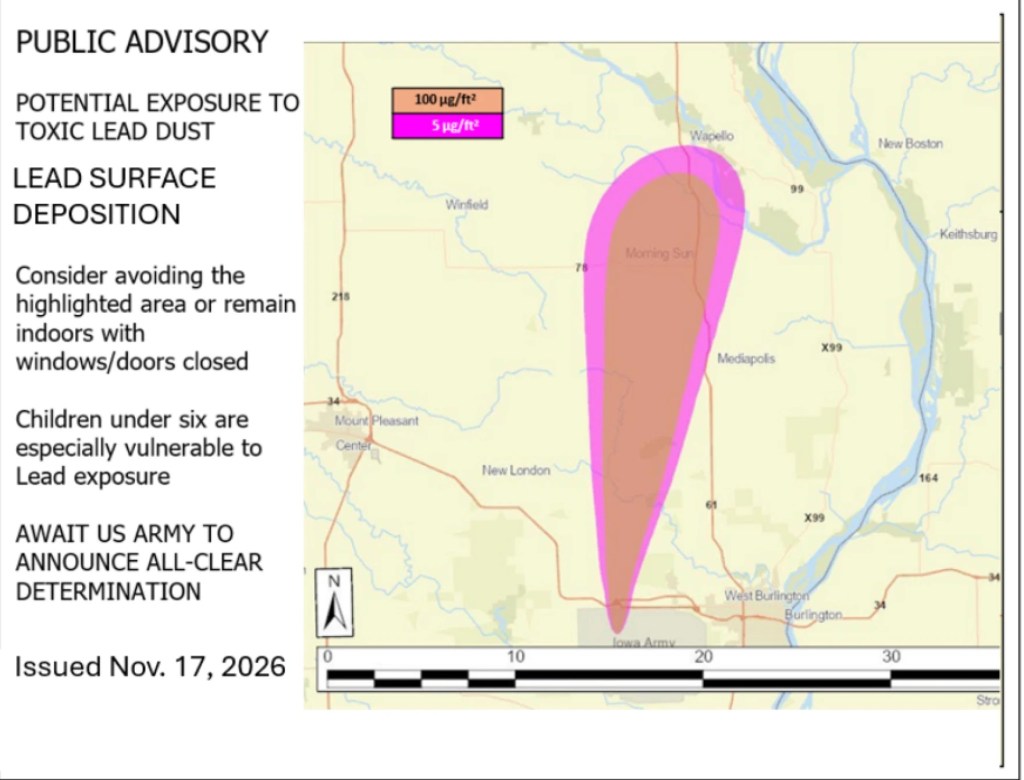
The U.S. Army has postponed the detonation of bomb-making chemicals in Iowa’s southeast region due to widespread public concern. The operation, initially set for Friday, has been moved to Monday. Many residents feared the detonation might release toxic lead dust into the environment, causing health and ecological issues.
Concerns and Responses
Iowa Governor Kim Reynolds advocated for the delay. She communicated with Acting Secretary of the Army Adam Telle alongside others who expressed similar worries. Environmental groups also took legal action, filing a lawsuit to prevent the detonation from occurring on Friday.
Reason for Delay
The detonation at the Iowa Army Ammunition Plant involves degraded lead azide, which poses a significant stability risk. Accidental detonation was a potential hazard, especially as temperatures drop. The U.S. Environmental Protection Agency approved an emergency permit for this purpose.
Adam Telle announced the postponement on social media, emphasizing the need to wait until just before cold weather could worsen conditions. Recommendations were made for some Middletown residents to vacate their homes to ensure safety.
Community Impact
Details were previously shared in an October public meeting, but broader notifications were delayed until Sunday, reaching communities up to 100 miles away. The permit requires the Army to assess how the chemicals might disperse in the environment.
Though Middletown houses about 400 people, many in nearby areas are also impacted. Businesses and educational institutions planned closures as a precaution. Superintendent Pat Wallace of Danville decided to close schools, prioritizing safety amid uncertainties.
Environmental and Health Risks
The detonation may cause vibrations affecting infrastructure and temporary lead dust hazards. Despite predictions that lead levels in the air will remain below EPA action thresholds, local residents remain concerned.
The Army has involved specialists to handle the situation, but handling the chemicals during colder weather is risky. Emergencies require the right expertise and equipment to mitigate possible accidents.
Expert Opinions
Experts stress uncertainty around environmental contamination from the chemical release. Lead is known to cause neurological damage, especially in children. Residents have been advised to be cautious, reflecting the wider anxiety about the potential fallout.
Some locals are particularly worried about impacts on pets and agriculture, exhausting available soil testing supplies. Environmental advocates argue that the Army and EPA did not sufficiently consider alternative solutions or provide ample public notice.
Leave a Reply