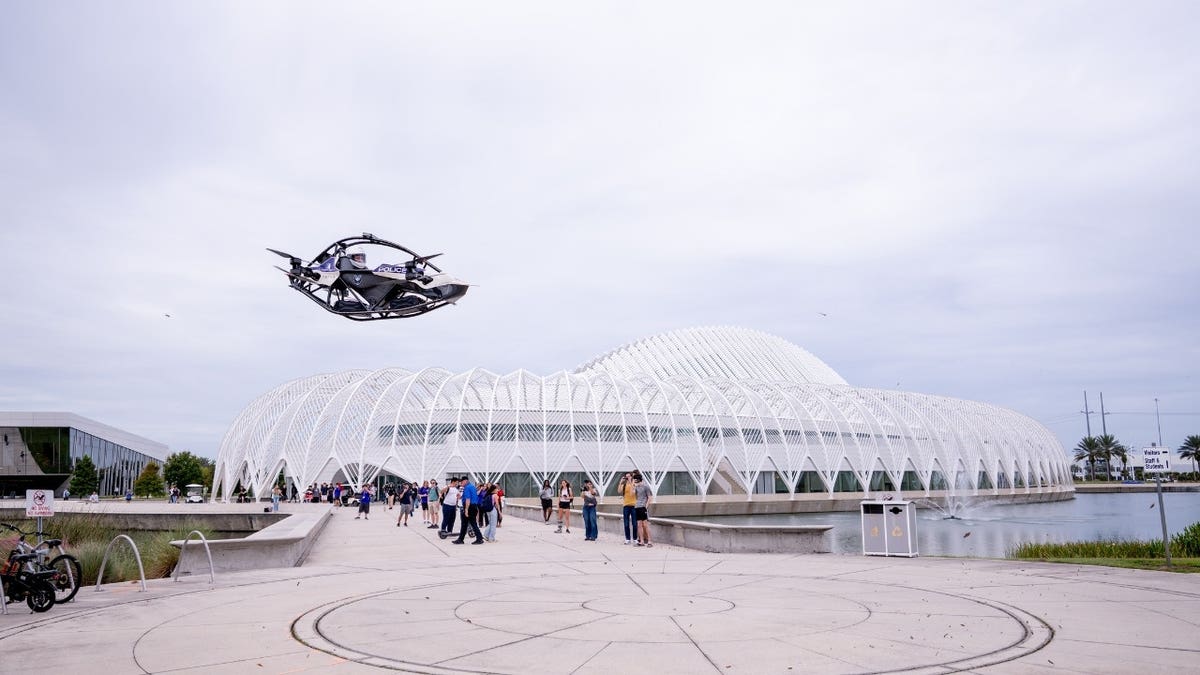
Florida Polytechnic University in Lakeland has introduced a new concept for emergency response. Their campus now hosts a flying patrol vehicle known as Astro. Built by Jetson, maker of the Jetson ONE personal flying machine, this aircraft resembles a large drone and signifies a step into modern policing.
Introducing Astro
Astro is named after a character from the popular cartoon, The Jetsons. Using electric vertical takeoff and landing (eVTOL) technology, it rises vertically, eliminating the need for a runway. Its compact and foldable design makes it efficient for storage and transport.
The aircraft features eight motors powering eight propellers and is controlled by a four-axis joystick. Despite its innovation, Astro is awaiting authorization from the FAA before it’s integrated into regular police operations.
Speed and Performance
Astro can reach speeds of 63 mph, facilitating rapid response within the campus. However, its battery limits it to around 20 minutes of flight per charge, requiring strategic planning for its use. Recharging takes about 90 minutes with a 240-volt connection, but battery swaps reduce downtime.
Astro supports police with swappable batteries, allowing quick turnaround for flights.
Potential Applications for Police
Astro has the potential to revolutionize emergency response. Particularly after storms in Florida, when roads are blocked, Astro could aid in damage assessment and delivery of supplies. Its compact size allows it to venture where larger vehicles can’t.
Though Astro carries only a pilot, its 210-pound limit poses constraints on carrying additional equipment. The police are exploring its use for tasks like delivering emergency supplies across inaccessible areas.
Challenges with Regulation and Limitations
The primary challenge Astro faces is regulatory approval. Part 103 of the FAA’s ultralight vehicle rules doesn’t align with police operations, requiring additional approvals. The university anticipates navigating these regulations and aims for wider use.
Despite its potential, Astro’s single-seat limitation means a continued reliance on drones for certain surveillance tasks.
Research and Development Role
Apart from its police applications, Astro serves as a research tool for students at Florida Polytechnic University. With a new aerospace engineering program, students will engage in hands-on learning and contribute to research projects exploring aircraft technology.
Additionally, virtual training and simulations are part of the university’s agenda to expand Astro’s application and understand its performance under different scenarios.
Community Involvement and Privacy Concerns
While offering innovative solutions, the introduction of aerial patrols raises privacy concerns. It’s crucial for communities to remain informed about when and how these vehicles will be deployed, ensuring transparency and privacy protection.
Florida Polytechnic University endeavors to develop Astro beyond its initial scope, with a focus on both utility and regulation compliance.
Astro provides a glimpse into future law enforcement methods, with the possibility of expanded usage fundamentally changing emergency responses.
Leave a Reply