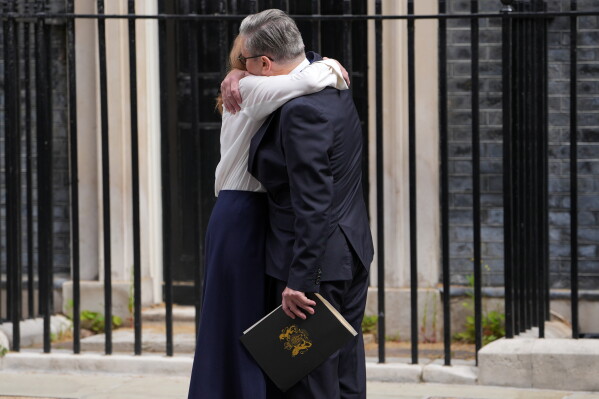
British Prime Minister Keir Starmer announced on Monday his decision to step down, admitting he has lost the backing of Labour Party members in Parliament. He will remain in office until a new leader is chosen, potentially by mid-July.
Andy Burnham, former mayor of Greater Manchester, has confirmed his intention to succeed Starmer. He emerged as a strong candidate following his recent victory in a special election in Makerfield, northwest England. Burnham’s ability to appeal to a broad spectrum of voters, despite Labour’s low poll ratings, has positioned him as a frontrunner.
In the Makerfield by-election, Burnham significantly increased Labour’s vote share to nearly 55%. This success, if replicated nationally, could ensure Labour retains power in the next general election, which isn’t due until 2029. Burnham defied the odds against candidates like the anti-immigration Reform UK.
Starmer expressed his resignation outside 10 Downing Street, acknowledging he wasn’t the best candidate to lead Labour into future elections. His departure enables a leadership change without waiting for a general election. Labour’s national executive committee is set to open nominations on July 9.
Potential Leadership Contest
If Burnham stands unopposed, he might be declared leader shortly after nominations close. A contest would extend the process into September. Burnham has the support of ex-health secretary Wes Streeting, who decided against running himself. Streeting believes Burnham can prevail against nationalist forces.
Other candidates might also enter the fray, including Angela Rayner and Al Carns, who both resigned from previous roles under Starmer. Some party members prefer Burnham to take over without opposition to enter 10 Downing Street before the party conference.
To contest, candidates require the backing of 81 party lawmakers in the House of Commons. They must further garner support from 5% of local constituency parties or from three affiliates like trade unions. The electoral system ranks candidates, and the first with over 50% of votes is declared the winner.
Once chosen, King Charles III would invite the new leader to become prime minister and form a government.
Leave a Reply