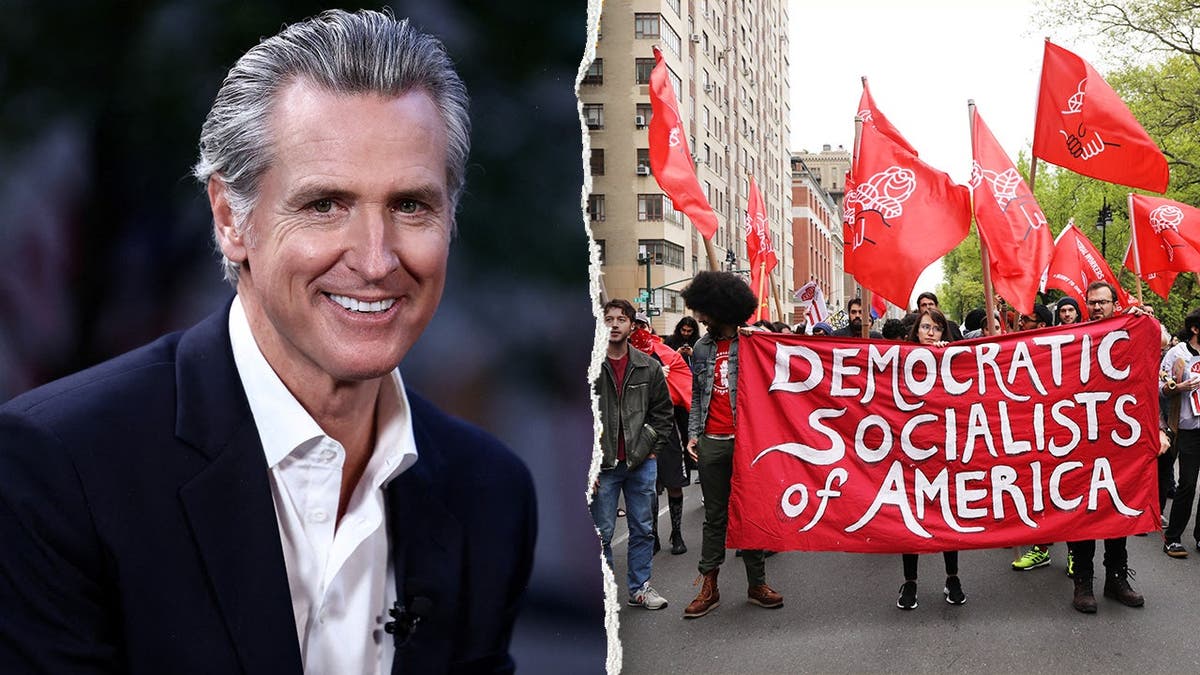
Leading to the November midterms, the Democratic Socialists of America (DSA) supported California’s Proposition 40. This measure sought to implement a one-time 5% tax on billionaires in the state. Despite its impending defeat according to election results, the proposition sparked debate on socialism’s redistributive goals and potential capital flight.
Richard Stern, an economist with Advancing American Freedom, expressed concerns that such taxation might discourage wealth creators. The DSA’s support of Proposition 40 also brought disagreements with figures like Gov. Gavin Newsom, who opposed the idea.
The proposition targeted businesses, securities, art, collectibles, and intellectual property. It aimed to prevent billionaires from leaving by applying retroactively to those residing in California as of January 1, 2026.
The DSA promoted the proposition through a PowerPoint, asserting the state’s wealth could fund essential services if redistributed. They projected it could address a $100 billion gap in federal support for Medi-Cal, a program aiding low-income residents. The plan would allocate 90% of new revenue to healthcare, with the rest going to education, food assistance, and tax administration.
The DSA compared it to existing progressive taxes, noting it would only affect about 250 Californians who collectively hold $2 trillion. The materials claimed that the tax would slightly slow but not reduce their wealth, as their growth rate averages 7-8% yearly.
Stern argued the policy misunderstood wealth, claiming it ignored the assets tied up in companies and infrastructure rather than liquid cash.
Gov. Newsom argued against Proposition 40, citing opposition from various groups, including labor organizations. He noted it could weaken California’s competitiveness and pushed for a countermeasure, Proposition 42, which would restrict new property taxes and certain retroactive taxes. This measure appeared headed for approval.
While Newsom opposed state-level implementation, he was open to a similar federal tax, citing different implications nationally. Stern warned that national proposals face challenges, including potential international impacts.
Stern highlighted the potential for people to leave California or the U.S. entirely if such measures became widespread. He referenced historic examples of restricted movement under communist regimes, contrasting them with typical protective measures.
When asked about the difference between Proposition 40 and regular tax hikes, Stern emphasized the potential impact on business operations. He worried about transferring control from entrepreneurs to politicians, specifically mentioning Bernie Sanders and Alexandria Ocasio-Cortez.
Leo Briceno covers politics for Fox News Digital and previously reported for World Magazine.
Leave a Reply