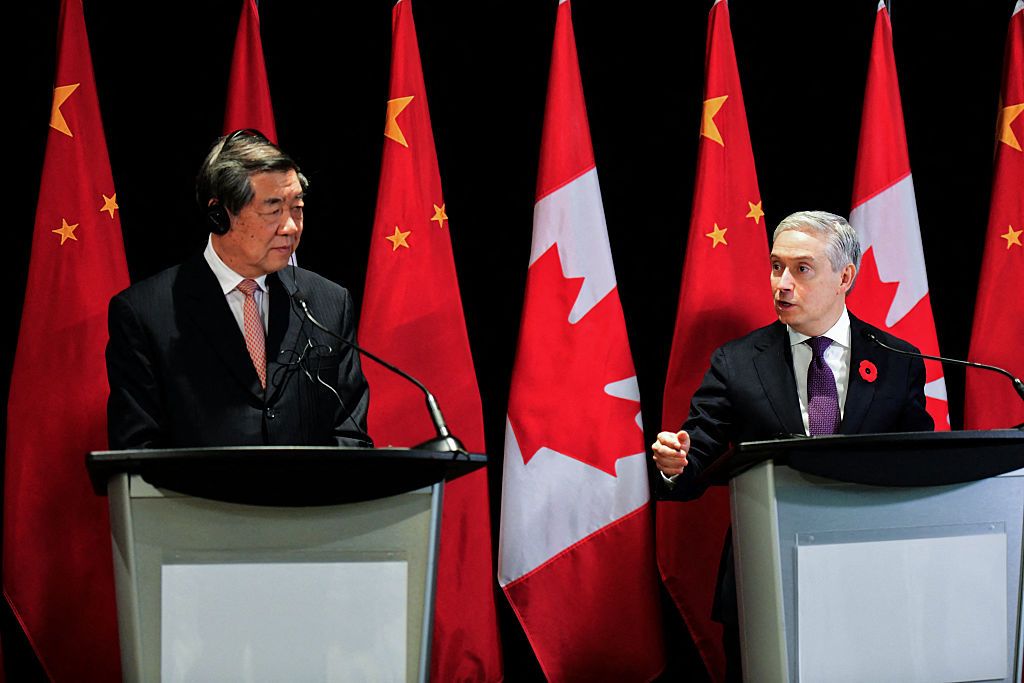
Canada has entered new economic agreements with China to ease trade tensions with the United States. Announced after discussions in Vancouver, these agreements enhance financial cooperation between the nations. This move precedes Prime Minister Mark Carney’s attendance at the Asia-Pacific Economic Cooperation (APEC) summit in Shenzhen.
Finance Minister François-Philippe Champagne and International Trade Minister Maninder Sidhu led the discussions with He Lifeng, China’s vice-premier. Champagne emphasized the importance of open dialogue and economic collaboration due to significant commercial links between Canada and China. The talks aimed to expand trade, increase investment, and deepen financial ties.
The nations extended an existing trade deal until the end of 2028. China will maintain lower tariffs on Canadian products such as canola meal, peas, lobster, and crab. In exchange, Canada will allow certain Chinese steel and aluminum products without additional tariffs. This extension benefits Canadian farmers and seafood businesses by facilitating product sales to China, while granting Canadian companies access to Chinese metals.
Amidst ongoing tariff disputes with the US, these agreements form part of Canada’s strategy to diversify trade relationships. The US retracted a proposal which would have allowed it to approve Canadian trade agreements with other countries. President Donald Trump indicated that a deal with Canada is near, though major differences remain.
The Vancouver discussions resulted in three agreements involving finance ministries, financial regulators, and central banks. These include stronger economic policy dialogue, financial regulator cooperation, and a working group between central banks. Both sides also showed progress on a bilateral currency-swap arrangement and financial services market access.
The agreements followed Carney’s January visit to Beijing, where a renewed strategic partnership was announced with Chinese President Xi Jinping. The deals align with efforts to reduce US economic dependence by enlarging trade with other countries. Champagne stated that G7 countries frequently maintain strategic ties with China, and this relationship supports trade diversification.
Philippe Rheault from the University of Alberta perceived the ministers’ remarks as a signal of Canada’s intention for increased engagement with China, despite political shifts in Washington. The agreements build on arrangements from Carney’s Beijing visit, which eased trade disputes affecting Canadian agricultural exports. China suspended certain tariffs on Canadian canola meal, boosting exports significantly.
Canada-Canada’s second-largest single-country trade partner-had bilateral goods trade worth $89 billion last year. Canadian exports to China grew to $25 billion with imports reaching $64 billion. The administration targets a 50 percent increase in exports to China by 2030.
Negotiations with Washington continue although gaps persist. A Canadian official mentioned that progress is slow yet ongoing. Tariffs on core industries like lumber, steel, and automobiles remain contentious issues. Foreign Minister Anita Anand signaled Ottawa’s intent to ease these tensions following US midterm election results.
Canada recently announced changes to its tariffs on US goods, extending relief for imports while preparing to reimpose duties on items made domestically. The tariff relief program, extended until mid-2028, helps Canadian businesses avoid certain US product tariffs. However, exemptions will be withdrawn where Canadian alternatives exist.
The changes aim to protect Canadian manufacturers and limit expenses for businesses reliant on US supplies. Canada assessed $10 billion in tariffs on American imports from 2025 to 2026; with $6.30 billion relieved, leaving net revenue of $3.7 billion. Trade Minister Dominic LeBlanc underscored the importance of supporting Canadian companies while promoting local goods.
Leave a Reply