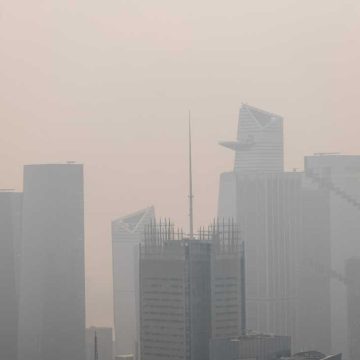
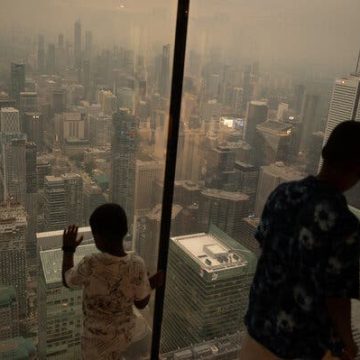
Wildfire smoke from Canada is impacting the United States again, obscuring the sky with a thick, toxic haze. This recurring summer trend involves smoke turning the sky a milky-white or orange. These wildfires, primarily in western regions, release harmful smoke that travels downwind. Recently, around July 17, 2026, this phenomenon was noticeable as a cyclist...
Category: Environment
Efforts to Study Alaska’s Native Bees
For many years, Alaska’s native bees remained a mystery to scientists. The state’s vast and varied landscapes provided a home to numerous unknown bee species. On a summer day near Fairbanks, an Alaska Bee Atlas volunteer collects bees. The volunteer sweeps a net across fireweed, catching bumblebees. Such moments are part of a broader initiative....
Exploring Alaska’s Native Bees
For many years, knowledge about Alaska’s native bees was limited. Scientists and researchers had little detailed information. However, recent efforts are expanding our understanding. On a pleasant July afternoon in Fairbanks, a volunteer from the Alaska Bee Atlas carefully swings a net through the air near blooming fireweed. In the net, a small bumblebee flutters....
Beluga Whale Relocation from Marineland: A Rescue Effort
On July 16, 2026, CBS News reported on the relocation of twenty-eight beluga whales from a closed Canadian theme park to aquariums across the United States. Federal officials approved an emergency import earlier in the month as part of an international rescue effort. Marineland, located in Niagara Falls, Ontario, closed to the public in 2024....
Wildfire Smoke Engulfs Parts of the U.S., Raising Health Risks
Wildfire smoke originating from Canada is affecting areas across the United States. This has resulted in poor air quality from the Great Lakes region into New England and extending south to Maryland. Conditions have become unsafe, with smoke levels reaching unhealthy and hazardous levels in several states. Wildfires in Ontario and northern Minnesota expanded significantly...
Canadian Wildfires Burn 24/7 Amid Rising Nighttime Temperatures
Wildfires in Canada are becoming an around-the-clock battle for firefighters as rising nighttime temperatures prevent fires from slowing down after dark. These conditions challenge fire crews who traditionally perform critical tasks at night to control these blazes. With temperatures climbing, wildfires continue to spread, posing greater risks to those on the front lines. One crucial...
Mayor Bass Appoints New Chief Heat Officer Amid Climate Challenges
Mayor Karen Bass recently addressed the public at a press conference held at the Pecan Recreation Center, discussing the imminent heat wave affecting Los Angeles. The city has quietly appointed a new chief heat officer, Daniela Simunovic, over a month ago to tackle these challenges. Simunovic assumed the position on May 31, following the discreet...
Lake Powell’s Water Levels Threaten Hydropower Generation
A recent federal analysis highlights the critical situation at Lake Powell. The report forecasts that water levels may drop dangerously close to the point where the dam can no longer produce hydropower. As of now, Lake Powell holds the position as the second-largest reservoir within the stressed Colorado River system. This potential decline in water...
Influence of Economic and Energy Factors on Michigan’s Renewable Energy Policy
Economic opportunity, energy affordability, and energy security are critical considerations for Michigan energy policymakers when defining the role of renewable energy sources. Climate science and the impacts of climate change remain significant topics for debate and discussion in today’s news landscape. Scientists largely agree that the changes in Earth’s climate stem from the increased levels...
Air Quality Crisis Due to Wildfires: A Health and Safety Update
A thick veil of smoke from numerous wildfires has spread throughout the northeastern United States and southern Canada, leading officials to recommend staying indoors as air quality drastically declines. On Thursday, air quality readings soared in cities such as Chicago, Cleveland, Detroit, Minneapolis, and Toronto. Experts warn that these conditions might intensify throughout the day....