The Chicago Cubs have shown significant interest in Edward Cabrera for some time. The team’s acquisition of the right-hander from the Miami Marlins in January was a strategic move. Despite their high hopes, Cabrera’s performance hasn’t fully met expectations in his first season with the Cubs.
Arriving at Wednesday’s game against the Milwaukee Brewers with a 4.06 ERA and 94 ERA+, Cabrera left the game abruptly due to a blister on his right middle finger. This contributed to a disappointing 5-0 loss and the Cubs’ first series sweep of the season.
“We’re in a funk right now, and it’s up to us to change it,”manager Craig Counsell commented. He believes the team can overcome their current struggles.
Cabrera’s history with blisters is notable. He missed two weeks in the 2025 season due to a similar issue. Despite this, he was optimistic about returning soon, stating through an interpreter, “My mentality is in five days I’m going to go out there and pitch again.” Counsell, however, was cautious about predicting Cabrera’s next start, expressing that “you take a guy out of a start, the next start’s in question.”
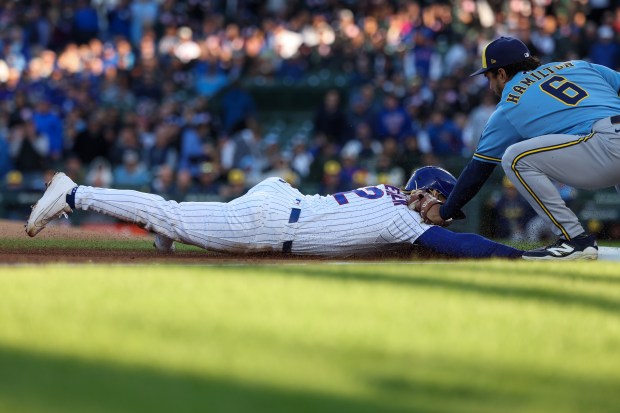
The Cubs, currently at 29-21, struggled with errors, tallying more errors (three) than hits (two) in this game. Pete Crow-Armstrong, in particular, had a costly mistake, allowing multiple runs due to a fielding mishap. Crow-Armstrong, dealing with a challenging period, emphasized the mental aspect of the game, saying, “One thing I can fall back on is that it’s never really a lack of focus, but trying too hard.”
With three primary pitchers on the injured list, the Cubs hope Cabrera recovers swiftly. Cabrera initially performed well, pitching 11 2/3 scoreless innings in two starts. However, he has since experienced a decline, posting a 5.26 ERA in his last seven outings.
Pitching coach Tommy Hottovy noted changes in Cabrera’s delivery. His extension and release points have slightly shifted, impacting his pitches like the changeup and four-seam fastball. Cabrera’s fastball speed has dipped, as seen in his four-seam fastball at 95.7 mph this year, compared to 97 mph last year. The changeup and sinker have also seen reductions.
Hottovy believes Cabrera might be operating conservatively due to past injuries. The coach hopes Cabrera can increase his output as his confidence builds. A key focus is understanding how to use Cabrera’s fastball effectively within his pitch repertoire, which has shown improvements in reducing hard contact and increasing the whiff rate.
“You don’t ever want to say a guy who throws 96, 97 (mph) and his fastball gets hit so don’t throw it. I want to find out why,”Hottovy expressed, highlighting the need to adjust Cabrera’s strategy for success.
Understanding how his pitches complement each other will be crucial for Cabrera. Using pitches strategically, like employing a breaking ball early to protect the changeup, can be effective against experienced hitters.
The Cubs’ rotation challenges mean Cabrera’s potential improvements during the season could position him as one of the team’s leading pitchers. Cabrera’s adjustments and performance in the coming games will be critical.
I thought there’s a lot of quality for four innings, and then it kind of fell off a little bit in that fifth inning on the South Side,Counsell remarked before Wednesday’s game. He highlighted the need for consistent execution of pitches.
The Cubs are hopeful that addressing these issues will unlock Cabrera’s potential as a key player in their strategy moving forward.
Leave a Reply