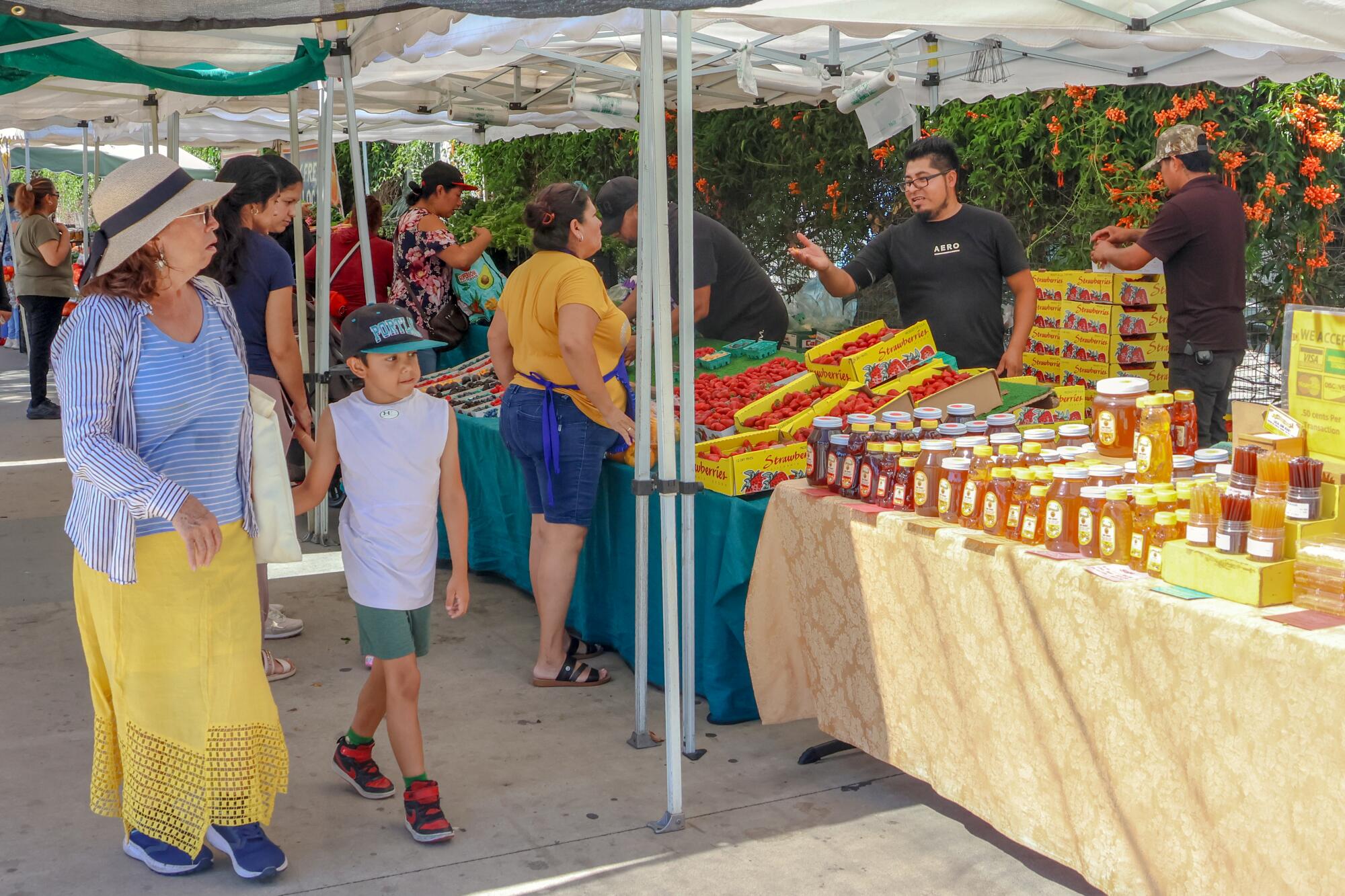
On a hot Thursday, the Central Avenue Farmers Market buzzes with activity. Children play around booths, and parents browse goods. The neighborhood celebrates a new start.
Last year, ICE raids prompted the market’s move to a private, cramped courtyard. Alejandro Corona, market manager, recalls the decision to relocate. A shocking incident occurred when ICE detained a woman as she got off a bus, causing fear among customers.
Now, the market thrives with colorful signs displaying bilingual information about EBT and social services. Corona and the team express gratitude to vendors with refreshments to mark returning outside amidst uncertainty.
Though fewer ICE raids happen, the community faces challenges with federal spending changes. The Trump administration’s HR 1, known as the ‘Big Beautiful Bill,’ cuts funds like CalFresh, while increasing ICE’s budget. Los Angeles County, with over a quarter of residents dependent on CalFresh, feels the impact. Recent cuts have removed access for some immigrant groups.
CIELO, a nonprofit aiding Indigenous communities, highlights growing food insecurity. Over 80% of migrants in Los Angeles struggle with food and housing. Language barriers add to their difficulties. Janet Martinez, co-founder of CIELO, notes a rise in demand for food aid, with only 150 boxes available weekly.
Many vendors and shoppers at the market rely on programs like Market Match. Yoana Luvian, a vendor, highlights the benefit of receiving extra funds through this program. Her family has used CalFresh for years, and the market supports gaps in their benefits.
Others, like Blanca, an undocumented mother, find resources despite not qualifying for CalFresh. Amid fears of immigration status, accessing benefits for her children remains challenging. Market organizers assist Blanca with Spanish resources and paperwork.
Jennifer Grissom, executive director of Food Access Los Angeles, describes the complex process of CalFresh recertification. The organization aids applicants at their market booth.
Local agencies like the L.A. Regional Food Bank adjust to unprecedented demands. CEO Michael Flood notes distribution struggles, worsened by past emergencies like wildfires.
The increased CalFresh work requirements add pressure on recipients. Many face difficulties finding jobs in a tough market to maintain benefits. The impact cascades to vendors like Brian Griffith, who see a drop in sales.
Griffith and others adapt by bartering and accommodating regular customers. Chef Amin Muhammad offers trade and volunteer options for food, supporting his community through mutual aid.
LaTonia Beason, a Leimert Park native, exemplifies community solidarity by sharing resources. Weekly food program visits tie her and friends together in mutual support.
Upcoming CalFresh cuts in October 2026 will shift more financial responsibilities to local entities. Grissom warns this will broaden burdens for communities and organizations alike.
Leave a Reply