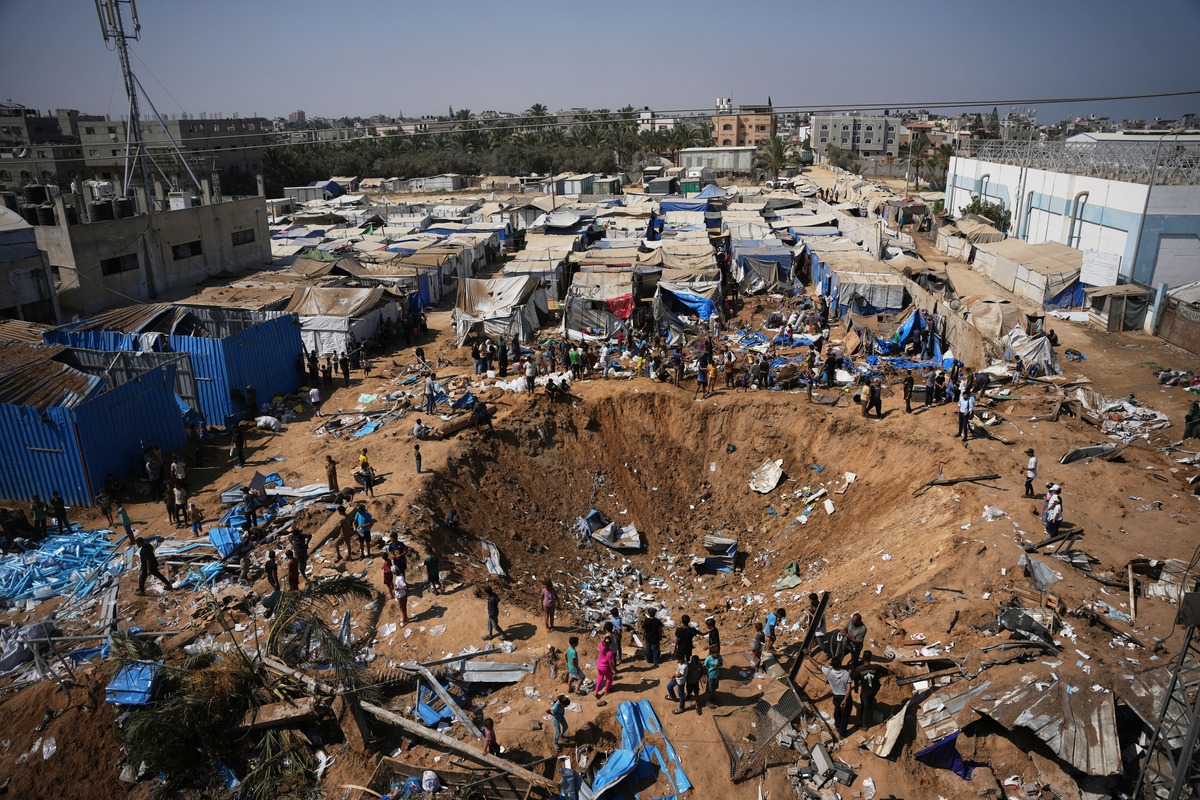
The recent announcement by U.S. President Donald Trump on a ‘historic’ peace deal involving the disarmament of Hamas and the withdrawal of Israeli forces from Gaza highlighted significant challenges. While the agreement was presented as a major move towards peace, reactions from Israel have been skeptical. Top Israeli officials doubt whether Hamas, despite being weakened, would disarm.
The peace plan, published by the Board of Peace following Trump’s announcement, urged Israel to end military operations in Gaza ‘without delay.’ However, the subsequent escalation with Israeli attacks led to 18 casualties on Sunday, further complicating peace prospects.
Israeli Prime Minister Benjamin Netanyahu faces electoral pressures in October. He hasn’t realized his promise for ‘total victory’ over Hamas, causing concern among Israelis regarding Hamas’s threat. Questions also arise over the effectiveness of international forces planned for Gaza, compared to the Israeli Defense Forces (IDF).
Shalom Lipner from the Atlantic Council warns that once Trump’s plan activates, Israel’s actions might be restrained. Netanyahu remains aggressive, fearing such constraints.
Ceasefire status: Brokered by the United States, Egypt, Qatar, and Turkey since October 2025. However, Israeli strikes have persisted.
Since the ceasefire, Gaza health officials reported 1,250 deaths and over 4,000 injuries. Overall, 73,375 fatalities have occurred since the 2023 war’s onset. The conflict was ignited by the October 7 Hamas attacks in 2023, resulting in around 1,200 deaths in Israel and 251 hostages.
The path towards a peace deal has encountered delays, worsened by ongoing Israeli strikes. Mahmoud Basal, representative for Gaza’s Civil Defense, sees increasing Israeli raids at unprecedented levels.
Recent Israeli operations targeted several militants, including PIJ and Hamas, detailed by the IDF. Strikes also aimed at Hamas weapons sites, near critical locations like the Al-Aqsa Martyrs Hospital.
Countries such as Qatar, Egypt, and Turkey urge Israel to cease its bombing campaign, emphasizing international law obligations and the ceasefire agreement’s compliance.
UN experts accuse Israel of genocide in Gaza, and South Africa brings an ICJ case for similar charges, which Israel denies. The humanitarian crisis worsens, compounded by the severe heat wave affecting Gaza’s vulnerable population.
Board of Peace representative Nickolay Mladenov pressures Israel to halt its offensive, referencing the meeting with Netanyahu. The Board of Peace declared Israeli withdrawal reliant on Hamas disarmament and tunnel relinquishment.
The Yellow Line, defined in the 2025 ceasefire, intended to equally split control but now sees Israel expanding to 70% of Gaza, refusing current withdrawal. Hamas insists on Israeli pullback before disarmament.
Mladenov stresses that ongoing violence disrupts disarmament efforts. He urges both sides to honor last year’s agreements. As the situation remains tense, trust-building is necessary for future success, according to Yossi Mekelberg of Chatham House.
Leave a Reply