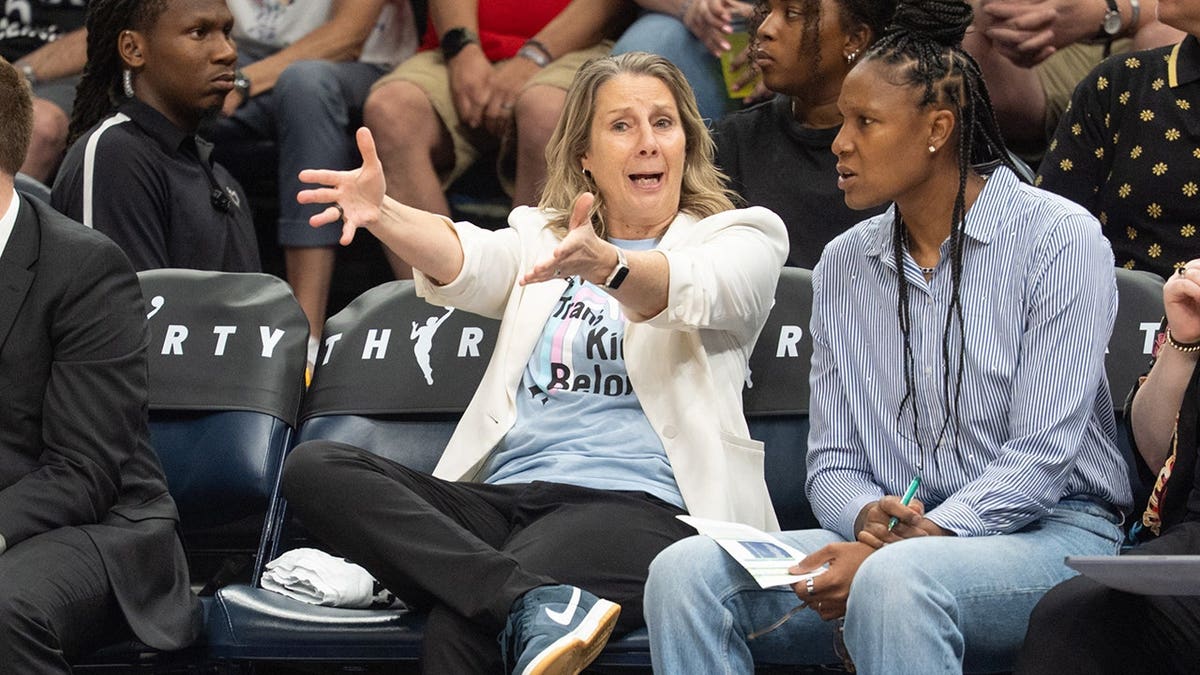
Minnesota Lynx head coach Cheryl Reeve made a public statement during the game on Sunday, wearing a shirt that read ‘Trans Kids Belong’ beneath her blazer. This occurred during a match against Sophie Cunningham’s Indiana Fever at Target Center, where Reeve’s attire was clearly timed with intention.
Reeve had already expressed her views on transgender athletes before the game, stating she promotes inclusion and believes in the protection of transgender children, emphasizing the right of every child to participate in sports. Her comments accompanied a rally outside the arena supporting Sophie Cunningham’s stance.
Cunningham has faced significant criticism over her comments regarding the participation of transgender athletes. She stated her belief that girls and women should not have to compete against biological males or share locker rooms with them. However, she clarified she does not oppose transgender individuals in sports or society and has never expressed hatred towards them. Her stance was specifically about participation within female sports and locker room scenarios.
Reeve’s shirt was perceived as a progressive stance that addressed Cunningham’s comments, which focused specifically on issues within women’s sports.
Reeve’s choice of attire during the game didn’t align with Cunningham’s more nuanced position. Before the game, Reeve had acknowledged the complexity of the issue once puberty, Olympic qualifications, and scholarships are factored in. She advocated for finding common ground rather than exclusion.
Questions arose about whether Reeve’s message was intended as a direct response to Cunningham’s perspective. Fox News Digital and OutKick were unable to ask these questions in person as their credential request was denied. The refusal came after the request was submitted well before the deadline. No specific reason for the denial was provided.
Some argued that local reporters should have priority for game coverage, while others celebrated the denial, suggesting media should focus only on basketball. However, Reeve’s choice to wear the message-laden shirt during a game indicated that social issues had become a part of the athletic event, contradicting the ‘stick to basketball’ argument.
The Lynx were asked about their stance on Reeve’s message and whether it was a coordinated move. They did not respond prior to publication.
While Reeve had the right to express her views through her clothing, and the Lynx had the right to deny credentials, the situation highlighted the discrepancy between approved social statements and challenging questions. While WNBA typically promotes inclusion and dialogue, these ideals appeared less valued when questions were potentially challenging.
Leave a Reply