China’s Economy Faces Slowdown
HONG KONG — China’s economy growth slowed considerably to a 4.3% annualized rate in the April-June period, marking the weakest performance in over three years, as reported by the government on Wednesday. This figure fell short of forecasts, significantly lower than the 5% growth rate seen in January-March, despite strong export growth driven by artificial intelligence advancements and rising demand for electric vehicles.
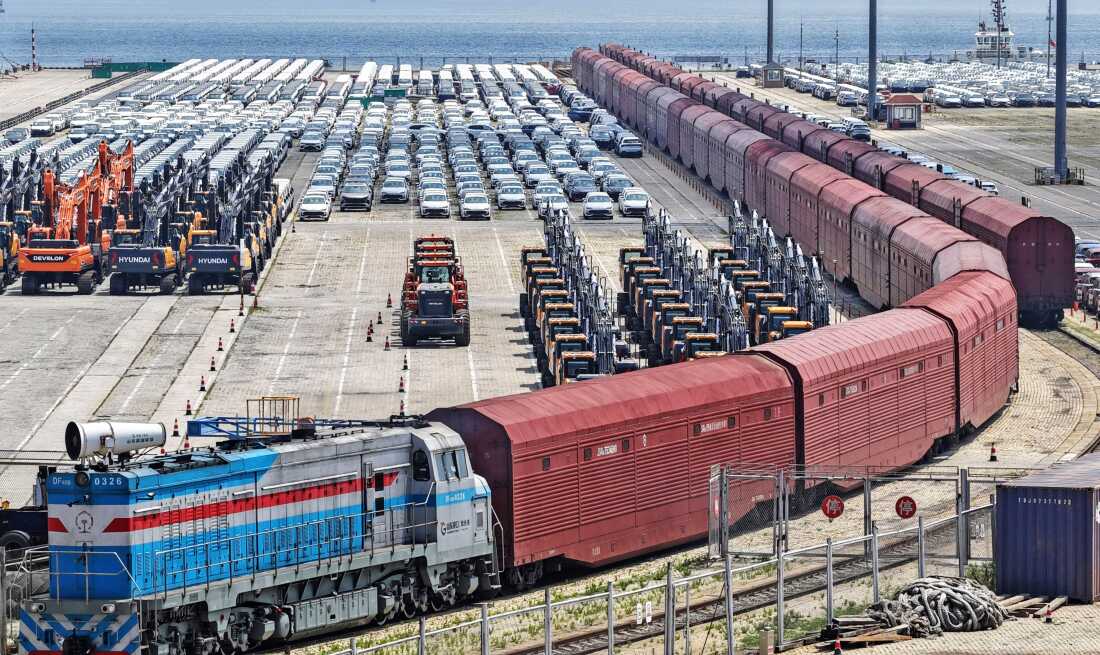
Despite global economic challenges, including the Iran war’s impact and rising energy prices leading to inflation, China’s exports increased. Customs data revealed a 17.6% rise in exports in the first half of the year from the previous year and a 27% surge in June. However, domestic spending and investment have lagged, hampering economic momentum post-COVID-19 pandemic lockdowns.
Imbalance in Economic Growth
Lynn Song, ING Bank’s Chief Economist for Greater China, noted this period marked the slowest growth since 2022’s lockdown-affected fourth quarter. Economists highlight increasing imbalances in China’s economy. Significant state support and private investments target advanced technologies like AI, computer chips, and robotics while lower-value manufacturing and service industries languish.
Exports of high-tech goods like electric vehicles and computer chips soared, benefiting from substantial government support. In 2025, China’s global trade surplus hit a record $1.2 trillion, sparking concerns over international trade imbalances attributed partly to state subsidies leading to oversupply.
Domestic and Global Employment Challenges
China’s industrial output rose by 5.4% in the first half of the year, but questions remain about job creation amid AI and robotics expansion. Families have limited their spending on major purchases due to ongoing property slumps and job uncertainty. Eswar Prasad from Cornell University remarked on China’s increasingly imbalanced growth model, with weak domestic confidence hampering demand.
Mao Shengyong, Deputy Head of China’s National Bureau of Statistics, mentioned persistent supply-demand imbalances due to international instability. China is striving for high-quality growth, focusing on a stable domestic market and employment stability.
Investment and Market Conditions
Fixed asset investments, including factory equipment, decreased by 5.7% year-on-year in the first half, while retail sales of consumer goods rose only by 1.3%. Housing prices continued to fall. Wei Li from BNP Paribas Securities (China) described China’s economic phase as a “significant transition.”
The annual growth target for 2026 ranges between 4.5% and 5%, less than last year’s 5%. Data released indicated 4.7% overall growth for the year’s first half. The International Monetary Fund increased its forecast for China’s growth by 0.2 percentage points to 4.6% for the year, anticipating a 4.1% expansion in 2027.
Leave a Reply