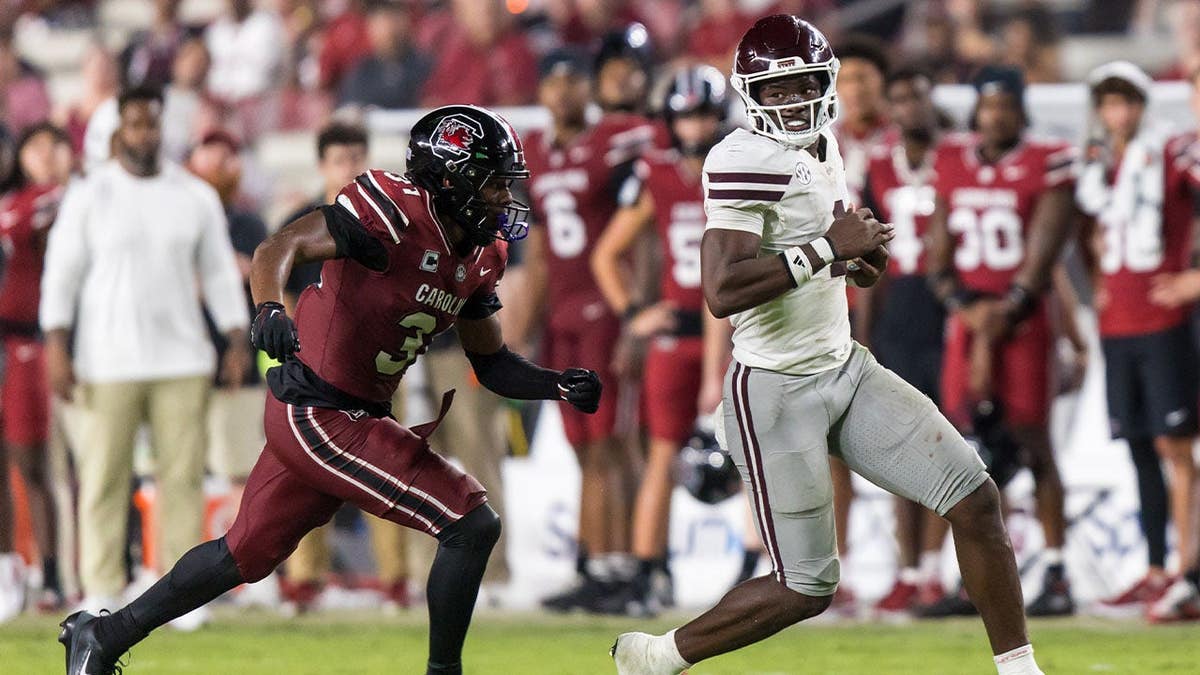
Inflation isn’t limited to supermarket prices. The earnings of college football quarterbacks are soaring, and Mississippi State’s Kamario Taylor is a prime example. Taylor has secured a $7.5 million deal to remain in Starkville, which could climb to over $9 million with performance incentives.
Mississippi State fans have reason to celebrate. The team hasn’t had much to celebrate for a while, but Taylor’s prospects as a promising young quarterback offer hope. Despite having a limited track record, Taylor is seen as a potential top-tier draft pick.
Securing such a deal is strategic for Mississippi State. With the transfer portal adding competitive pressure, retaining Taylor ensures that the team maintains a strong quarterback presence. Taylor showed promise in a game against Wake Forest during the Duke’s Mayo Bowl on January 2, 2026.
The quarterback market is becoming increasingly competitive. NFL teams have often offered substantial contracts to quarterbacks based on potential rather than proven performance. This trend is crossing into college football.
There have been instances where substantial NIL deals have not panned out. Texas Tech paid Brendan Sorsby $5-6 million, but that move didn’t yield the expected results. Similarly, Tennessee invested $8 million in Nico Iamaleava, only for him to transfer to UCLA. These cases illustrate the unpredictable nature of high-value deals in college sports.
Players like Alabama’s Keelon Russell display exceptional skill and could command even higher earnings if their teams excel. If Alabama secures an SEC Championship, Russell’s asking price could be substantial, with a chance to transfer to teams offering more financial incentives.
Rosters are becoming more expensive each year. Not long ago, Ohio State’s Ryan Day mentioned the need for $20 million to build a competitive team. Currently, that sum seems modest at top-tier programs.
The increasing flow of money into college football shows no signs of slowing. Players are in control, benefiting from the sport’s high revenue generation. There are talks about salary caps and collective bargaining, but for now, the system operates without many restrictions. Whether this approach is sustainable remains an open question.
Leave a Reply