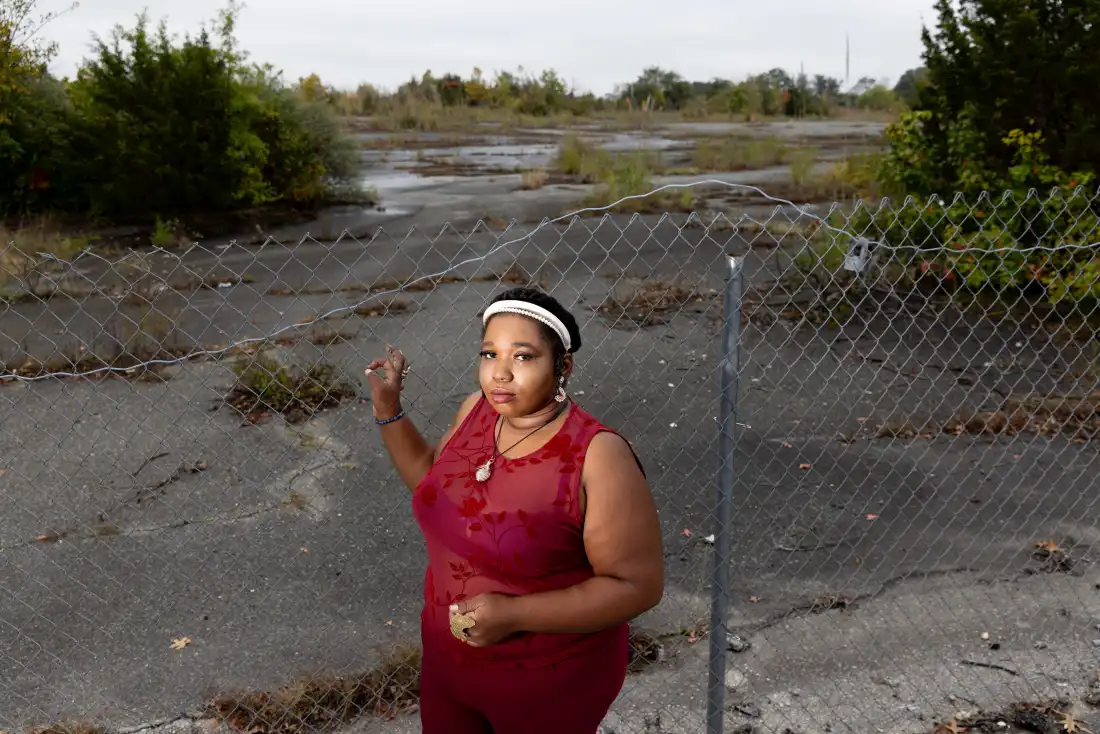
Taylor Frazier McCollum has actively opposed a potential data center at the former Landover Mall site in Prince George’s County. This development could span over 80 acres, situated less than a mile from where she lived. The site, once bustling with activity, closed in 2002 and has remained largely unused. County planners approved a $5 billion data center project for the site in 2024, sparking concerns in the nearby community.
Frazier McCollum expressed immediate disapproval upon learning about the project. “Why bring water-polluting, diesel-generating data centers to our neighborhood?” she questioned. She rapidly became a voice among many Americans who oppose such developments, attending local council hearings and supporting around 500 data center moratoriums nationwide.
A Different Kind of Land-Use Activist
Unlike traditional land-use activists, Frazier McCollum does not own a home. In 2024, financial struggles led to her eviction from an apartment she shared with her young daughter. She recounted the difficulties of balancing work and rent before losing their home. Temporarily staying at her grandfather’s residence, she encountered news of the data center proposal. This propelled her into activism, leading to a petition with over 25,000 signatures and resulting in local moratoriums.
Her efforts halted the $5 billion project, initially slated to start between 2026 and 2027. This advocacy earned Frazier McCollum local recognition. She joined forces with various groups, including socialists, environmentalists, and local residents. Her involvement in the movement brought media attention, earning her the moniker “the Landover girl.”
County Financial Challenges and Development Needs
Prince George’s County faces financial hurdles, with worries over diminishing tax revenues. The closure of cultural and economic staples, like Six Flags and the Washington Commanders’ departure, exacerbates the county’s budget deficit. The proposed data center site, over 80 acres of vacant land, represents potential economic recovery. At a county council meeting, Frazier McCollum advocated for roof repair funds, yet faced opposition from officials emphasizing development needs.
Council member Wanika Fisher acknowledged the economic challenges, highlighting the need for realistic financial discussions. “I’m not saying a data center is the solution, but we must have tough conversations,” Fisher stated.
Expanding Activism and Seeking Alternatives
With the Landover project paused, Frazier McCollum aims to ban data centers entirely. Supported by grants, she spreads her message to communities in Atlanta, Memphis, and internationally in Zambia. “Many depend on this fight’s success,” she stated, recognizing the broader implications for other communities opposing data centers.
Personal sacrifices accompany her activism, affecting her employment and daily responsibilities. Her father, Lacy McCollum Jr., sees the fight as part of the larger civil rights movement, emphasizing basic rights for all. He acknowledged her commitment, comparing her to historical figures significant in civil rights progress.
Encouraged to consider political office, Frazier McCollum remains focused on personal financial stability and housing. She aims to contribute further by proposing alternative developments for the Landover site, such as sports complexes or affordable housing. Although less profitable compared to a data center, she hopes these ideas can bolster heritage tourism in the area.
Jenny Abamu, reporting for WAMU, covers the evolving story of Frazier McCollum and the community’s stand against data centers.
Leave a Reply