Before undergoing surgery, Elizabeth Wehrle knew she was about to receive four new organs. What she didn’t realize was that her operation at Northwestern Memorial Hospital might be the first of its kind in the U.S. involving a quadruple-organ transplant for a person with a previous lung transplant. Elizabeth, 36, from Montezuma, Iowa, expressed gratitude and relief about not knowing she was the first.
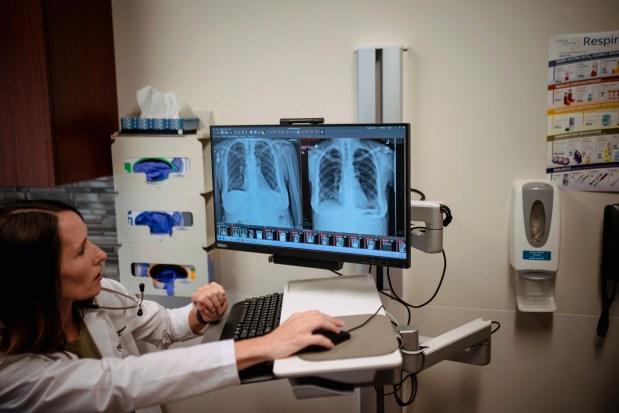
In the U.S., quad-organ transplants have been performed seven times recently, but Elizabeth is the first person known to receive a liver, a kidney, and a second set of donor lungs. Her body previously rejected the lungs she received, and her liver and kidney were damaged by cystic fibrosis. Doctors from Northwestern highlighted the surgery’s complexity due to her previous lung transplant, which complicates a second lung transplant due to scar tissue and distorted anatomy.
Dr. Satish Nadig, transplant surgeon and director of the Northwestern Medicine Comprehensive Transplant Center, underscored the uniqueness of Elizabeth’s case. Her only option was the power of transplant, making her the first patient to undergo this life-saving procedure. Her journey with cystic fibrosis began at 11, a disease impacting lungs and other organs. Her condition remained manageable until late 2015, leading to a lung transplant in 2017. Post-transplant, Elizabeth resumed her life, raising her son and managing a massage therapy studio.
This January, her health declined due to pneumonia. After three weeks in a hospital in Iowa, she worsened at home, losing 30 pounds and struggling to breathe and complete daily tasks. By February, Elizabeth was back in the hospital, unresponsive, and placed on ECMO (extracorporeal membrane oxygenation), a life-support machine. Her parents ensured she could make the decision about another transplant despite her earlier reluctance to undergo the procedure again.
Elizabeth emphasized her motivation, deriving strength from her 11-year-old son. Despite the daunting mental and physical challenge, her love for her son made her choice clear. She felt compelled to fight through the surgery, emphasizing the need to be present for her son.
At Northwestern, doctors performed the surgery in two stages, acknowledging the severe rejection that complicated the second lung transplant. As explained by Dr. Ankit Bharat, chief of thoracic surgery, patients with severe rejection are often in critical condition, making second lung transplants technically challenging.
During the initial stage, surgeons freed the rejected lungs to facilitate removal, keeping Elizabeth under general anesthesia on ECMO and a ventilator, her chest open. Next, they proceeded with the second stage, transplanting her new lungs, liver, and kidney, in an operation lasting about eight hours. Perfusion machines preserved the liver and kidney during the lung transplant, all sourced from a single donor.
Elizabeth’s memories post-surgery are vague, but her relief was palpable upon awakening and realizing the operation was a success. Her thoughts focused on continuing to raise her son and re-engaging with her business, reinstating her life.
Following the transplant, Elizabeth remained at Northwestern for several weeks before moving to Shirley Ryan AbilityLab for rehab. With her parents’ support, she stayed in Chicago for follow-up appointments, enjoying her son’s visit, including trips to the Shedd Aquarium and Navy Pier.
Currently, Elizabeth walks daily, anticipating her return home. She looks forward to celebrating her birthday belatedly with her son and reuniting with her cats. She expressed gratitude for the doctors and the Northwestern team for enabling her recovery.
Dr. Nadig hopes the surgery signifies new possibilities for similarly complex cases, recognizing the coordination required beyond technical skill. This landmark operation inspires hope for patients facing challenging medical scenarios.
Leave a Reply