Recent suspected animal poisonings have alarmed Israeli security officials, farmers, and local leaders. These incidents pose a threat to agricultural communities, with farmers reporting significant losses of livestock. They warn that poisoned food and water sources might also put other animals and nearby residents at risk.
An Israeli source disclosed to Fox News Digital that military officials are seriously considering these poisoning reports, particularly those occurring on Jewish-owned farms in the West Bank, often referred to as Judea and Samaria in Israel. The source labeled these acts as “agricultural terror.” This issue gained attention after The Press Service of Israel (TPS-IL) conducted an investigation revealing numerous poisoning incidents in farms across the Binyamin region over the past year.
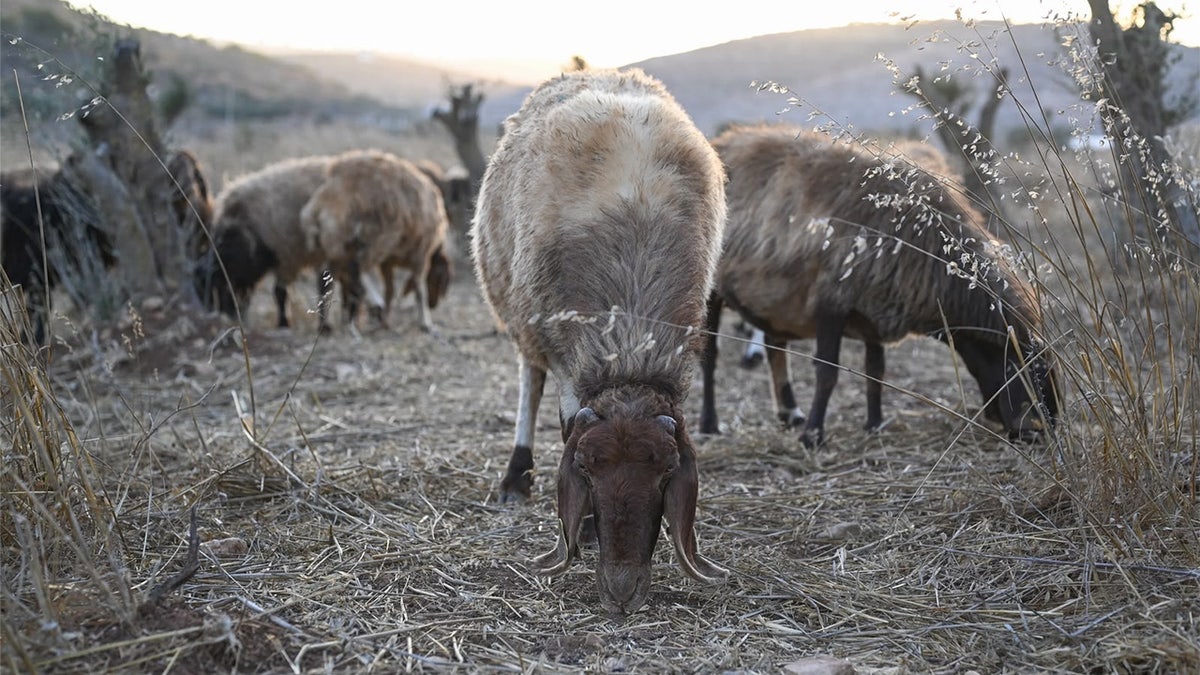
A herd of goats grazes at an Israeli farm near the West Bank in July 2026. Local Israeli agricultural workers say Palestinian militants have carried out a series of poisoning attacks against their livestock since November 2025.
Moreover, a TPS-IL video featured an Israeli farmer claiming that poisonings involved substances concealed within food items such as dates and pita bread.
The source explained, “We have two populations with warm blood,” referring to Israelis and Palestinians in the contested area. “Sometimes this results in verbal or physical violence, attacks, arson, property damage, and, among other things, agricultural terrorism targeting animals.” They continued, noting, “Recently, we’ve received increasing reports of attempts by Palestinians to poison animals. We are discussing dozens of cases witnessed in recent weeks. We act against terror; if we receive intelligence indicating a Palestinian plans to poison someone or has done so before, we will act to detain them.” The source advised farmers to remain in designated grazing areas, mark their livestock as required, and report each incident to relevant authorities, emphasizing that animal poisoning is a cruel act.
An Israeli shepherd looks at a dead goat from his herd, reportedly poisoned by Palestinian militants. Local shepherds report ongoing livestock poisoning attacks in the area since November 2025.
According to Evyatar Karo, a leader in the farming movement, the poisonings have heavily impacted his farm in the Binyamin region north of Jerusalem. These incidents began in November 2025, he stated to Fox News Digital. One day, he found one of his goats lying on the ground, struggling to breathe, alongside another in the same condition.
Karo explained, “Suddenly, we found dates scattered around – strange, as they weren’t natural; they had a blue substance inside.” He mixed veterinary medication with water and administered it to the goats, attempting to prevent the toxin from spreading. One goat survived, but four perished. In the affected grazing area for Israeli farmers’ goats and sheep, militants were blamed for poisoning Israeli livestock.
Karo said, “We brought in the Nature and Parks Authority to investigate. The poison is lethal. If a carcass of an animal poisoned lies in the field, it endangers other animals that could consume it. It functions like a chain affecting other wildlife.” He identified one of the poisons as Lannate, a broad-spectrum carbamate insecticide used by farmers, but applied in a highly concentrated form.
“We lost 25 animals. It’s terrible. The animals die in your hands, screaming and choking – it’s a terrible substance,” Karo said. Police have launched an investigation, but he fears the incidents could intensify.
“It’s not isolated to me – it affects an entire network in many places, occurring in Gush Etzion and Shiloh, involving incidents with poisoned water cisterns,” Karo explained. “We are dealing with organized Palestinian squads. They observe where we lead our animals and spread poison there. Initially, it targets animal lives, but it soon poses risks to people.”
An Israeli shepherd checks a well for poison in July 2026. The poisonings are blamed on Palestinian militants by Israeli farmers and shepherds.
TPS-IL documented further suspected poisonings in early 2026, followed by a series of additional cases. These included contaminated water in about 10 cisterns near Alon Road close to al-Mughayyir on May 5; an incident at Shlisha Farm on June 7 where two sheep died and about 15 others fell ill; and discovered poisoned food bait near Tel Talpiot, near Gush Shiloh, in July. In this latter case, two guard dogs died within minutes, as did a goat.
Palestinians, however, accuse Israeli settlers of retaliating against their livestock. The official Palestinian Authority news agency, WAFA, reported that 13 sheep died, and others suffered poisoning after an alleged “Israeli settler” attack west of al-Auja, north of Jericho.
Sheep owner Suleiman Mleihat told WAFA that “Israeli settlers” sprayed toxic substances on grazing land. A veterinarian confirmed the cause as poisoning. Mleihat’s sheep reside on a farm near the area, which local Israelis and security forces frequent daily.
Yisrael Ganz, governor of the Binyamin region and head of the Yesha Council, cautioned, “Those willing to poison a goat may eventually aim at targeting local residents.” He noted, “Tomorrow, a child might come across dates on the ground and consume them. Think about a shepherd taking children out. If water sources become poisoned, it could harm thousands.” Ganz continued, “They’ve killed goats, dogs, cows, and we fear we could be next. These terrorists will show no more compassion for people than for goats.”
An Israeli farm near the West Bank in July 2026.
Reciting 16 incidents but expressing significant concern over their rising frequency, Ganz described recent occurrences as almost weekly. “They study and adapt their tactics as they succeed,” he mentioned.
The deployment of body cameras to shepherds served as an immediate donor-funded response, but Ganz stressed such measures cannot replace governmental action. Addressing these incidents is a top priority. If a water source serving Jerusalem or regions of Judea and Samaria becomes compromised, it could evolve into a major catastrophe.
The Coordinator of Government Activities in the Territories (COGAT) informed Fox News Digital that the Civil Administration diligently handles reports involving suspected poisonings. The administration’s Agriculture Unit collaborates with relevant authorities and counterparts to provide a safe environment for animals in the region and tackles related agricultural needs.
“Upon receiving a report, the unit’s professionals inspect the field, collect findings, and, when required, take samples of suspected substances for testing at specialized labs, including the Ministry of Agriculture’s labs in Beit Dagan,” a COGAT statement explained. “This helps determine incident circumstances and craft a professional assessment. Based on needs, the unit coordinates aid, such as medicines, food, and water.”
Explaining the varied potential impact on the environment, which depends on factors like substance type and concentration, the Civil Administration assigns great importance to environmental protection in Judea and Samaria and acts within authority to address hazards. COGAT emphasized the involvement of the Israel Police in investigating these incidents and pursuing those responsible.
Attempts to contact the Israel Police for comment were unsuccessful prior to publishing. Amelie Botbol, a freelance field reporter based in Tel Aviv, contributes to Israel-related news coverage.
Leave a Reply