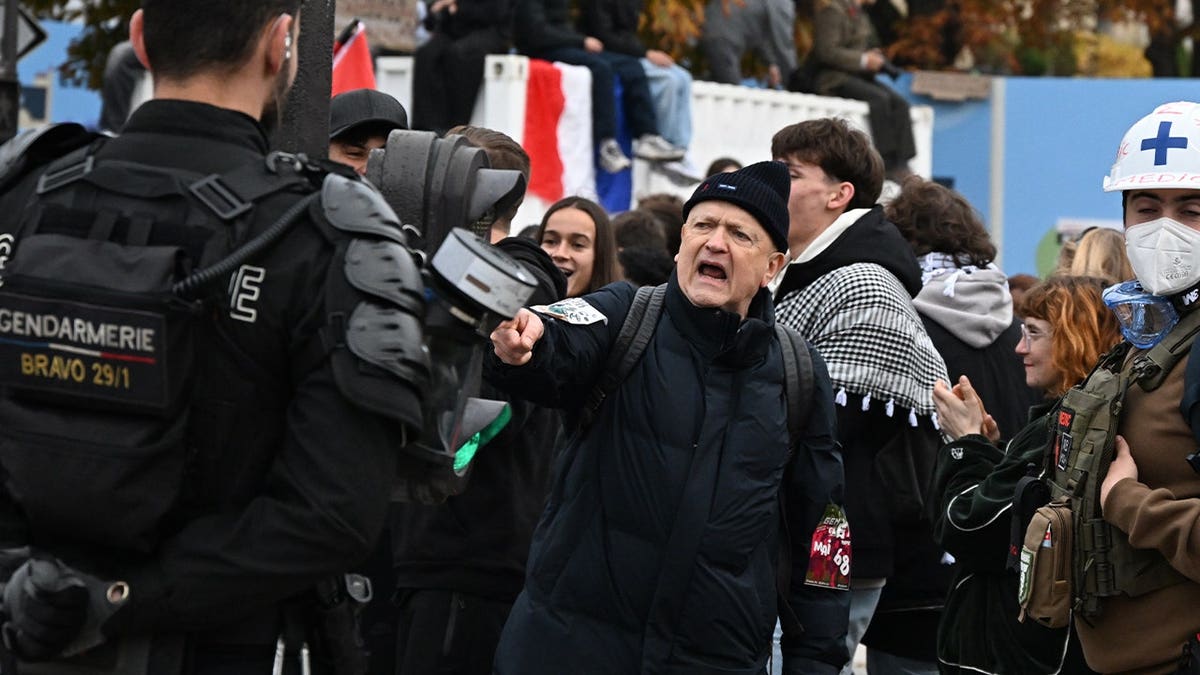
Protesters in France persist in their demonstrations throughout Paris and the rest of the country, despite police restrictions on gatherings in the capital. The Paris Police Prefecture declined multiple requests for protest permits in various city areas due to riots in October that resulted in numerous arrests and clashes with law enforcement.
“These events demonstrated the intention of certain individuals to target the institutions of the Republic, specifically through actions directed against public buildings and State services in order to undermine the foundations of the Republic,” a police statement said, as translated by Fox News Digital. “That these elements characterize a particular and serious risk to public institutions, agent safety, and the normal functioning of public services during such demonstrations.”
French President Emmanuel Macron attributes the protests to ‘ultra-left groups’ aiming to destabilize the Republic. During a recent protest for higher wages in Paris, some demonstrators faced off against police. The country has mobilized 70,000 police officers to manage a new wave of protests, including a planned rally by France’s Yellow Vest movement at Place de la Concorde, which authorities have prohibited due to security concerns.
Despite the ban, notable Yellow Vest figures, including coordination group member Benjamin Ball and spokesperson Azelma Sigaux, were apprehended near the National Assembly. The Interior Ministry projected that 170,000 individuals would join demonstrations nationwide, marking the fourth consecutive Saturday of protests. Interior Minister Laurent Nunez emphasized the continuing high risk associated with these gatherings, instructing security forces to ‘not lower their guard.’
In some areas, rioters clashed with police, launching projectiles and setting fires. Tear gas was used to manage the unrest. The demonstrations are fueled by frustration over high living costs, drawing participation from student and teacher unions alongside the Yellow Vests. Prime Minister Sebastien Lecornu plans to meet with union leaders to discuss wage and purchasing power concerns. Despite this scheduled meeting, unions are calling for a new wave of strikes to maintain pressure, asserting their strong position compared to the government’s weakening stance.
Since the start of protests in September, National Assembly Deputy Leader Marine Le Pen has gained ground in national polls. Her candidacy for the presidential election, announced in October, positions her as a significant contender likely to advance to a runoff.
Leave a Reply