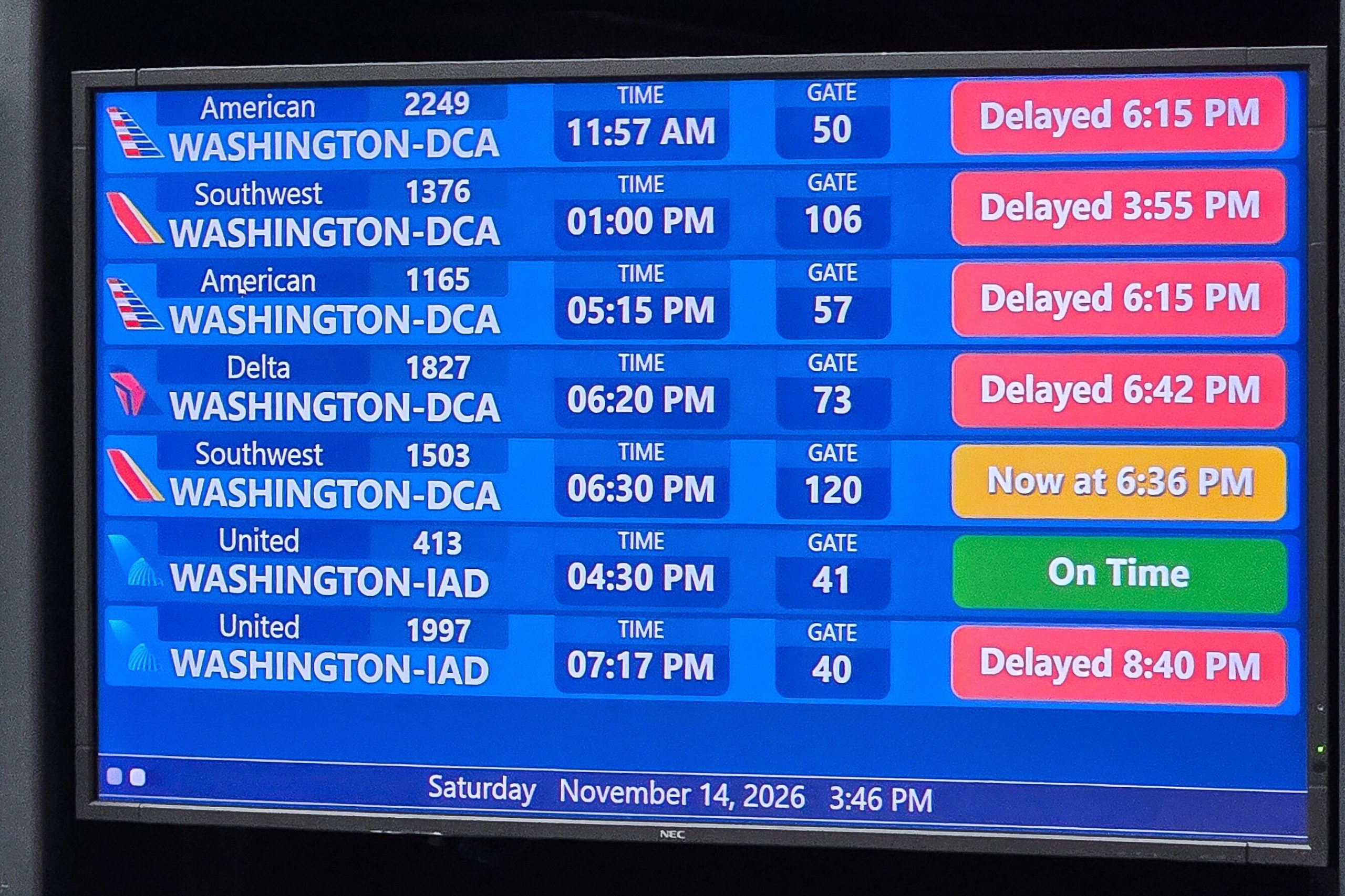
On November 15, US air travel disruptions persisted for the third consecutive day. More than 5,200 flights experienced complications on Sunday. However, Transportation Secretary Sean Duffy anticipated a return to normal operations by Monday, despite airlines struggling to realign schedules following a comprehensive ground stop.
Sunday saw the cancellation of more than 1,600 flights nationwide, with almost 3,600 facing delays, as reported by aviation data site FlightAware. The previous day, airlines canceled over 6,400 US flights and delayed over 8,000.
Speaking on ABC’s “This Week,” Duffy dispelled any notions of cyberattacks or malicious intent, though the root cause remained unidentified. Duffy assured the public that flights would resume normalcy soon, first on Sunday and fully by Monday. The Federal Aviation Administration (FAA) emphasized its commitment to passenger safety.
Several airlines experienced significant disruptions on Sunday. JetBlue had 27% of its flights canceled, American Airlines faced a 13% cancellation rate, while Southwest, United Airlines, and Delta saw cancellations of 3% to 5%.
The FAA issued a nationwide ground stop on Friday, which halted almost all departing flights for nearly five hours. This was the longest suspension since the September 11, 2001, attacks on the United States.
“A digital flight information display showed numerous delayed flights to Washington, D.C. across various airlines at Orlando International Airport.”
The problems escalated after the installation of new equipment by FAA contractor L3Harris at a remote site, which caused an overload in air traffic control communications systems. The problematic setup led to congested data flow, hampering operations nationwide.
Duffy explained that replacing a router in El Dorado, Arkansas, triggered issues with a recently installed router in Amarillo, Texas. This caused congestion at other control centers due to excessive data transmission.
The FAA has since disabled the faulty routers and similar devices across the system but has yet to determine the definitive cause of the failure. The mentioned routers date back to purchases made in 2001 and are outdated, making the case for an upgrade.
Duffy advocated for a $50 billion investment to overhaul the air traffic control systems, up from an earlier request of $30 billion. This comes following Congress’s approval of $12.5 billion last year, with significant funds still unutilized.
Former President Donald Trump weighed in, urging Congress for immediate, large-scale funding rather than incremental progress. Trump’s comments came as Democrats prepared to assume control of Congress.
Despite skepticism from Representatives Rick Larsen and André Carson about the unspent funds from the previous budget, Duffy clarified that those funds were allocated for specific spending and did not cover software upgrades.
This incident serves as the latest illustration of the pressures on the aging US air traffic control system, marked by obsolete technology and insufficient personnel.
Leave a Reply