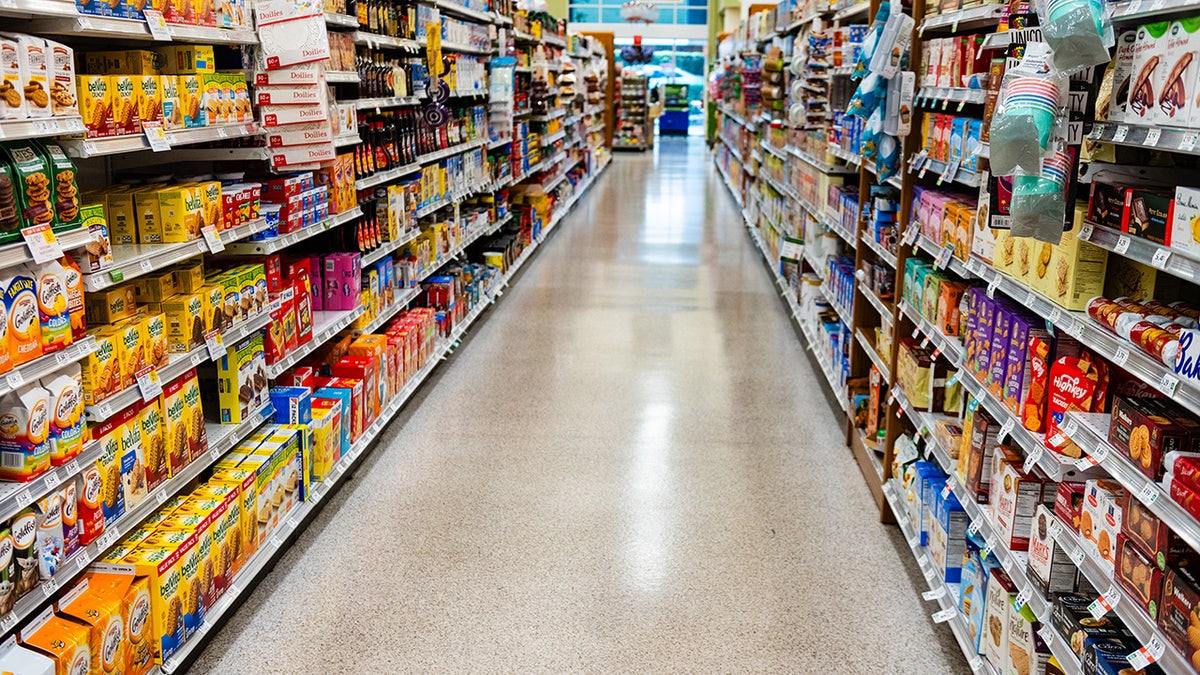
You can now listen to Fox News articles! Former FBI Special Agent Nicole Parker expressed concerns that a new threat to Americans’ security might emerge from grocery stores. Recent hacking incidents in Europe have raised fears that essential goods could be used as tools of psychological warfare. Parker highlighted that cyberattacks on the food supply chain could affect the United States.
“Every human being has to eat,” Parker told Fox News Digital. “This is the grocery store.” Cybersecurity experts have warned of potential threats to U.S. utilities, likening them to a ‘Trojan horse.’
Parker’s warning comes amid investigations into refrigeration failures at U.S. military commissaries in August. The Army Criminal Investigation Division, Defense Commissary Agency, and Defense Criminal Investigative Service are working with French authorities to determine if these issues relate to similar outages in Europe. The cause of military commissary problems is yet to be identified as a cyberattack.
At least six military commissaries reported refrigeration issues, leading to food spoilage. Locations affected included Fort Huachuca in Arizona and bases in Wyoming, Rhode Island, Mississippi, and California. Fort Irwin restricted sales to non-perishable items after a malfunction.
Incidents of higher refrigeration temperatures were reported at other bases. European supermarkets also faced disruption, with some forced to discard spoiled food. Retail locations in Sweden, Belgium, and Luxembourg encountered temperatures reaching 122 degrees Fahrenheit, according to Reuters.
Parker stated that cyberattacks on critical services pose a serious threat. “What we’re seeing right now is in Europe and other places, but it can very well happen on our soil,” she said. Such attacks allow disruption without traditional warfare tactics.
No suspects have been identified in the European incidents, and Parker cautioned against speculation. “Again, we don’t know who did this,” she noted.
Parker emphasized that attacks not only spoil food but also undermine public confidence. “This asymmetrical warfare has a very strong psychological impact, but we’re Americans. We will not falter ever,” she said. She urged expanded readiness efforts beyond mere investigation, involving elected and local leaders in safeguarding communities.
Parker recommended that families maintain emergency supplies and a plan for possible service interruptions. “I think if you are prepared, you do not have to fear,” she explained. She highlighted the importance of having food, water, medication, important documents, and a battery-operated AM radio readily available.
While advising against panic buying, Parker suggested practical preparations. “I’m not saying that, you know, you need to go buy everything off of the shelves,” Parker said. “We’re used to hurricanes,” she remarked, drawing from her experience in Florida, recommending similar preparation tactics.
Leave a Reply