David Hockney, the innovative British artist known for his vibrant depictions of Los Angeles, passed away at the age of 88. Hockney famously described himself as “an English Los Angeleno” and immortalized the city’s swimming pools, palm trees, and dazzling young men in his work. Over his career, he explored various mediums, including photo collages, iPad drawings, and filmed images of Yorkshire landscapes.
Since his early Pop Art days in the 1960s at London’s Royal College of Art, Hockney consistently stayed in the creative spotlight. His work included thousands of pieces, with The David Hockney Foundation owning over 8,000 of his creations. These include about 200 sketchbooks, self-portraits, opera designs, and portraits of family and friends. He openly expressed his admiration for Hollywood and drew inspiration from a variety of sources, from Elvis Presley to the Hubble Space Telescope.
Time Magazine art critic Robert Hughes once referred to Hockney as “the Cole Porter of modern art.” Open about his sexuality, Hockney’s 1972 painting “Portrait of an Artist (Pool with Two Figures)” drew inspiration from his relationship with artist Peter Schlesinger. This piece set a record at Christie’s auction in 2018, selling for $90 million.
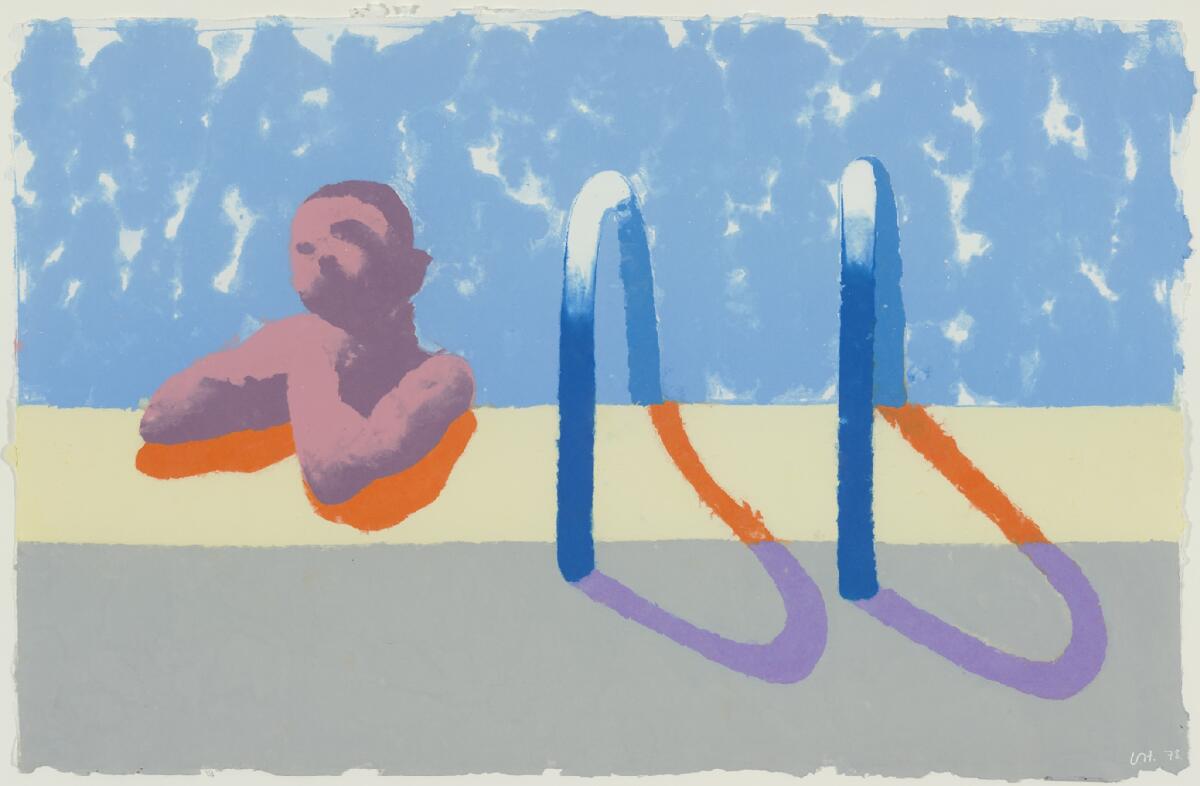
Hockney’s passion for art was matched by his love for opera. He designed sets for major opera companies worldwide and often listened to music while working. His work, such as “Gregory in the Pool (Paper Pool 4),” featured in exhibitions that attracted large audiences, including a retrospective at New York’s Metropolitan Museum of Art in 2017.
Born on July 9, 1937, in Bradford, Yorkshire, Hockney began making marks on paper at the age of eight. He sold his first painting, a portrait of his father, in 1955. After graduating from the Royal College of Art in 1962, he maintained a rigorous work ethic, as noted by his biographer Christopher Simon Sykes. Hockney’s multi-image photographic collages, featuring friends and landmarks like the Brooklyn Bridge and Pearblossom Highway, stand out in his body of work.
Hockney was not restricted by traditional painting; he experimented with technology and optics. Inspired by the works of Jean Auguste Dominique Ingres, he purchased a camera lucida to explore the use of optical devices in 19th-century drawings. His explorations led to the publication of “Secret Knowledge” in 2001, where he discussed his theories on early art techniques. His passing was confirmed by respected sources including the Associated Press and New York Times.
Leave a Reply