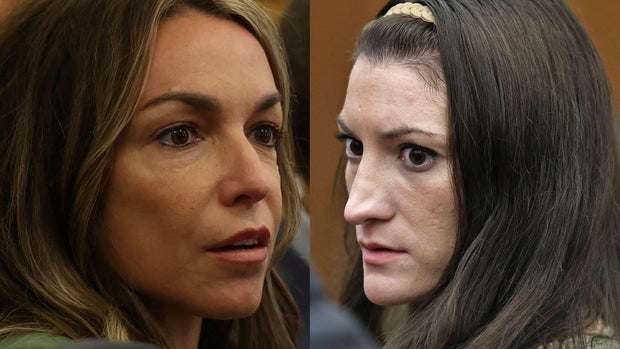
As of September 1, 2026, the jury involved in the trial of Lindsay Clancy reported to the judge that they were unable to reach a unanimous decision. This state, known as being ‘deadlocked,’ means the jury’s inability to agree on a verdict.
Judge William Sullivan responded to the jury’s statement of being deadlocked by instructing them to continue their deliberations. Despite these efforts, the jury concluded its deliberation for the day at approximately 3:30 p.m. without arriving at a verdict.
Hung Jury in Recent High-Profile Cases
This situation is not unique; Massachusetts has seen similar outcomes in high-profile cases in recent years. Two noteworthy examples are the trials of Karen Read and Emanuel Lopes.
Emanuel Lopes faced charges for the murder of Weymouth Police Sgt. Michael Chesna, an incident that occurred in 2018. His initial trial took place in 2023 but resulted in a mistrial caused by a hung jury. Another trial ensued in 2024, which once again faced initial deadlock with the jury reporting their difficulties to the judge multiple times. Yet, after extensive deliberations over six days, spanning 32 hours, the jury ultimately delivered a unanimous guilty verdict.
In Karen Read’s 2024 trial, she faced similar circumstances with a deadlocked jury. The jury signaled it was unable to reach a verdict after 17.5 hours and later after 23.5 hours of deliberation. Despite attempts by the judge to extend deliberations, a mistrial was declared following another report of deadlock. A subsequent trial led to Read’s acquittal a year later.
The “Tuey-Rodriguez” Instruction
In Massachusetts courts, judges often employ the “Tuey-Rodriguez” instruction, referred to colloquially as a “dynamite” charge. This technique aims to encourage a deadlocked jury toward reaching a consensus. The name originates from a 1973 case.
This legal provision allows judges to send deadlocked juries back for further deliberation twice. Additional opportunities for deliberation may be granted if jurors ask for clarification on legal matters. When jurors report deadlock for a second time, judges consult with the case’s attorneys before presenting the Tuey-Rodriguez charge. The charge emphasizes the desirability of case resolution, highlighting the jury’s role and the improbability of a subsequent jury having superior capabilities.
“You should consider that it is desirable that the case be decided. You should consider that you have been selected in the same manner, and from the same source, as any future jury would be. There is no reason to suppose that the case will ever be submitted to six persons who are more intelligent, more impartial, or more competent to decide it than you are, or that more or clearer evidence will be produced on one side or the other. With all this in mind, it is your duty to decide this case if you can do so conscientiously.”
If a jury continues to be deadlocked even after this instruction, the judge possesses the discretion to declare a mistrial. In Lindsay Clancy’s case, should a mistrial be declared, she would maintain her status of “in custody” at Tewksbury State Hospital, receiving psychiatric care.
Following a mistrial, Plymouth County District Attorney Timothy Cruz holds the responsibility of determining whether to retry Clancy for first-degree murder or a lesser charge, or opting not to proceed with a retrial.
Leave a Reply