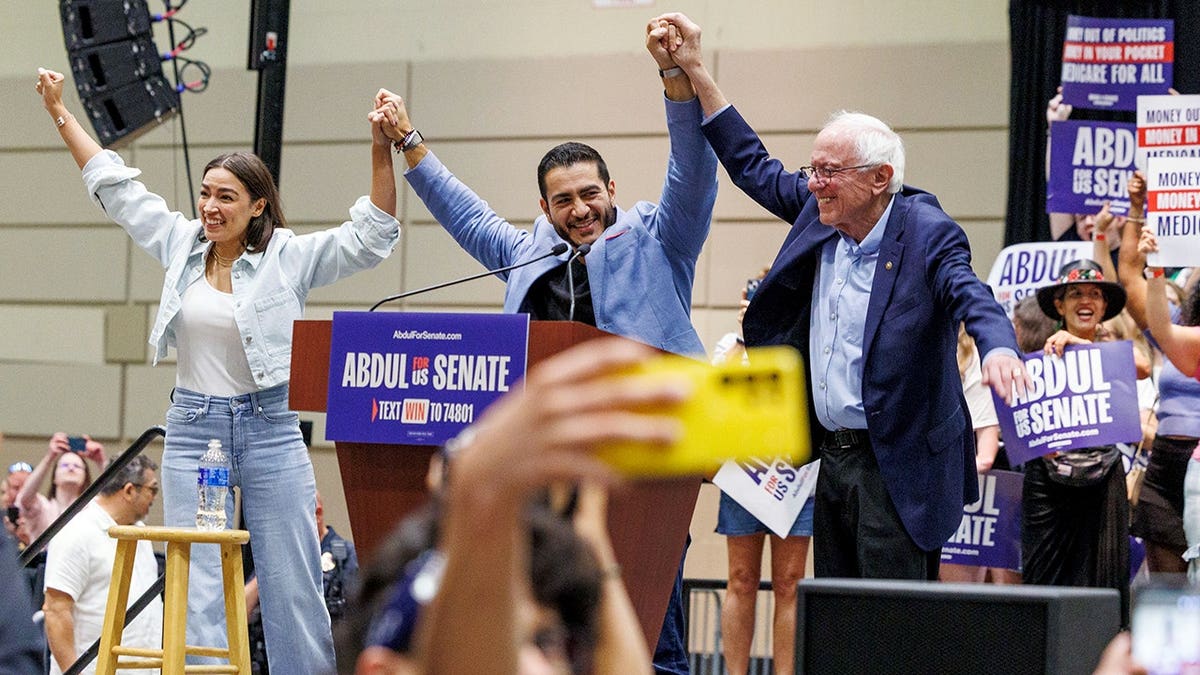
Michigan’s Democratic Senate candidate, Abdul El-Sayed, has made Medicare-for-all a key part of his campaign. He believes this policy shift would mean higher taxes for Americans in exchange for health coverage not tied to employment.
This proposal would change how healthcare is funded, affecting private insurance and potentially altering employment dynamics. According to experts, it would create a system different from the current U.S. Medicare model.
P.J. O’Rourke once said, ‘if your healthcare is expensive now, wait until you see what it costs when it’s free,’” said Michael Cannon, director at the Cato Institute.
El-Sayed argued that instead of paying private insurers, where executives earn hefty salaries, people would pay slightly higher taxes for more stable healthcare coverage.
One major issue is how healthcare providers would be compensated. Medicare currently pays less than private insurers, and a government-run model could lead to more patients being serviced at these lower rates.
Michael Cannon cautioned that policymakers might have to raise federal revenue significantly or risk limiting provider participation.
Countries like Canada and England, often used as examples of socialized medicine, face challenges like long wait times. Critics highlight these issues when discussing similar models for the U.S.
However, Cannon acknowledged flaws in the U.S. system. He suggested that market competition might better serve healthcare needs by placing spending decisions in patients’ hands.
Ed Haislmaier from the Heritage Foundation described single-payer systems as plans without solutions to cost issues. He suggested competition to reward efficient providers.
President Trump’s approach involved shifting funds into personal healthcare accounts rather than letting insurers manage them.
Elements of the U.S. system, like the Veterans Affairs setup, resemble international models. Employer-based insurance is significant in Germany, and Obamacare aligns with systems in Canada and Scandinavia.
Experts argue that if Medicare-for-all becomes reality, maintaining wide access while limiting provider pay could lead some hospitals to reduce their participation.
Higher federal revenue would be needed to shift most healthcare expenses from individuals to government, replacing premiums currently paid by employers and families.
For near-universal coverage, Cannon suggested removing government barriers. He pointed out that Americans nearing Medicare eligibility spend significantly more on healthcare compared to citizens in other countries.
Abdul El-Sayed did not respond to requests for comments. Fox News contacted him for his views on these healthcare issues.
Leave a Reply