Samsung Electronics, a key player in the global memory chip market, has gained significantly from the boom in artificial intelligence. This has sparked a debate on how to allocate the resulting profits.
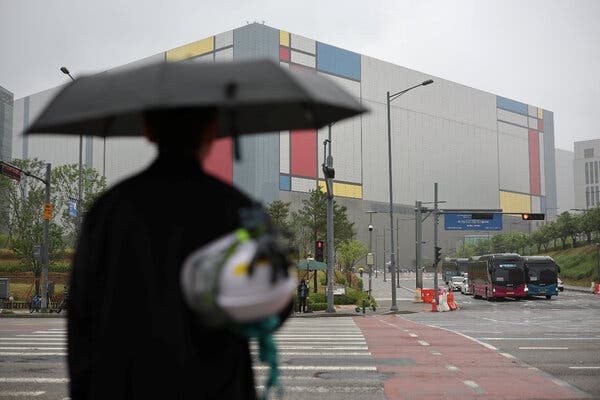
Outside Samsung’s semiconductor facility in Pyeongtaek, South Korea, the impact of the AI expansion is evident. The increased demand for computer memory chips, dominated by Samsung and SK Hynix, highlights a prosperous period for the industry. In 2025, SK Hynix introduced new employee benefits, dedicating 10% of operating profit to worker bonuses and lifting bonus caps.
Recently, Samsung’s largest labor union sought a similar arrangement. They requested the company to allocate 15% of operating profit for performance bonuses in the semiconductor division and to remove the cap on individual bonuses.
These negotiations almost led to a strike, which was narrowly avoided after government intervention. According to the provisional agreement, Samsung plans to allocate 10.5% of profits for bonuses, while also abolishing the bonus cap.
In the first quarter of this year, Samsung reported a $39 billion profit. The union is set to vote on finalizing the agreement by next Wednesday.
Although this agreement resolved the immediate conflict, it raises broader questions for South Korea regarding the distribution of AI-related wealth.
Leave a Reply