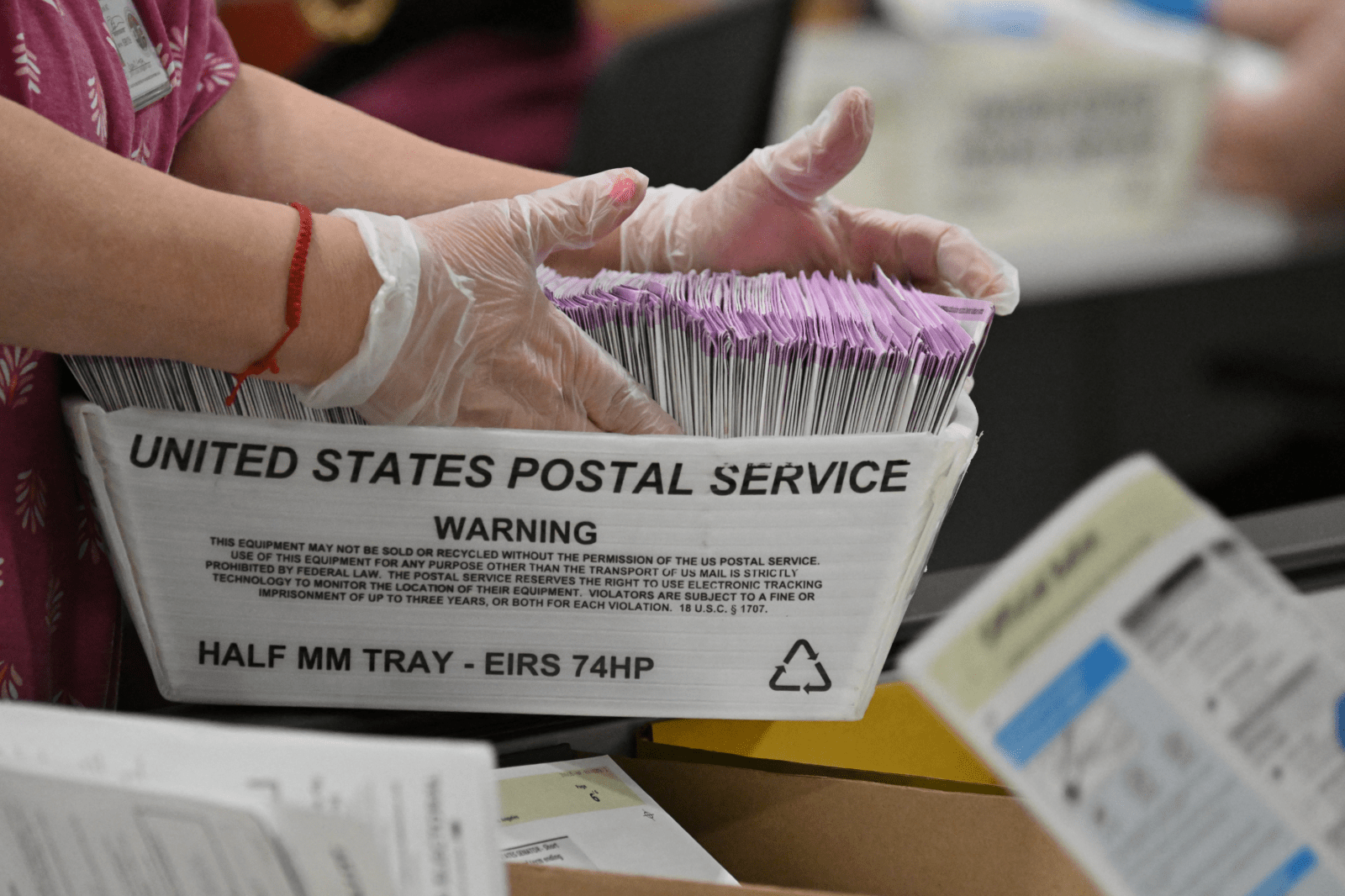
A small group of states relying heavily on mail-in voting finds itself at the heart of a major dispute. This controversy could influence whether millions of ballots reach voters in upcoming elections. Central to the debate is a set of proposed rules from the U.S. Postal Service (USPS). These rules stem from President Donald Trump’s March 31, 2026, executive order on election administration.
The order mandates states to provide detailed lists of mail voters. States failing to comply could face ballot delivery disruptions. The scope is significant, with over 48 million Americans voting by mail in 2024, representing about a third of voters nationwide. The changes could disrupt voting mechanics in states where mail is the primary voting method.
Twenty-three Democratic-led states and Washington, D.C., have filed a lawsuit against the proposal. A federal appeals court may issue a decision in the summer, just as states prepare for the November midterm elections. News outlets have reached out to USPS and the White House for comments.
Why It Matters
Trump’s order, called “Ensuring Citizenship Verification and Integrity in Federal Elections,” is another step by the federal government to control election processes. It includes key provisions:
- The Department of Homeland Security must compile lists of voting-age citizens by state.
- The Postal Service must create rules ensuring ballots go to voters on approved lists.
- Mail ballots need tracking systems, such as unique barcodes.
This has sparked a legal battle because the Constitution gives election administration authority to states and Congress, not the president. An ACLU lawsuit argues the order could turn USPS into a gatekeeper for mail voting.
A Fundamental Shift
The USPS proposal, released in May, enacts those directives. It requires states to submit details like names and addresses for mail voters. USPS could reject mailings not meeting these new standards. Traditionally, USPS has been a neutral carrier, focusing on delivery rather than voter eligibility.
The ACLU warns that this order could transform USPS into an “arbiter of who may cast a ballot by mail.”
An Unprecedented Role for the Postal Service
Currently, USPS’s role is to deliver election-related mail securely. Reports show the system as reliable, with USPS delivering over 99.22 million ballots in 2024, and 99.88 percent arriving within seven days. The new proposal alters USPS’s role significantly, requiring:
- Verification of recipients on state-submitted voter lists before delivering ballots.
- Creation of a federal “Mail-In and Absentee Participation List” system through a new digital portal.
- Mandated envelope designs and tracking systems linked to voters.
Election officials previously managed voter lists and mail ballot packets, while USPS handled reliable delivery. The new framework involves USPS in validating systems, potentially rejecting ballots that do not comply.
Former Vice Chair Anton Hajjar emphasized, “If proper postage is paid, USPS should deliver.”
The States With the Most to Lose
The impact of the proposed rules varies, with states relying on mail-in voting facing the most disruption. States like California, Oregon, Washington, and Colorado conduct elections largely by mail. The postal network is crucial, similar to polling places in other states.
Nationally, eight states and D.C. use mostly mail election systems, with every state offering some mail voting options. In these areas, disruption impacts core voter participation, raising concerns about the right to vote being denied.
Oregon’s Secretary of State, Tobias Read, stated, “This is not in the president’s power.”
Battleground States Watching Closely
Other states, such as Arizona, Nevada, and Michigan, may also face challenges. These states have large mail-voting populations but don’t exclusively use mail voting. Such disruptions could affect election outcomes, especially in tightly contested races.
Local jurisdictions might already be using systems aligned with proposed rules, but smaller or rural offices could face expensive redesigns.
A Data Battle at the Core
A deeper conflict involves data control. Trump’s order involves assembling voter citizenship databases and ties ballot delivery to state-provided lists. States resisting federal data requests now face a path where compliance is essential for ballot delivery.
Amanda Gonzalez criticized the administration’s data demands, labeling them as a ploy.
Legal Fight Over Federal Power
At the heart of the legal battle lies the question of election control. The Constitution grants states authority, moderated by Congress, a principle courts have reaffirmed. Plaintiffs argue the executive order breaches separation-of-powers, imposing national rules through executive action.
A federal judge has yet to block the order, finding challenges premature as the policy awaits full implementation. Appeals are ongoing, with the D.C. Circuit’s decision predicted to be crucial.
Is USPS Ready for This Change?
Even if the courts permit rule adoption, USPS faces execution challenges. The proposal involves developing digital systems for voter lists and ballot tracking—technology yet to be created. This poses logistical issues for an agency managing millions of election-related mailpieces on tight schedules.
USPS historically delivers ballots swiftly, demonstrating a system optimized for speed. Expanding to include voter verification and compliance checks marks a significant change.
Matt Crane expressed skepticism regarding USPS’s capacity to manage this expanded role.
What Happens Next
The next immediate move in resolving this issue lies with the courts. The D.C. Circuit Court of Appeals may soon decide whether the USPS rule can advance before ballots are distributed for midterms.
Several factors will influence how the situation develops:
- USPS launching a functional voter-list portal.
- Release of citizenship lists by DHS.
- State compliance with federal data requests.
The resolution of this dispute will not only affect this election cycle but might redefine U.S. election structures long-term. Mail voting is an integral component across the country, impacting millions of voters and parties. For many states built on mail voting, changes to USPS’s role are not merely theoretical. They could alter voting machinery right before Americans head to the polls.
Leave a Reply