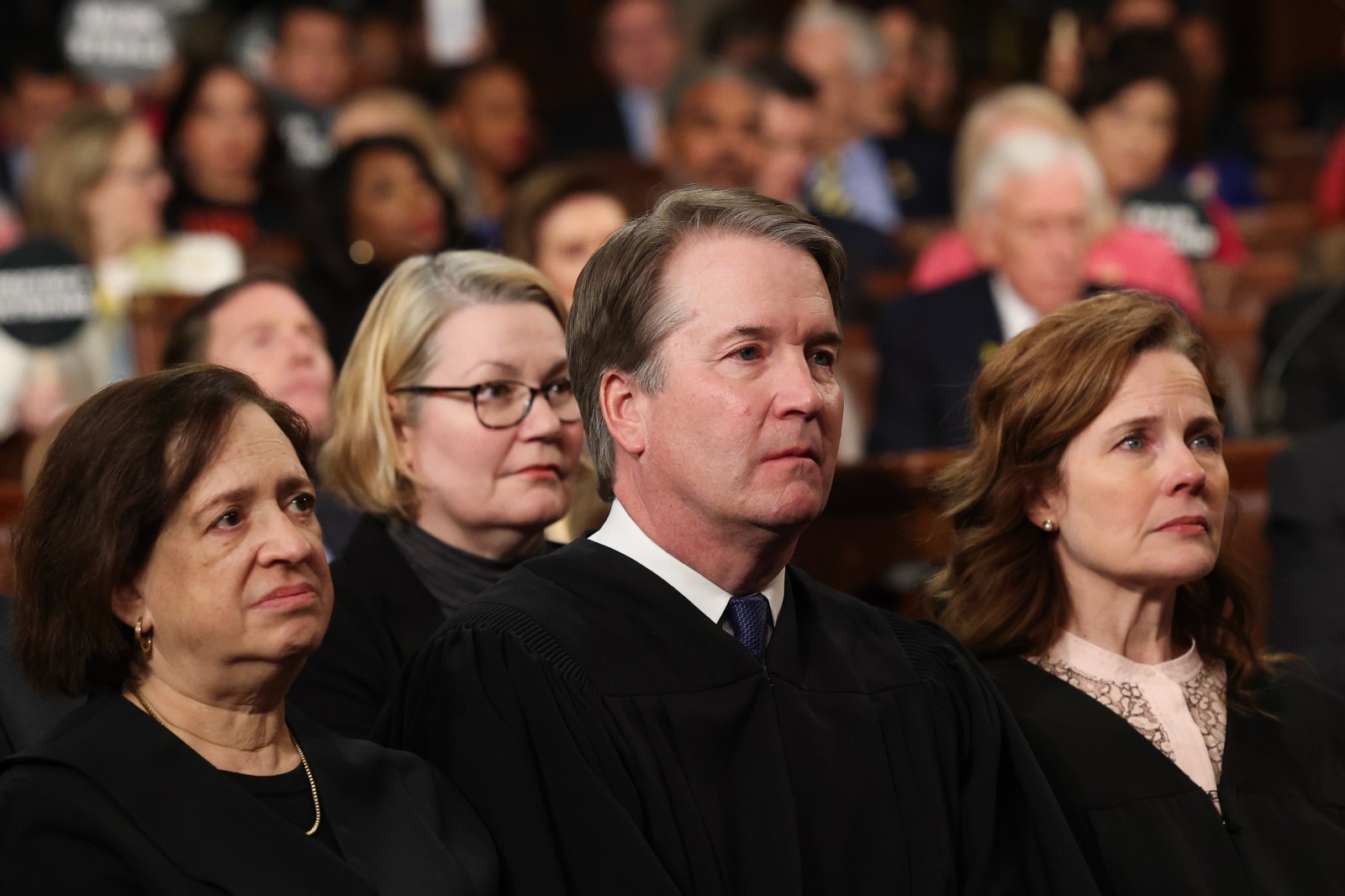
The approval rating of the United States Supreme Court has fallen among Republicans following its latest term, according to a new Gallup poll. Recent rulings involving President Donald Trump have contributed to this decline. The Supreme Court has been experiencing growing distrust from the public, with many questioning its impartiality.
Both progressives and conservatives have expressed dissatisfaction with the Court’s decisions. For example, a recent ruling was criticized for allegedly weakening the Voting Rights Act, while another sided against Trump’s attempt to end birthright citizenship. Overall approval of the Supreme Court has dropped to a historic low of 33 percent, down from 42 percent in September 2025.
The Court’s declining approval is part of a longer trend. In 2022, overturning Roe v. Wade significantly decreased approval among Democrats. Currently, Republicans have shown a negative shift in their views toward the Court. The latest poll indicates only 58 percent of Republicans approve, a decrease from 79 percent in June 2025.
“This decline may indicate that rulings unfavorable to the Trump administration this term, such as those on tariffs and birthright citizenship, weigh more heavily in Republicans’ evaluations of the court than the rulings that favored Trump and the GOP.” — Jeffrey M. Jones, Gallup editor
Historically, the Supreme Court has not faced such low approval ratings as seen in recent Gallup polls. Approval was as high as 58 percent in 2020, but dropped to 40 percent by September 2021. Justices, including Justice Ketanji Brown Jackson, have voiced concerns about public opinion.
Liberals, represented by Justice Jackson, have criticized the Court’s approach to certain rulings, pointing to substantial real-world impacts. Such decisions involved the dismantling of the Department of Education and the termination of federal grants.
Regarding Trump-related rulings, the Court’s decision against the administration’s effort to end birthright citizenship has disappointed some Trump-aligned Republicans. Other rulings against Trump’s tariffs and a Federal Reserve board firing also limited his executive authority. Yet, the Court also issued rulings favoring Trump, such as in cases of transgender athletes and executive authority.
The Supreme Court’s rulings have also sparked criticism from Trump. He expressed dissatisfaction on social media when the Court overruled his tariff policy, indicating disappointment with the justices he appointed.
Other surveys support the trend of declining approval. A joint survey by The Washington Post and Ipsos revealed 41 percent approval versus 55 percent disapproval. Meanwhile, a YouGov poll found 38 percent approval against 45 percent disapproval. These surveys reflect larger concerns over Supreme Court operations, with many supporting reforms like term limits and ethics codes.
Meanwhile, ethical concerns have arisen regarding justices Clarence Thomas and Samuel Alito. Reports in 2023 highlighted Thomas accepting gifts from donors without proper disclosure, while Alito faced criticism for his wife’s display of a controversial flag.
Looking ahead, the Supreme Court’s docket for the upcoming term includes potentially significant cases that will touch on various issues. These range from gun rights to climate change litigation and Title IX employment protections. The Court will likely provide insights into its approach during oral arguments beginning in October.
The timing of the next Gallup poll on Supreme Court approval remains uncertain. Historically, polls occur biannually, with another survey expected in the fall.
Leave a Reply