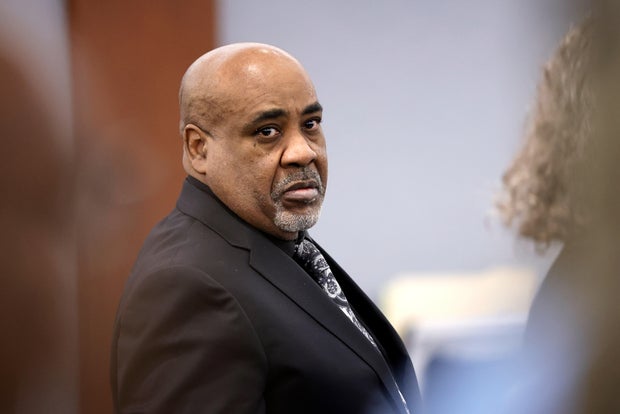
Michael Sanft, the defense attorney representing Duane ‘Keffe D’ Davis, has voiced concerns over the jury’s decision to convict his client of first-degree murder for the 1996 shooting death of Tupac Shakur. Davis was found guilty on Monday, and Sanft believes the jury had ‘preconceived notions’ about his client.
During an interview with CBS News on Tuesday, Sanft expressed surprise at the jury’s actions, noting the jury reached its verdict in less than three hours and questioned whether they reviewed all the evidence thoroughly. ‘My feeling is that they had preconceived notions, and those notions led to the conviction for Duane Davis,’ Sanft stated.
Nevada law does not mandate a specific amount of time for jury deliberation before a verdict. When asked about these concerns at the trial’s outset, Sanft mentioned ‘bigger issues’ were present, mainly focusing on pre-trial motions regarding admissible evidence.
The prosecution claimed Davis procured the gun used in the Sept. 6, 1996 drive-by shooting in Las Vegas, targeting Tupac Shakur in retaliation for the earlier beating of Davis’ nephew, Orlando ‘Baby Lane’ Anderson. Chief Deputy District Attorney Binu Palal stated Davis was ‘hunting’ for Shakur and Death Row Records co-founder Marion ‘Suge’ Knight, who survived but was wounded in the incident.
In closing arguments, Chief Deputy District Attorney Marc DiGiacomo labeled it a ‘slam-dunk, absolutely no defense to murder case’. While Davis was not accused of being the shooter, Nevada law allows for a murder conviction if someone aids in the crime’s commission. Prosecutors presented an audio interview from 2008 where Davis stated Anderson fired the shots after Davis handed a gun to the car’s backseat. Anderson, not charged with the murder, died in an unrelated shooting 20 months after Shakur’s death. Davis remains the only living individual allegedly involved in the case.
Davis, who pleaded not guilty, was initially offered immunity for cooperating with authorities. However, the publication of his book ‘Compton Street Legend’ in 2019 and subsequent interviews invalidated the immunity agreement, according to prosecutors. In the book, Davis recounted his presence in the Cadillac during the shooting and acquiring a Glock .40 from drug dealer Eric ‘Zip’ Martin. Davis later claimed he hadn’t read the book and was merely credited as a co-author.
Sanft criticized Judge Carli Kierny’s decision to admit evidence of Davis’ ‘other bad acts’, including gang involvement and drug trafficking. He also objected to Kierny’s jury instructions, suggesting if they believed Davis’ self-inculpating statements, corroborative evidence wasn’t necessary. Sanft felt disadvantaged from the trial’s onset, likening it to entering a football game with a 52-0 score against.
As a result, Sanft had to challenge his own client’s credibility. Describing this tactic as ‘the only defense strategy when convicted solely on one’s words without supporting facts’, Sanft argued there was no evidence placing Davis in Las Vegas on the shooting day. ‘There is no actual evidence that supported the conviction,’ he insisted, calling the decision sentiment-based rather than evidence-based.
Davis faces a maximum sentence of life in prison at his scheduled sentencing on Oct. 13. Sanft intends to appeal the conviction, a process potentially extending over a year.
Leave a Reply