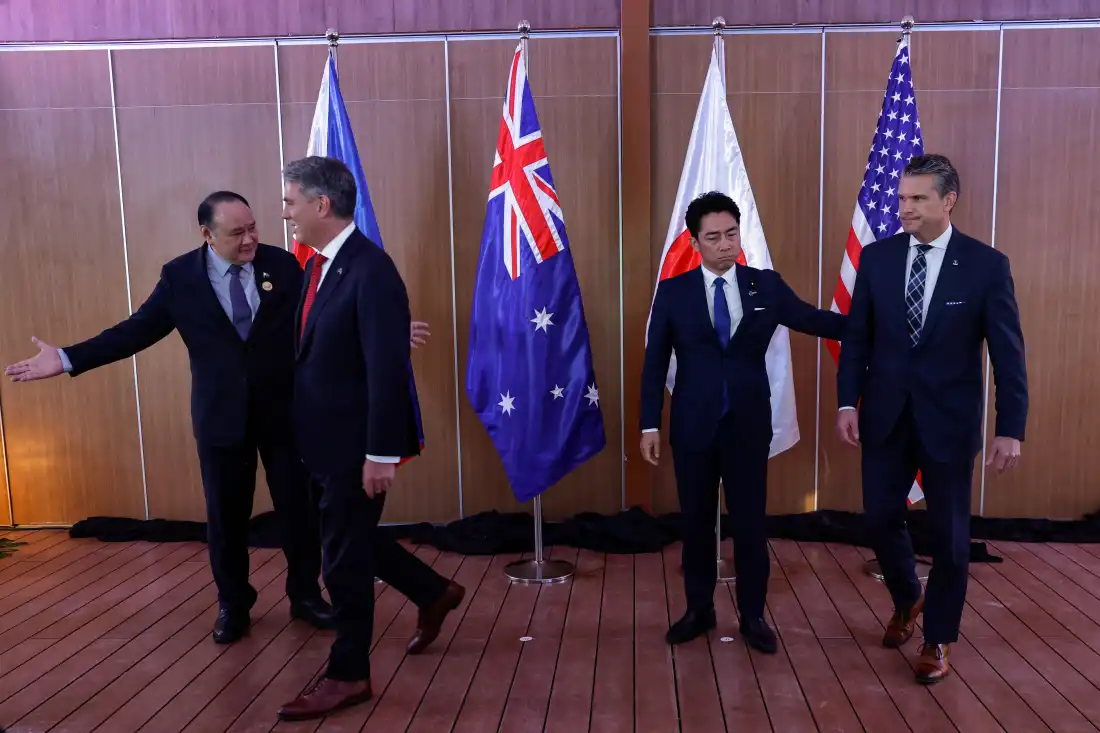
In Cebu, Philippines, regional defense leaders from the Philippines, Australia, Japan, and the United States gathered for a Quadrilateral Meeting. The leaders convened during the 20th Association of Southeast Asian Nations (ASEAN) Defence Ministers’ Meeting (ADMM) and the 13th ADMM-Plus Meetings. This assembly highlighted significant defense collaborations amid rising regional tensions.
New Japanese Facility for Missile Production
The United States and Japan have decided to establish a site in Japan dedicated to producing advanced medium-range air-to-air missiles. This collaboration aims at countering the rising challenges posed by China’s assertiveness in the region. Japanese Defense Minister Shinjiro Koizumi announced this initiative during a news conference in Cebu, outlining the importance of enhancing joint defense capabilities.
Addressing Naval Concerns
Koizumi expressed concerns regarding China’s escalating naval maneuvers near southwestern Japan. He highlighted that this week, a fleet comprising three Chinese destroyers and a coast guard vessel navigated the Osumi Strait. The apparent strategic move has prompted the Japanese defense to maintain heightened surveillance of these activities. Japan’s military efforts in the southwest aim to deter potential threats.
Missile Production and Defense Collaboration
The U.S. and Japan agreed to increase missile production capabilities as part of their ‘Operation Supercharge’. This initiative focuses on the missiles used by F-35 fighter jets, enhancing the joint deterrence strategies of the Japan-U.S. alliance. During discussions in Cebu, Koizumi and U.S. Defense Secretary Pete Hegseth emphasized enhancing regional security and maintaining a rule-based international order.
Continued U.S. Engagement
Hegseth reaffirmed the U.S. commitment to regional stability in a separate meeting with ASEAN defense ministers. He noted that this commitment aims to counter aggression without unnecessary escalation. Hegseth emphasized the importance of defending allied interests, referencing China’s activities in the South China Sea as a focal point of concern.
Australia’s Stance on Regional Order
Australian Defense Minister Richard Marles reiterated Australia’s dedication to enforcing a rule-based order in the Pacific region. He cited incidents with Chinese military aircraft as examples of rising threats that must be countered through a united allied front. Marles underscored the vital role of freedom of navigation in maintaining stability.
The conference in Cebu marked a crucial moment for allies to consolidate defense strategies and reinforce alliances. Both regional and international tensions underscore the need for robust cooperation among countries committed to maintaining peace and upholding international laws.
Leave a Reply