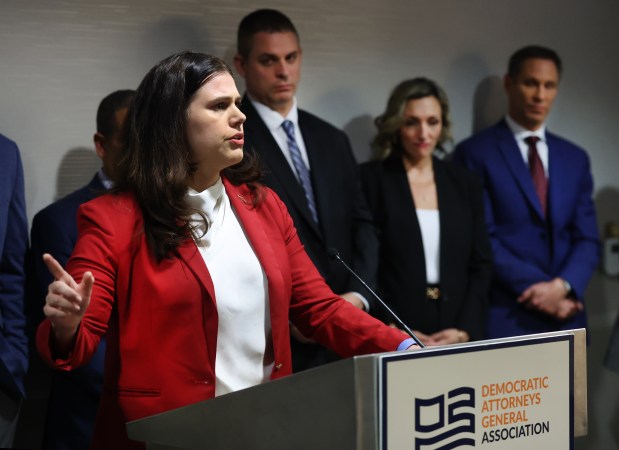
Following the midterm elections, Democratic attorneys general gathered in Chicago to reflect on their legal achievements against President Donald Trump’s administration and outline future efforts. Illinois Attorney General Kwame Raoul emphasized the importance of their continued role in defending their objectives, saying, “While a lot of the focus turns to what’s next in Washington, we understand — and we’re not naive to the fact — that we will continue to have a critical role in protecting our Republic.”
According to the Progressive State Leaders Committee, state attorneys general have launched over 150 lawsuits against Trump’s administration during his second term. The committee reports 80 victories out of nearly 100 court decisions that have obstructed Trump policies temporarily or permanently. One of the first major legal challenges occurred right after Trump’s January 2025 inauguration, when attorneys general filed a multistate lawsuit opposing his attempt to end birthright citizenship.
Efforts also targeted cuts to federal funding, immigration tactics, environmental policies, and tariffs. A significant victory came in February when the U.S. Supreme Court struck down Trump’s emergency tariffs in a case led by businesses and twelve states. In Illinois, Raoul’s actions resulted in a federal judge blocking Trump’s intention to deploy National Guard troops in the Chicago area during immigration raids, a decision later upheld by the Supreme Court.
The midterm elections altered the political landscape, with Democrats gaining control of Congress and the Senate. The new balance is 257 House seats for Democrats to 171 for Republicans, and 56 Senate seats compared to 44 for the GOP. Additionally, attorney general positions in several states like Georgia, Iowa, Kansas, Ohio, and Texas transitioned from Republican to Democratic control.
Raoul, who secured a third term, looks forward to leveraging the expanded Democratic offices in tackling areas such as consumer protection and fraud. He highlighted the collaborative nature of their efforts and anticipated increased involvement in antitrust matters, environmental issues, and consumer protection due to perceived gaps in federal government action.
Raoul hinted at potential investigations into technology companies but declined to specify any actions regarding OpenAI, noting, “Some of the best investigations come unannounced.” This cautious approach mirrors the lengthy process leading to a recent settlement with Meta.
Meanwhile, Texas Attorney General-elect Nathan Johnson expressed optimism that the group of Democratic attorneys general could influence Congress to address executive agency overreach. Similarly, Colorado Attorney General-elect Jena Griswold articulated the urgency of their mission: “We have a mandate to take on progressive policies, to make the lives of everyday people better — whether that’s against corruption from the White House or unhinged corporate greed, and I’m very excited to join the fight.”
Leave a Reply