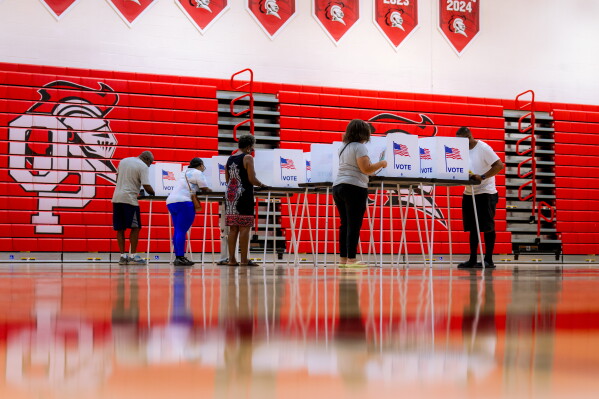
Democratic voters have been turning out in significant numbers for the 2026 primaries, with a noticeable increase observed across several states. This uptick is fueling optimism within the Democratic Party as the November elections approach, where control of Congress is at stake.
In Wisconsin’s recent primary, Democrats cast nearly 800,000 ballots, marking the highest turnout for a midterm election in over 20 years. In Michigan, Democrats set a record with 1.5 million voters participating the week prior. This enthusiasm is not confined to the Midwest; it has also been evident in Texas and Georgia, key states for Senate races in the fall.
“The big news is that Democrats are getting huge turnouts,” said David Axelrod, a former adviser to Democratic President Barack Obama. “That’s been a steady story throughout this period.”
Strong Turnout Patterns and Republican Response
Competitive Democratic primaries are helping to drive voter participation. Meanwhile, Republican turnout remains closer to historical norms in places like Michigan, despite a competitive statewide contest. Republicans are focusing on mounting efforts to energize their base for the general elections, banking on a fundraising advantage and campaigning strategies, including a midterm convention in Texas.
Mike Marinella, spokesperson for the National Republican Congressional Committee, emphasized the significance of general election strategies: “Primary turnout doesn’t win general elections. House Republicans are entering November with the money, momentum, stronger candidates, and a battle-tested operation built to turn out voters when it actually counts.”
Geographic Turnout Trends
The scale of Democratic turnout varies by state, but the overall pattern reflects a broad engagement across key battlegrounds. For instance, in Wisconsin, turnout reached about 22% of registered voters for the Democratic gubernatorial primary. In Michigan’s recent Senate primary, turnout was over 18%, the highest midterm turnout rate since at least 2002.
Such patterns are replicated in states like Minnesota, Georgia, and Texas, highlighting significant Democratic engagement. In Georgia, over 1 million people participated in the Democratic gubernatorial race, exceeding 13% of registered voters. In Texas, the Democratic Senate primary saw 2.3 million voters, totaling over 12% participation.
Challenges of Maintaining Unity
The strong turnout is promising but comes with challenges. Competitive primaries that energize voters can also exacerbate divisions within the party. For instance, Michigan’s Democratic Senate primary drew over $80 million in spending and attention but left some supporters unwilling to back the victorious candidate, Abdul El-Sayed, over representative Haley Stevens. Unity breakfasts were held in Wisconsin and Michigan post-primaries to address such issues.
Senator Bernie Sanders expressed optimism that Democrats would unify for the general elections despite differences: “At the end of the day, when it comes to taking on Trump and creating a Democratic House and a Democratic Senate, there is going to be unity, because I think everybody knows how important that is.”
Prospects Leading to November
Democrats have positive indicators with the midterm enthusiasm and a favorable environment, considering Trump’s low approval ratings amid economic challenges and an unpopular war. However, achieving significant gains demands overcoming electoral map disadvantages, as Republican-controlled states have redrawn districts to ensure Republican predominance.
With Republicans holding a slender majority in the House and controlling the Senate with a slight lead, Democrats need substantial voter mobilization to challenge these structures. According to political analyst Corwin Smidt, “If we have a national tide like we had in 2024, suddenly that opens the map a little more.”
Authors Pamela Jo Martin and Samuel Jens from The Associated Press Election Services team provided insights for this report from Washington.
Leave a Reply