Recently, Democrats have taken control of several key state legislatures and gubernatorial seats. This change opens a chance to challenge the U.S. Electoral College system. The system has influenced at least two presidential contests for the Democrats this century.
To officially end the Electoral College system, a constitutional amendment would be necessary. However, an alternative exists through the National Popular Vote Interstate Compact (NPVIC). This agreement aims to ensure the presidency goes to the candidate who wins the national popular vote.
The National Popular Vote Interstate Compact
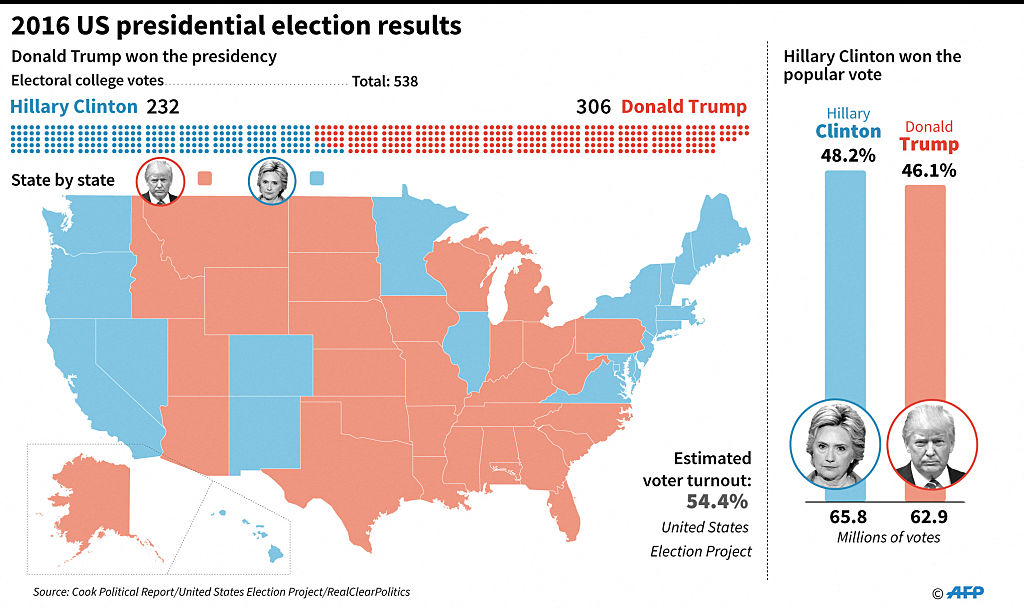
The NPVIC involves states agreeing to pledge their electoral votes to the presidential candidate winning the national popular vote. Currently, most states use a “winner take all” approach. This means all of a state’s electors go to the candidate with the most state votes. This method allows a candidate to win the presidency without securing the national popular vote. This occurred in the 2016 election, where Donald Trump won the Electoral College but lost the popular vote to Hillary Clinton. It also happened in 2000 when George W. Bush lost the popular vote to Al Gore but won the presidency.
The idea for the compact dates back to 2000 after a contentious election. Professors Akhil and Vikram Amar proposed something similar in 2001. The compact was formally created in 2006. Since then, 18 states and Washington D.C. have joined, representing 222 electoral votes. The compact needs a total of 270 electoral votes to activate.
The Impact of Democratic Midterm Wins
In recent elections, Democrats secured trifectas in five key states: Pennsylvania, Michigan, Arizona, Wisconsin, and Nevada. These states hold a combined total of 61 electoral votes. This number could push the compact over the 270-vote threshold. If only four of these states join, including Pennsylvania with its 19 votes and Michigan with 15, the goal could be reached.
Statements from local politicians show varying levels of interest and caution around the pledge due to potential legal battles. Nonetheless, these shifts indicate that a path to nullifying the Electoral College is within reach for Democrats.
Constitutional Challenges
The legality of the NPVIC may face challenges. Lawrence Lessig from Harvard Law School argues it aligns with constitutional provisions allowing states to decide electors. Opponents argue it breaches the Constitution’s compact clause. They claim this clause prevents states from acting in ways that undermine federal supremacy. However, supporters believe it respects state autonomy in elector allocation.
Potential Impact on Elections
If implemented, the compact would make the popular vote the deciding factor in presidential elections. This would change campaign strategies as candidates would focus nationwide rather than targeting swing states.
A shift to a popular vote system could increase campaign costs. Candidates would need to appeal to voters across all states instead of concentrating on traditionally decisive ones.
Akhil Amar highlights both benefits and potential issues. The main advantage is the equality principle of one person, one vote. However, implementation could present challenges since this method has not been tested in practice.
States joining the compact could try to manipulate voting rules to favor specific outcomes. Close elections could cause disputes over recounts, especially in states outside the compact. Member states might also attempt to exit the agreement.
The compact’s partisan nature poses a risk. Without bipartisan support, it could be undermined by political interests. Vikram Amar suggests delaying implementation to reduce partisanship. Over time, successful operation of the compact could foster support for a constitutional amendment to abolish the Electoral College.
Leave a Reply