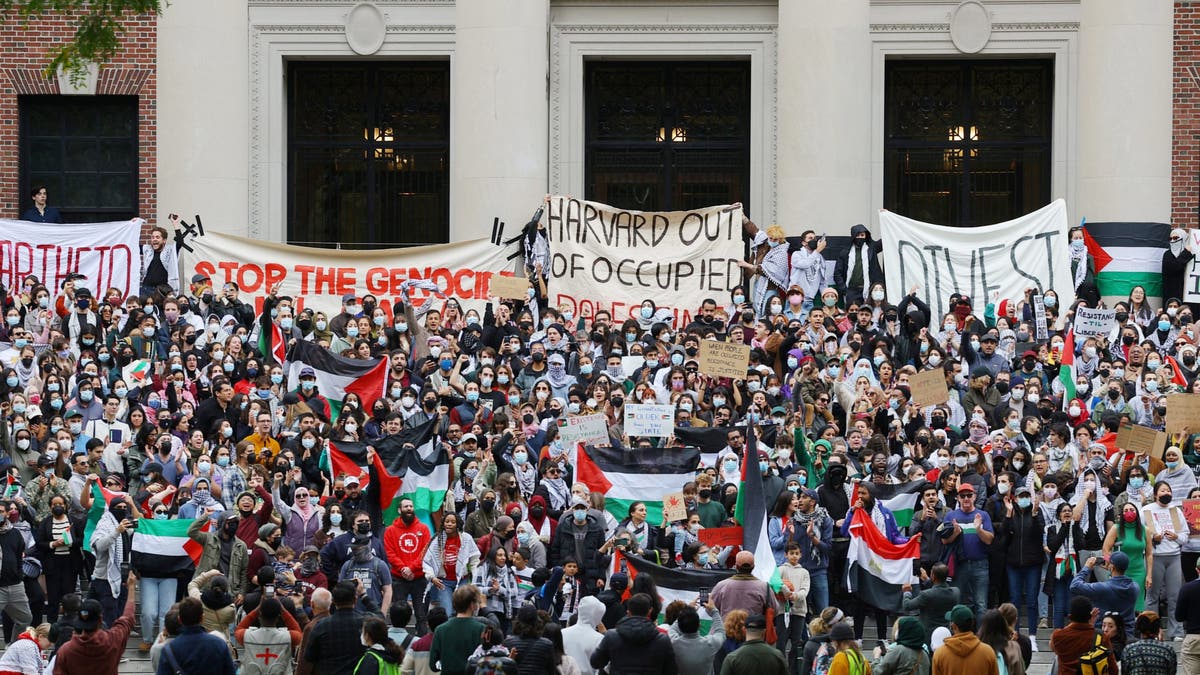
The Department of Justice (DOJ) has taken legal action against UCLA, accusing the university of failing to protect Jewish and Israeli students. The lawsuit follows a 2024 protest at UCLA where agitators reportedly attacked and pepper-sprayed these students. Human rights attorney Brooke Goldstein highlights concerns about the politicization of antisemitism.
Controversies on college campuses contrast sharply with an imagined scenario of a university fully embodying “America First.” Observers question what might be if solidarity with Israeli victims had taken precedence over placing blame during attacks on October 7, 2023. They cite instances such as the Harvard Palestine Solidarity Committee’s reaction, and moments at George Washington University and UNC Chapel Hill where actions appeared to support Palestinian movements at the cost of American or Israeli symbols.
The issue resonates with calls for limiting foreign influences on universities, exemplified by donations shaping educational narratives. Since 1986, foreign sources have funneled $67.6 billion into American universities, with Qatar being a notable contributor at $7.7 billion. This raises questions about the influence of foreign funds, particularly when the donor nation may host groups like Hamas.
Dr. Sheila Nazarian, an Iranian-born physician, reflects on her experiences fleeing Iran and the importance of education focused on national values. She emphasizes the role of universities in fostering patriotic Americans rather than accepting external political influences. She questions the impact of current academic practices and challenges if universities should accept funds from sources linked to groups considered as terrorist organizations.
Secretary of State Marco Rubio has expressed concern, reminding foreign students that their visas are for education, not activism. Former President Donald Trump advocated for stronger enforcement against overstaying visas. These sentiments align with a broader debate on balancing the protection of free speech with maintaining a campus culture incompatible with promoting violence or terror.
Advocates for change envision universities returning to missions that prioritize technological and infrastructural advancements. Such a shift could strengthen America’s leadership globally. Dr. Nazarian underscores the importance of redirecting universities toward producing graduates who contribute positively to American society.
Leave a Reply