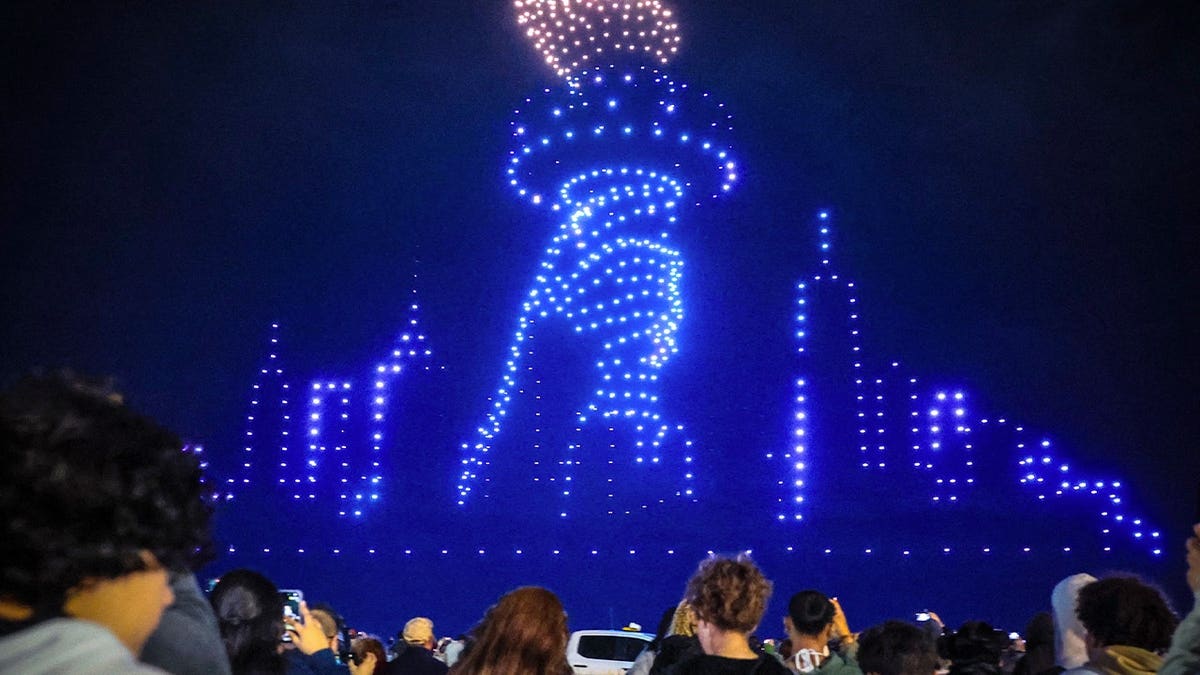
Drone shows are quickly taking the place of fireworks at various events such as concerts, sports games, and Fourth of July celebrations. Many view them as a safer, environmentally friendly option. However, they also bring new challenges in event security, particularly around detecting unauthorized drone activity.
Security Concerns with Drone Shows
Cordell Bennigson, CEO of R2 Wireless U.S. Operations and a retired Marine Corps officer, acknowledges the popularity and accessibility of drones. He stresses that while drone shows are not inherently a security risk, their presence illustrates the accessibility of drone technology, leading to more security challenges.
Bennigson points out how busy the radio frequency (RF) spectrum becomes during these events. This spectrum comprises wireless signals from devices like cellphones and drones. The increased activity can complicate security efforts to detect unauthorized drones amid the legitimate electronic signals.
“Detection is the first line of defense,” Bennigson said. “We need to see through the noise of the electromagnetic spectrum to spot unauthorized activities.”
Challenges and Solutions
Reducing wireless transmissions is not feasible. Bennigson suggests improving detection capabilities as drone technology advances. He likens this to how night vision was developed to see in darkness, emphasizing the need to see within the electromagnetic spectrum.
Artificial intelligence (AI) plays a vital role in this process. AI is adept at processing vast amounts of data quickly, identifying patterns, and detecting anomalies. This capability is essential in environments crowded with transmissions.
Broader Implications and Regulatory Needs
The growing presence of drones is not limited to organized shows. Bennigson highlights the need for enhanced airspace monitoring over stadiums, infrastructure, and larger gatherings at various governmental levels.
The Federal Aviation Administration (FAA) has effective systems for legal drone operations. The challenge arises with those who ignore regulations, requiring systems like radar to identify them. Bennigson warns that while radar detects untransmitted activity, it has limitations; urban use risks signal disruption and may struggle with low-flying drones.
A comprehensive detection approach that does not rely solely on radar is necessary to prevent potential security breaches from unauthorized drones.
This necessity extends beyond technology to policy and regulatory updates needed to deal with the evolving drone landscape.
Rachel Wolf is a media and culture reporter for Fox News Digital.
Leave a Reply