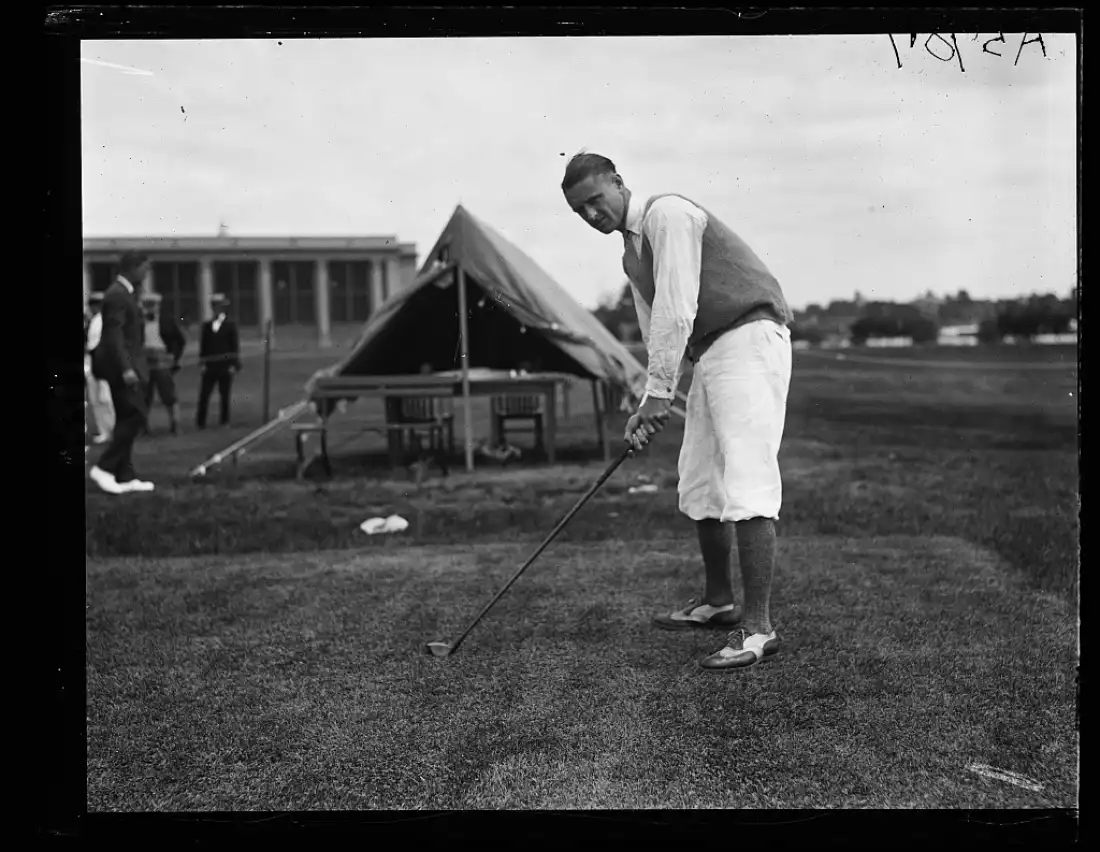
Dick Walsh emerged victorious in a championship tournament at East Potomac Park in 1923. Despite the Trump administration’s plans for closure, runners and cyclists still access the park, but the golf course currently lacks flags marking its holes, affecting its usual players.
Federal Judge Ana Reyes intervened late Saturday with a restraining order to keep the park open for two weeks, counteracting the National Park Service’s plan for indefinite closure. However, the government’s lease with the National Links Trust, operators of the golf course since 2020, expired on Sunday. Judge Reyes did not mandate the continuation of golf operations but indicated possible future consideration.
Reyes wrote in her 30-page order, “Whether and how Defendants do so is solely within their discretion, but Defendants cannot use the absence of golf operations as a reason to exclude the public from the Course.”
She criticized the government’s reasons for closing the park, emphasizing the irreversible harm it would cause local preservationists and golfers who filed a lawsuit to protect the course in February. Protesters rallied against this closure on Sunday.
President Trump criticized the decision on social media, stressing plans to appeal. The White House directed inquiries to Trump’s comments, emphasizing the short 15-day delay the decision causes. The National Park Service and Interior Department did not respond to questions about the course’s future. Trump’s intention to transform the golf course into a championship venue faced criticism from locals due to potential accessibility and affordability issues.
The proposed redesign by architect Tom Fazio would consolidate East Potomac’s three courses into one extensive 18-hole course, eliminating valued features like the perimeter road and grassy picnic areas. Critics argue this change would restrict beginner access and affordability, with current game prices ranging from $17 to $48. The administration has not disclosed planned pricing for the new course, noting that local players will receive discounts.
Judge Reyes pressed the government on why closure was necessary, with officials citing a lack of golf operator and needed repairs to the seawall. Critics argue that there is no substitute for East Potomac Park, despite nearby recreational areas. Reyes, in agreement, noted there is no replacement for the park’s unique attributes.
East Potomac Park has a rich historical significance, originally established on a man-made peninsula dredged from the Potomac River. The park was designated a public recreation area in 1897. The federal government constructed seven golf courses in Washington between 1917 and 1948, reflecting golf’s growing popularity. This number has since decreased to three, with East Potomac remaining highly popular, hosting 125,000 rounds of golf in 2025.
East Potomac holds a significant history of accessibility. It initially allowed Black players access only on a limited basis. A pivotal moment occurred in June 1941 when three Black golfers completed 18 holes despite resistance, leading to racial integration in all national park facilities by 1945. Judge Reyes referenced this historic context throughout the case.
The East Potomac golf course has rarely closed, with exceptions during World War II and after Martin Luther King Jr.’s assassination. The park’s role in offering affordable public golf options continues, but changes are in flux. Critics are concerned about future affordability given the president’s ambitions to create a top-tier global golf attraction in D.C.
Judge Reyes remains cautious given recent actions by the government, such as unauthorized tree removal contradicting court statements. She questions why the National Park Service couldn’t renew the lease with the current operator, which manages two other municipal courses. An inquiry has been ordered into potential government misconduct.
The court is considering whether it has the authority to require the government to continue operating the East Potomac golf course. Oral arguments are requested to explore if maintaining the status quo is legally enforceable.
Leave a Reply