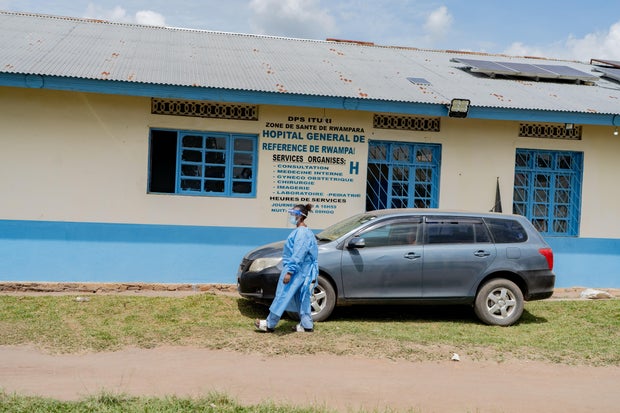
The World Health Organization (WHO) has announced a public health emergency of international concern for the Ebola outbreak in Congo and Uganda. This declaration follows the identification of over 250 suspected cases and 80 deaths linked to Ebola. WHO officials caution that the actual extent of the outbreak might be greater than reported due to the ongoing challenges of screening and contact tracing.
Current Outbreak Situation
As of Saturday, the epicenter in Congo’s Ituri province reported eight lab-confirmed cases, 246 suspected cases, and 80 suspected deaths. Two more lab-confirmed cases, including one death, were noted in Kampala, Uganda. These cases involved individuals who traveled from Congo without apparent links to each other.
The Africa CDC reported 246 suspected cases and 65 deaths in Congo. Regional health officials, however, cite upwards of 300 probable cases overall.
Impact on Local Populations
The outbreak has significantly impacted the residents of Bunia, Ituri’s capital. Citizen Jean Marc Asimwe expressed fears amid frequent burials, stating, “Every day, people are dying.” Congolese Health Minister, Samuel-Roger Kamba, confirmed eight laboratory cases, including four deaths.
The virus identified in this outbreak is the Bundibugyo strain, previously responsible for only two outbreaks—in 2007 in Uganda and in 2012 in Congo. No approved vaccines or treatments exist for this strain. Medical professionals are concerned about containing the spread.
Spread to Uganda
Uganda confirmed an imported Ebola case from Congo, resulting in one death at the Kibuli Muslim Hospital, Kampala. The case underscores the risk of spread due to regional proximity to Sudan. Doctors Without Borders prepared a large-scale response, terming the situation extremely concerning.
Authorities transplanted the deceased’s body back to Congo with no confirmed local cases. Screening at entry points, including Kibuli Muslim Hospital, intensified to curb further spread.
Regional and International Response
Kenya reported a moderate risk of Ebola importation due to regional travel. The government formed an Ebola preparedness team and strengthened surveillance. Meanwhile, challenges such as logistical difficulties in Congo, exacerbated by ongoing conflicts and vast distances, impede outbreak management.
According to WHO’s Dr. Abdi Rahman Mahamud, the outbreak area in Ituri is highly volatile. Efforts are focused in Bunia and areas like Rwampara and Mongwalu. Limited testing at the National Institute of Biomedical Research confirmed positive cases, with logistical hurdles affecting sample analysis.
United States Involvement and Observations
The U.S. CDC characterizes the risk to Americans as low but is actively monitoring the situation. The agency has urged travelers in Congo and Uganda to avoid contact with symptomatic individuals and implemented measures at entry points for monitoring travelers.
Concerns arise due to past administration cuts affecting U.S. international outbreak response capabilities. Dr. Craig Spencer, a U.S. physician who survived Ebola, stressed the U.S. lacks current capacity for rapid global outbreak response. He highlighted changes in USAID as potentially delaying outbreak announcement.
Spencer acknowledged ongoing U.S. capabilities, noting isolation centers prepared for high-consequence pathogens. He expressed that precautionary commitments help manage current and future outbreaks effectively.
Leave a Reply