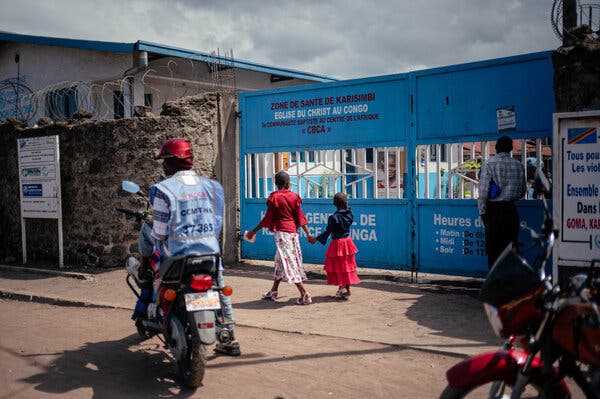
The World Health Organization (WHO) has declared a global health emergency following a deadly Ebola virus outbreak in the Democratic Republic of Congo and Uganda. Approximately 80 individuals have died from the virus in Congo, prompting this urgent action.
The Centers for Disease Control and Prevention (CDC) reported over 330 suspected cases of Ebola in Congo as of Sunday. These include nearly 90 fatalities. The initial cases appeared in the northeastern Ituri Province of the country. Laboratory testing has confirmed that only 10 cases are definitively linked to the virus, with two cases verified in Uganda as well.
On Saturday, WHO described the outbreak as a “public health emergency of international concern.” This classification has mobilized resources and international attention to control the spread and impact of the virus.
The CDC mentioned efforts to withdraw a small number of American citizens affected directly by this outbreak.
The Ebola virus type responsible for the current outbreak is known as Bundibugyo. This strain is particularly challenging to manage due to its rarity, limited field tests, and the absence of a specific vaccine or treatment.
Understanding Ebola
Ebola is a severe illness caused by viruses classified under orthoebolaviruses. It was first identified in 1976 in areas now known as South Sudan and the Democratic Republic of Congo, near the Ebola River. The Zaire Ebola virus is the most prevalent species and often associated with significant outbreaks.
Leave a Reply