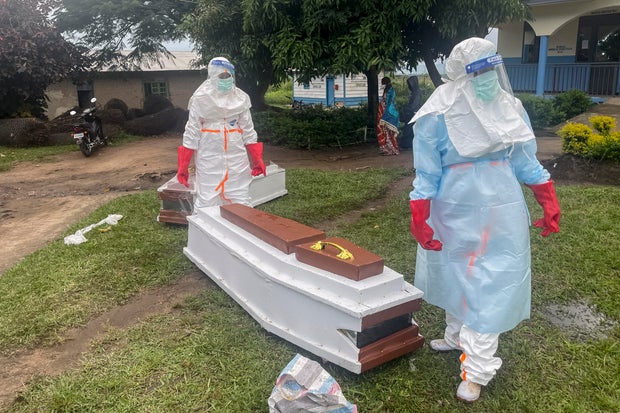
The World Health Organization (WHO) has raised concerns about the rapid spread of the Ebola outbreak in the Democratic Republic of Congo. The outbreak now presents a ‘very high’ risk at the national level, according to WHO Director-General Tedros Adhanom Ghebreyesus. Despite the heightened national threat, the risk remains lower outside the country.
In northeastern Congo, authorities have responded by banning funeral wakes and gatherings of more than 50 people. Funeral processes must adhere strictly to health protocols, with journalists required to obtain permits to report on the outbreak, posing challenges to their work. Nearly 750 suspected cases of Ebola have been identified, with 177 suspected deaths, highlighting the virus’s extensive reach.
The situation in neighboring Uganda remains stable, with two confirmed cases stemming from visits to Congo, resulting in one death. Health officials face significant obstacles due to misinformation and cultural clashes over medical procedures and burial rites.
‘The Ebola outbreak in the Democratic Republic of the Congo is spreading rapidly,’ Ghebreyesus said. ‘We are now revising our risk assessment to very high at the national level.’
In Rwampara, an Ebola treatment center was set ablaze by locals. These locals were frustrated by the restrictions on retrieving the body of a local man who died of Ebola. This incident showcases the tensions between health protocols and local customs, especially burial rites. Bodies of people who have died from Ebola can still spread the virus if improperly handled, necessitating controlled burials by authorities. However, these measures often provoke protests from the deceased’s families and communities.
Jean Claude Mukendi, a local security officer, explained that youth misunderstood Ebola burial protocols. Hama Amadou of ALIMA confirmed that calm has been restored since the incident, allowing aid teams to resume operations.
The situation is further complicated by armed conflicts in the region. Congo struggles with weak health infrastructure, exacerbated by international aid cuts and widespread displacement. Over 920,000 people are internally displaced in Ituri Province. This weak infrastructure makes early detection and containment of the virus difficult.
Efforts to secure a vaccine are ongoing, but a suitable vaccine for the Bundibugyo strain will not be ready for at least six to nine months. Health workers urgently require more resources and personnel to manage the outbreak.
Ebola transmission occurs through contact with infected bodily fluids, and its symptoms include fever, diarrhea, vomiting, and muscle pain, with potential bleeding internally and externally. The outbreak began in late April, undetected for weeks as health authorities initially tested for a different strain of Ebola.
In response to the outbreak, various countries have enacted travel restrictions. The U.S. has restricted travelers from Congo, Uganda, and South Sudan, requiring U.S. citizens and residents from these areas to undergo screening upon entry.
The Ebola outbreak has also affected international events. The India-Africa Forum Summit in New Delhi is postponed due to the outbreak. Additionally, Congo’s soccer team canceled World Cup preparatory activities.
Leave a Reply