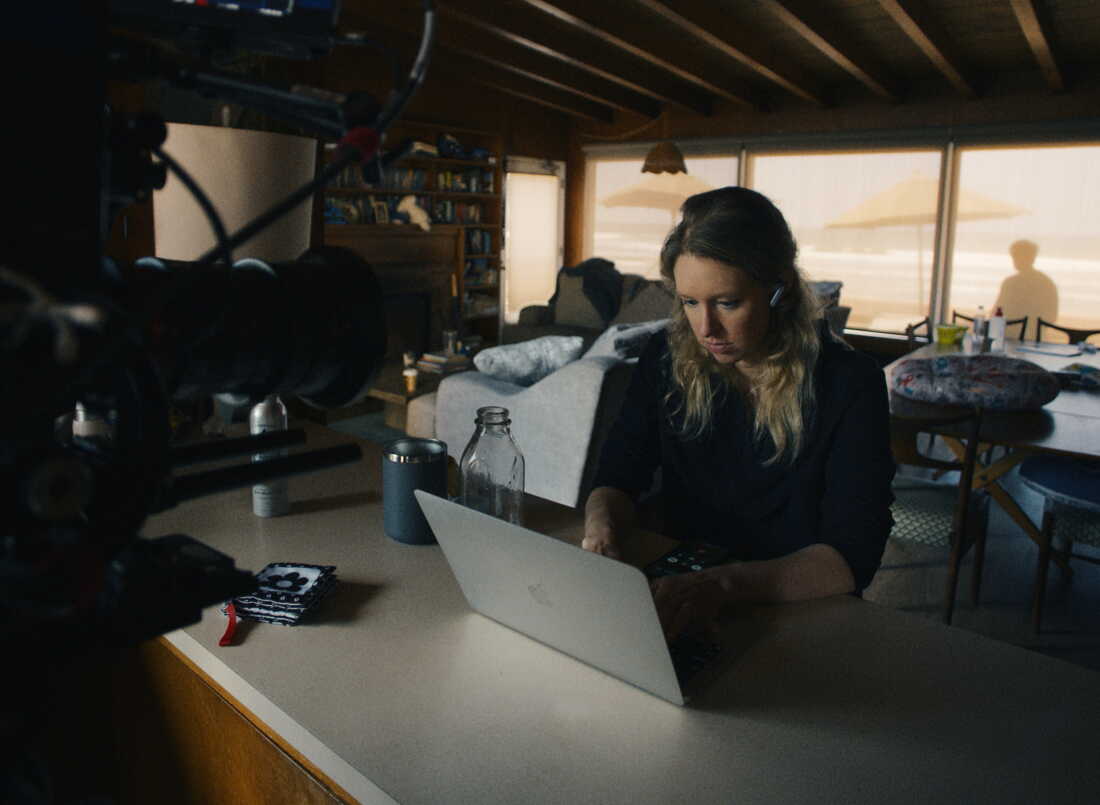
Elizabeth Holmes once held the title of the youngest self-made billionaire in the U.S. Her downfall was both swift and public. The documentary You Can See Everything, which premiered at the Telluride Film Festival, offers a fresh look at her story. Lasting nearly three hours, the film provides a unique viewing experience.
The film doesn’t retread old ground. In 2014, Holmes announced a healthcare breakthrough with her company, Theranos. However, journalists later revealed the technology as fraudulent. In 2022, Holmes faced conviction for four counts of fraud, resulting in a sentence exceeding 11 years in prison. Her story has been recounted in Alex Gibney’s The Inventor and the miniseries The Dropout. Yet, You Can See Everything takes a different, deeper approach.
As the movie starts in 2023, Nathan Fielder, known for his docu-comedy series, arrives with co-director Lance Oppenheim to film Holmes before her prison term begins. They visit her at her San Diego beach house, where she resides with partner Billy Evans and their two young children.
The film’s title reflects Holmes’ agreement to allow full access. However, the real question remains: Why did she agree? It seems she might want to reshape her image as a devoted mother and partner. The choice to work with Fielder, known for his awkward comedic style, adds an intriguing dynamic.
Fielder’s interviews with Holmes attempt to unravel her evasions and contradictions. The film captures her in intense close-ups, suggesting a search for truth in her expressive blue eyes. Both Fielder and Holmes manipulate situations, but their methods differ. Fielder creates elaborate scenarios to uncover truths. Holmes appears to oscillate between self-delusion and deceit. She claims she’s never lied, which she seems to sincerely believe.
Fielder’s exploration into Holmes’ mindset includes surprising elements. He demonstrates her tendency for semantics by showing her the “Who’s on First?” routine by Abbott and Costello. This exposes her limited grasp of humor and perhaps reality. Another scene has Holmes reacting uncomfortably to The Dropout, bringing her face to face with her past actions.
The documentary’s focus shifts as Holmes departs for prison. Evans, previously portrayed as opportunistic, gains prominence. The film questions whether Holmes, a known scammer, might be getting deceived herself. New developments in the narrative present unforeseen paths.
Fielder’s self-awareness throughout the film contrasts with traditional documentaries. He questions his role, offering more honesty than usual fly-on-the-wall approaches. Co-director Oppenheim contributes significantly, leveraging his formal control seen in his works like Primetime and Some Kind of Heaven.
You Can See Everything is best appreciated on a large screen with an audience. The film’s visuals are sharp, yet each frame holds enigmatic elements, making it a compelling viewing choice.
Leave a Reply