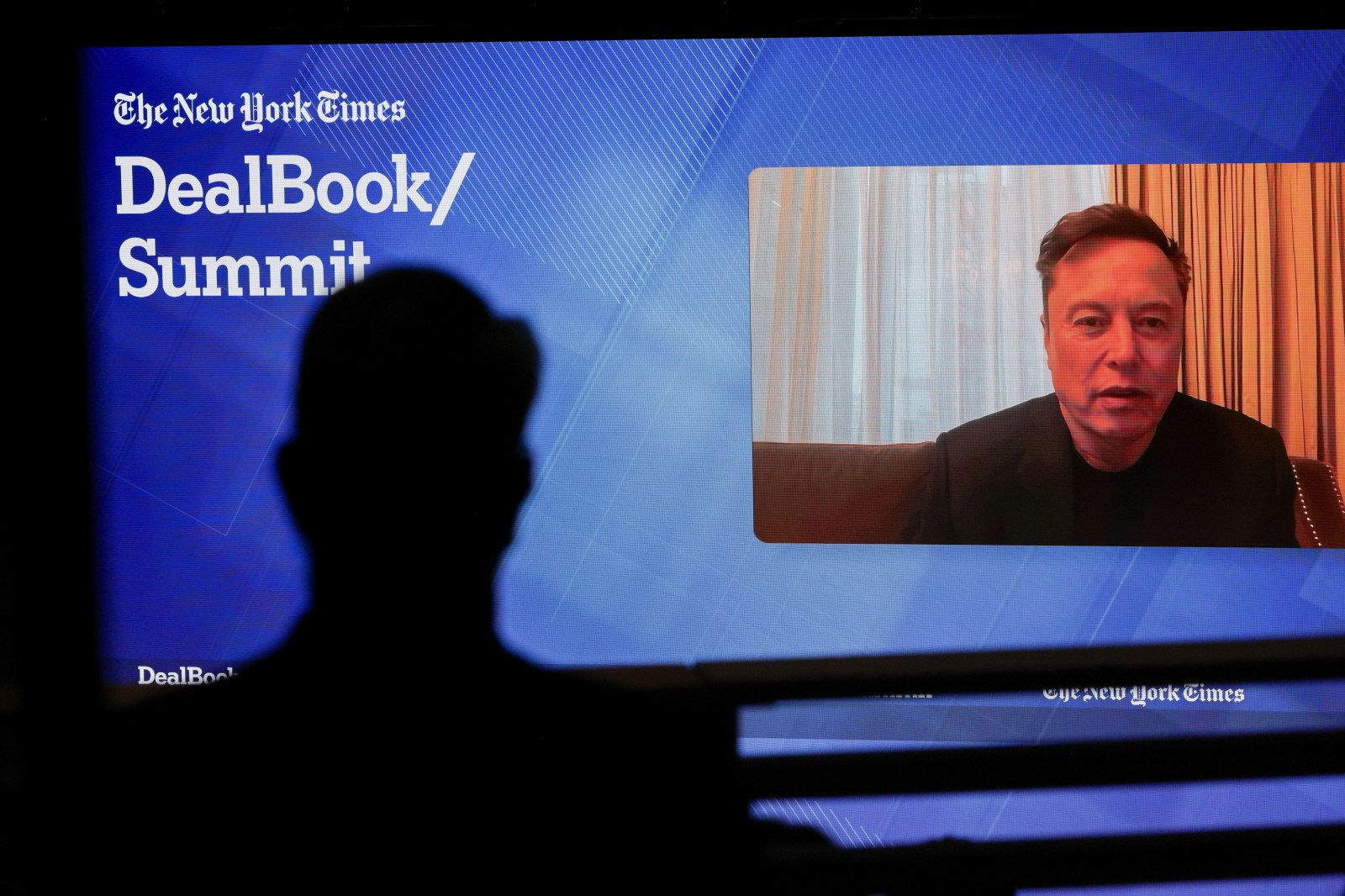
Elon Musk, the CEO of Tesla and SpaceX, expressed feelings of regret over spending hundreds of millions of dollars on the midterm elections with minimal results. At The New York Times’ 2026 DealBook Summit, Musk stated, “I’m not MAGA. I’m not sure what MAGA means entirely, but if it signifies blind adherence to Republican policies, I certainly don’t have that.” He acknowledged the substantial losses suffered by the Republican Party in the elections and expressed his remorse over the financial expenditure with limited outcomes. “The Republicans were routed, and the money I spent seems wasted. But perhaps things would have been worse without it,” Musk commented.
An earlier report by The Times estimated Musk’s election spending to have reached nearly $475 million, which Newsweek confirmed independently. Other media sources also noted the hefty expenditure, exceeding $400 million.
The midterm elections concluded with significant setbacks for Republicans, who lost control of both the House and the Senate. Former President Donald Trump attempted to distance himself from these outcomes, claiming that if he had been on the ballot, a landslide victory would have ensued.
In a conversation with Andrew Ross Sorkin, a Times columnist and editor, Musk articulated his motivations during the election cycle, emphasizing his desire to prevent a Democratic supermajority in the government. He stated, “I’m not in favor of a Republican supermajority either,” advocating for equitable governance through checks and balances. “I see myself as moderate, not extreme in political views,” Musk added.
Sorkin noted Musk’s immigration views and MAGA ties, saying, “Some might find MAGA and certain immigration stances extreme.” Musk maintained, “You can’t broadly label me as MAGA.”
Political scientists weighed in on Musk’s statements. Grant Davis Reeher from Syracuse University suggested Musk’s current popularity could impact perceptions of Republican backing negatively. At the same time, Stephen Voss from the University of Kentucky remarked on the shrinking financial base for Republican campaigns, which now rely more heavily on financial figures like Musk.
Musk discussed Texas Democratic Governor-elect Gina Hinojosa, describing her as “quite moderate” and expressed confidence in Texas’s political future. He remarked on the limited effect of monetary influence in elections, saying, “Elections are more than just funding; substantial spending might still result in minimal impact.” Musk had earlier spoken out on social media, advocating for a Republican-controlled Senate.
In a pre-election post, Musk warned of a possible 2028 Democratic sweep, which he suggested could lead to the “end of democracy.” He mentioned concerns about potential Democratic initiatives, including statehood for Puerto Rico and the District of Columbia, potential legalizations affecting immigration, and increasing the size of the Supreme Court. Musk concluded that these measures could transform the U.S. into a permanent one-party state, urging support for 51 Republican senators to prevent such outcomes.
This story was produced with assistance from Martyn, Newsweek’s AI assistant.
Leave a Reply