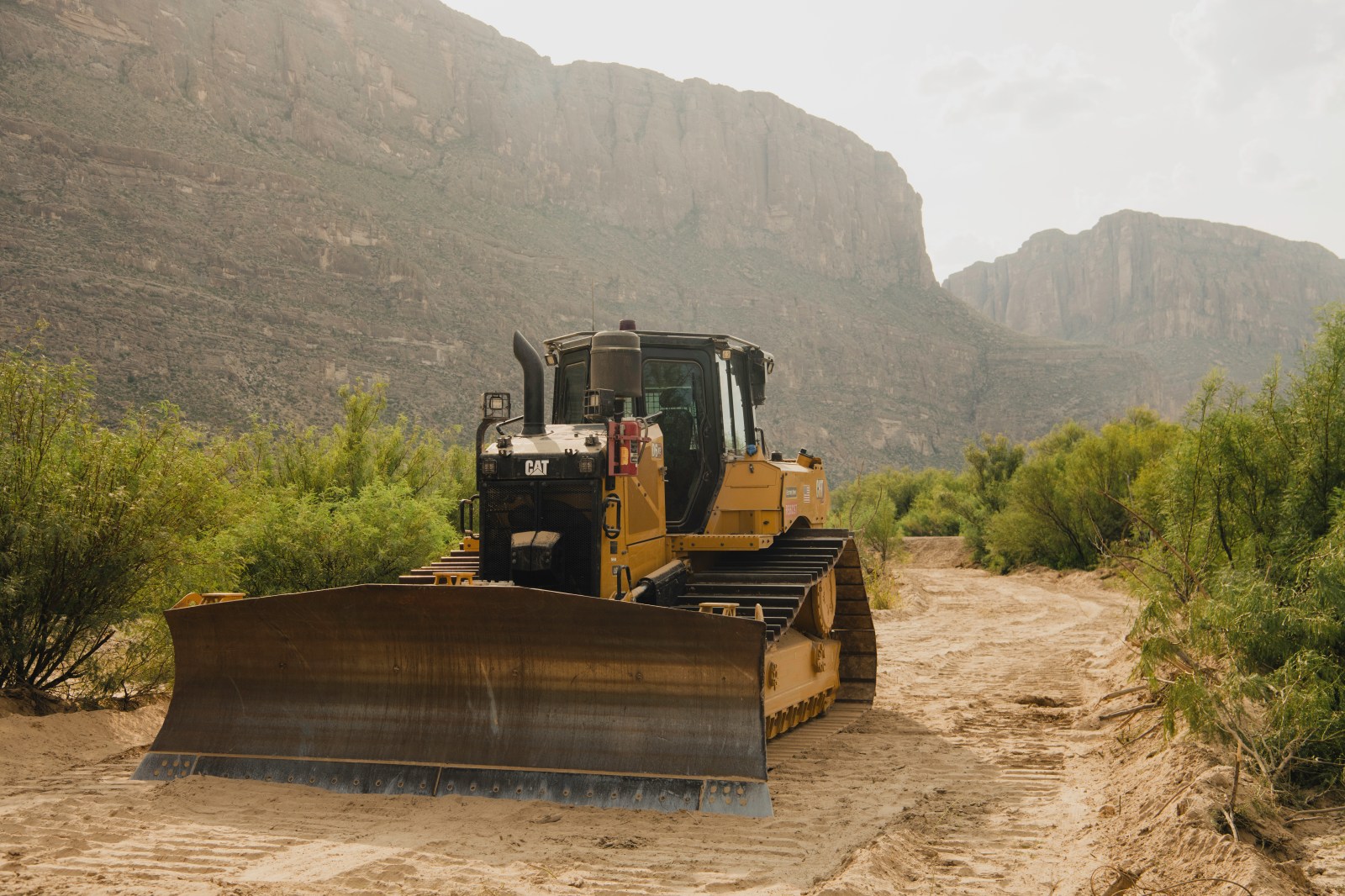
The Trump administration’s planned border wall in Texas may require blasting through Mariscal Mountain, located in Big Bend National Park. This decision has sparked opposition from environmental groups and lawmakers.
Proposed Route and Construction Concerns
U.S. Customs and Border Protection’s (CBP) Smart Wall map shows a patrol road crossing the mountain near Mariscal Canyon and the Rio Grande. Detailed engineering plans have not been released, but constructing the road likely involves blasting and bulldozing.
Sheriff Thaddeus Cleveland criticized the necessity of the proposed road. He mentioned that crossing the rugged terrain would require a 110-mile walk for potential illegal crossers.
Cleveland emphasized the impracticality of the road. He described the area as an unlikely crossing point with little operational benefit.
Bipartisan Opposition and Environmental Impacts
The project has faced opposition from various Texas stakeholders, including local officials, environmentalists, and former National Park Service leaders. The planned roads and barriers threaten sensitive habitats and the local recreation economy.
The Center for Biological Diversity highlighted the potential need for “extensive dynamite blasting” of Mariscal Mountain. Laiken Jordahl, an advocate with the center, criticized the project’s environmental impact.
A group of House Democrats urged the administration to pause the project until detailed plans and environmental assessments are finalized. They expressed concern over potential treaty violations with Mexico and environmental damage.
Impact on Wildlife and Habitat
Environmental groups worry that the construction will disrupt wildlife habitats and damage ecosystems. Mariscal Mountain is known for its limestone ridge, crucial for vulnerable species like the peregrine falcon.
Raymond Skiles, a former wildlife biologist, noted that construction could threaten important nesting sites for the falcons. He described Mariscal Canyon as a densely populated nesting area.
Administration’s Justification for the Project
The Department of Homeland Security (DHS) and CBP argue that the project is essential for enhancing security across the Big Bend Sector. They cited over 89,000 migrant encounters and other border enforcement activities.
Unlawful crossings in the sector have declined significantly. In June 2026, Border Patrol reported 148 migrant encounters, down from 412 in June 2023.
Questions remain about the final design and environmental impact of the project. Lawmakers have called for a halt to the work until these issues are addressed.
Leave a Reply