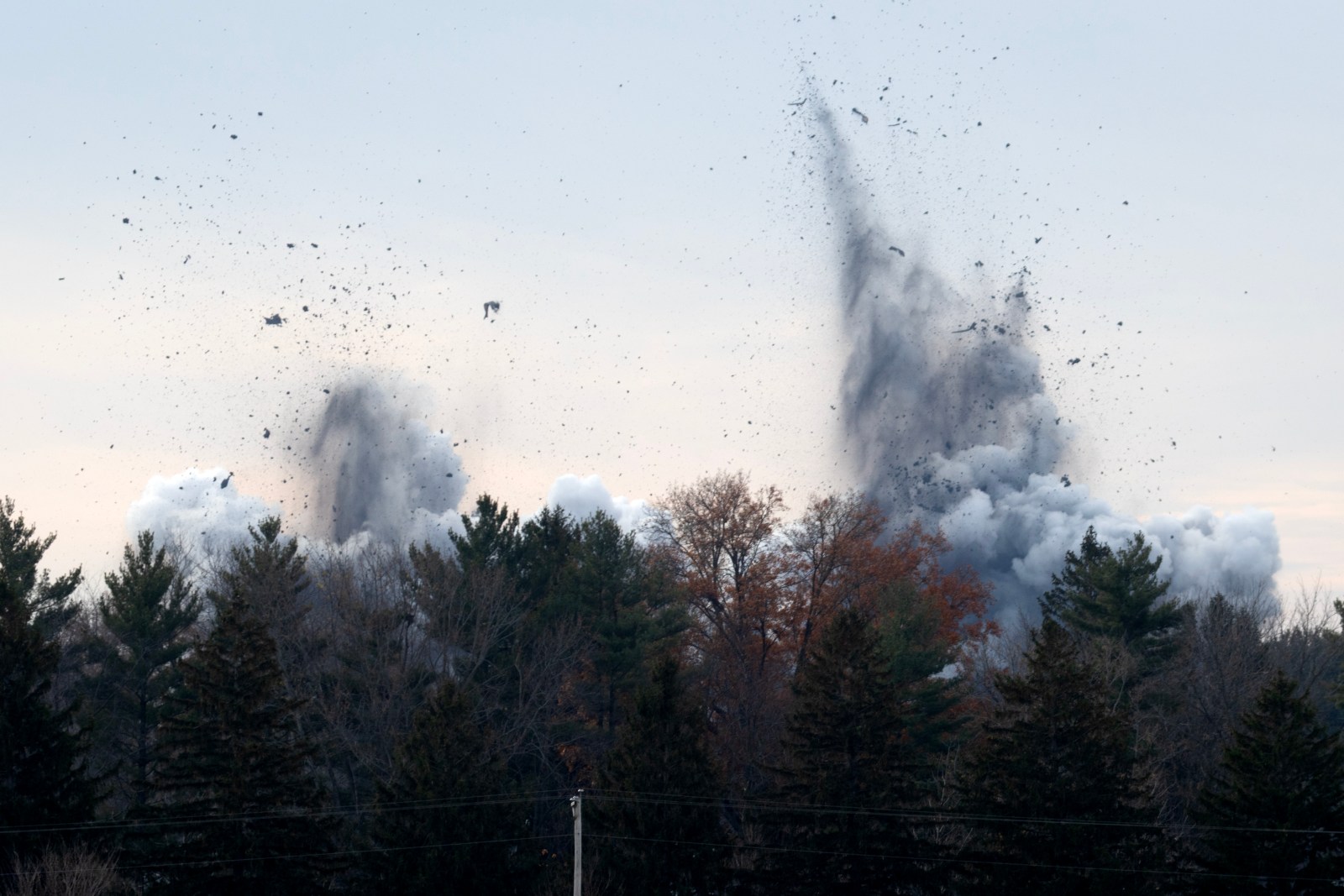
Preliminary test results from water sampling conducted after the U.S. Army detonated all of the nation’s lead azide stockpile in Iowa show no increase in lead levels. The U.S. Environmental Protection Agency (EPA) confirmed this result in a statement on Saturday. “EPA found no lead in the 38 water samples taken post-detonation at public water supplies, which included both treated drinking water and untreated intake water,” the agency reported.
Lead is a hazardous heavy metal, particularly to children and pregnant women. The EPA stated they previously sampled 35 drinking water sources across Iowa, Illinois, and Missouri to establish a baseline before the detonation. Additionally, Xact air monitoring systems detected no airborne lead in the region since the event on Wednesday.
The Army detonated five tons of lead azide stored for nearly two decades at the Iowa Army Ammunition Plant in Middletown. Lead azide acts as a primary explosive in various applications. Officials noted this action was necessary due to the risk of uncontrolled explosions as temperatures cooled. Legal challenges had arisen from environmentalists concerned about potential health and environmental impacts.
Newsweek has reached out to the EPA for further comment.
EPA Administrator Praises Outcome
On Friday, EPA Administrator Lee Zeldin called the detonation outcome a “best-case scenario.” He noted all evidence supports this favorable result. President Donald Trump praised the Army’s efforts on Truth Social, highlighting that mitigation efforts exceeded expectations. Vice President JD Vance commended White House Chief of Staff Stephen Miller and the administration for effective decision-making during the operation. Iowa Governor Kim Reynolds also expressed gratitude to Army officials and the Trump Administration for their coordinated response.
Various precautions were taken to minimize risks. The Army installed barriers around the bunkers. Ballistic gels and foams were employed to contain lead dust. Thousands of gallons of water were sprayed on the site post-explosion.
Concerns and Criticisms
Democrats criticized the Trump administration’s handling of public health and safety concerns. House Minority Leader Hakeem Jeffries mentioned possible impacts on multiple states, displacement of residents, and long-term community health effects.
Extensive EPA Sampling Operations
The EPA detailed its comprehensive sampling efforts in a news release. The agency collected 1,632 samples of air, water, soil, and dust before the detonation and 1,607 samples afterward. These were analyzed across various labs. The EPA sampled 187 structures pre and post-detonation, including public parks, schools, daycare centers, and churches. Data collection extended to farms, drinking water systems, and across the Mississippi watershed.
Some sampling teams faced access issues at private properties, as residents were not available. These efforts indicate the EPA’s commitment to ensuring community safety.
Leave a Reply