After assessing soil at approximately 1% of residences affected by the Eaton Fire, the U.S. Environmental Protection Agency (EPA) informed locals that most sites cleared by the U.S. Army Corps of Engineers do not have dangerous lead levels. However, some external scientists disagree.
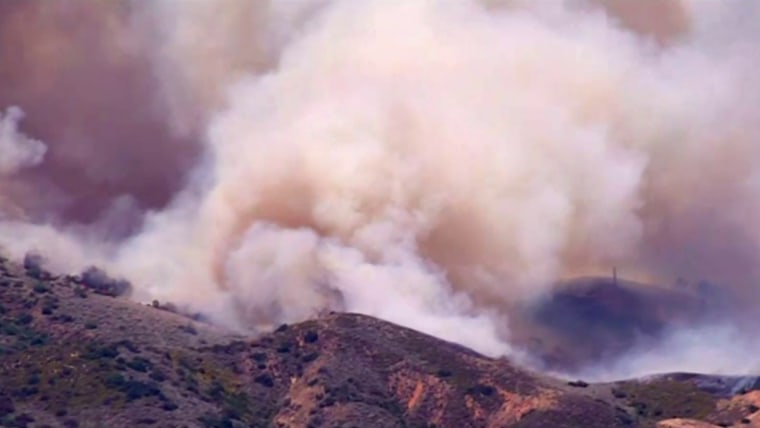
The Eaton Fire, which decimated 9,400 homes in Altadena in January 2025, released smoke laden with lead, arsenic, and asbestos. These elements settled in the surroundings. Of these contaminants, lead poses significant neurodevelopmental risks to children.
An EPA evaluation of 100 randomly chosen homes within the cleanup area revealed that five properties exceeded federal lead screening thresholds. Moreover, seventeen properties surpassed California’s stricter regulations. The overall average lead concentration was notably below state and national concern levels.
Michael Montgomery, the head of the EPA Region 9 Superfund and Emergency Management Division, stated, “Residents should feel reassured that the Army Corps addressed fire-related contaminants, particularly lead, adequately.” He emphasized that their results broadly apply to the affected zone.
“We can say with 95% confidence that the homes that were addressed, or that burn areas that were addressed in Altadena and Pasadena, were below both the California and the federal screening level,” Montgomery added.
Contamination fears have taken root in Altadena, characterized by older homes where lead usage in paint and plumbing was common. Though the Army Corps cleared debris from about two-thirds of burned sites, they did not conduct pre- and post-cleanup soil testing, leading to resident unease.
Given that soil testing wasn’t obligatory, local authorities and private entities began independent tests, yielding varied findings. Purdue University’s Andrew Whelton criticized the EPA’s analysis method. He argued it reflects average risks but fails to identify dangerous zones.
“The results they have are not representative of the Eaton Fire area,” Whelton commented. “They were collected in a way that cannot be compared to existing data other organizations are collecting or to what Californians or California businesses have come to expect for property safety.”
The Army Corps’ debris removal, including scraping up to six inches of soil, has faced scrutiny. Whistleblowers revealed to NBC News that the operation was inconsistent and hastily executed.
Montgomery explained that the Federal Emergency Management Agency prompted the EPA’s soil examination in response to concerns from officials and residents. This kind of assessment was unprecedented for wildfires, he noted.
The EPA sampled soil at two depths, collecting it from 30 locations on properties designated for debris cleanup by the Army Corps. The soil was combined into two samples per location, both at the surface and six inches below it.
Surface soil demonstrated a median lead concentration of 31 mg/kg, significantly below the safety levels set by California (80 mg/kg) and the EPA (200 mg/kg). However, subsurface soil showed a median level of 43 mg/kg. Alarmingly, five surface samples surpassed federal standards, with one reaching 705 mg/kg.
Whelton criticized the sample pooling strategy, arguing it could mask specific contamination hotspots. He stressed the potential for certain property sections to have significant lead levels, even if overall results appear acceptable.
“We know, based on prior experiences in California, that hot spots are real after debris removal — where contractors fail to remove ash and debris,” Whelton stated. “Even individuals that pass this individual testing may have lead levels that exceed lead levels on parts of their property, but this testing wasn’t designed to figure that out.”
Highlighting the highest concentration property, which had an average lead level of 705 mg/kg, Whelton emphasized the gravity of the findings. He noted that lead concentrations above 1,000 mg/kg denote hazardous waste.
“That means the entire property came back hot,” Whelton remarked. “There were likely portions of that property much higher.”
Leave a Reply