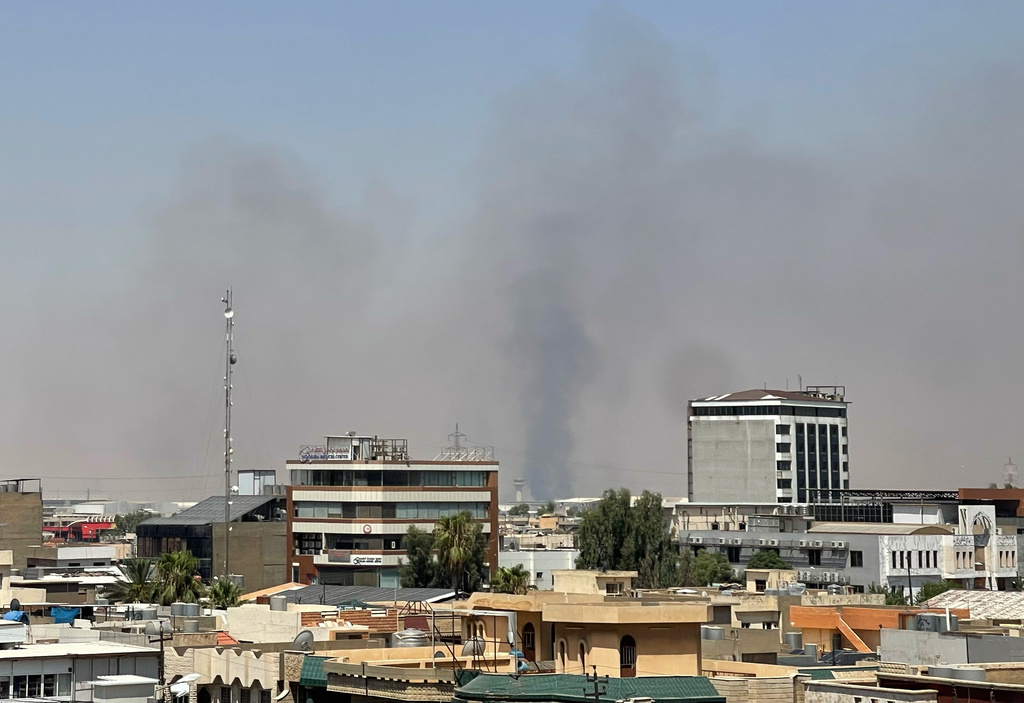
Black smoke rose following explosions near a military base hosting U.S. forces in Irbil, Iraq, on July 24, 2026. These incidents have reignited discussions among unnamed Republican lawmakers and foreign-policy analysts regarding President Trump’s approach toward ending the conflict with Iran. The proposition gaining attention suggests declaring victory and halting hostilities, despite the unresolved central aim of eliminating Iran’s nuclear capabilities.
The concept reflects a recurring pattern of four previous attempts at declaring victory, none of which succeeded in achieving lasting peace. On March 24, Trump announced Iran’s defeat, asserting the war was won, yet hostilities persisted. During an April 1 speech, he communicated progress towards fulfilling military objectives, including dismantling the Islamic Revolutionary Guard Corps and reopening the Strait of Hormuz, followed by Iranian missile strikes on Israel.
A ceasefire claimed as victory quickly disintegrated after April 7. Trump’s 80th birthday post on June 15 proclaimed a completed deal with Iran, promising security and Hormuz’s reopening, yet subsequent strikes undercut these assurances. After the funeral of Iran’s Supreme Leader, Ali Khamenei, on July 6, Trump signaled continued resolve, foreshadowing further joint U.S.-Saudi military actions due to Iranian hostility.
Repeated declarations highlight structural flaws, as the administration shifts focus between goals to redefine victory. These have included preventing an Iranian nuclear weapon, reopening Hormuz, dismantling missile programs, and neutralizing proxy networks. However, evolving objectives hamper clear policy direction and contribute to ambiguity in claiming tactical achievements.
This fifth declaration of victory diverges from actual peace-making, aiming to redefine success by lowering expectations rather than achieving the intended objectives. The unresolved nuclear issue remains central. Congressional scrutiny should prioritize identifying conditions under which a fifth declaration would sustainably conclude the conflict, ensuring accountability within the administration before pursuing further pronouncements.
Charbel A. Antoun, a Washington-based journalist, specializes in U.S. foreign policy, with a focus on the Middle East and North Africa.
Leave a Reply