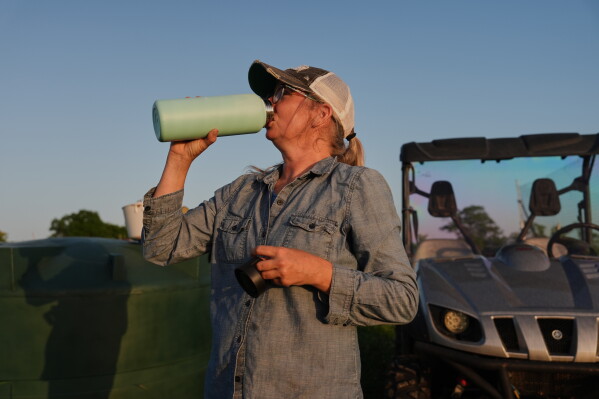
In Brooksville, Kentucky, the evening heat persisted as Annie Woods returned to harvest squash and zucchini on her 50-acre farm. Prolonged intense heat is now part of a climate change pattern causing extreme weather, including floods and droughts. For farmers, this results in shorter planting windows and potential crop losses due to early heat followed by freeze conditions.
Woods observed, “These heat waves aren’t going away.” Recent heat domes have affected specialty crop farmers who lack the safety nets available to traditional crop farmers. Adjusting harvest schedules is one way these farmers adapt, but it’s not enough.
Heat domes create dangerous conditions for farmworkers, as Melissa Widhalm from the Midwest Regional Climate Center noted. Woods avoids peak heat by working mornings and evenings, staying hydrated, and using tents to create shade. The heat influences both crop quality and harvest timing.
Woods grows vegetables and herbs for local restaurants and a community agriculture program. She faces concerns about her seedlings’ health in the heat. To protect them, she uses an enclosed cabinet and a fan-cooled greenhouse to moderate temperatures and ensure survival.
Paul Rasch in central Iowa has experienced similar effects, needing to harvest raspberries more quickly as heat shortens the harvest window. His crew of eight starts as early as 6 a.m. to avoid dangerous heat. Rasch employs air conditioning and shades to create cooler environments for workers and visitors, while testing high tunnels for climate control.
Heat events are becoming more frequent and intense, impacting crops. Farmers, such as Rasch, note these patterns with concern, as typical seasons become rare.
Crop diversity offers some protection for smaller farms like Woods’ and Rasch’s. They plant various crops to minimize losses. However, specialty crop insurance differs from commodity insurance, leaving farmers more vulnerable. Woods, also involved with the Organic Association of Kentucky, finds insurance access difficult due to her farm’s varied crops.
Federal programs are not designed for mixed crops on small farms. Duncan Orlander from the National Sustainable Agriculture Coalition highlights the complexity and limited use of revenue-based policies. Orlander stated, “We need to rethink risk mitigation and loss coverage.”
For Woods, her agriculture program provides a buffer against crop failures. Customers support the farm regardless of specific yields. This strategy, alongside crop diversity, helps her manage the impact of extreme weather. “Planning and resilience are key to facing these events,” Woods said.
Photo credits: Joshua A. Bickel
Leave a Reply