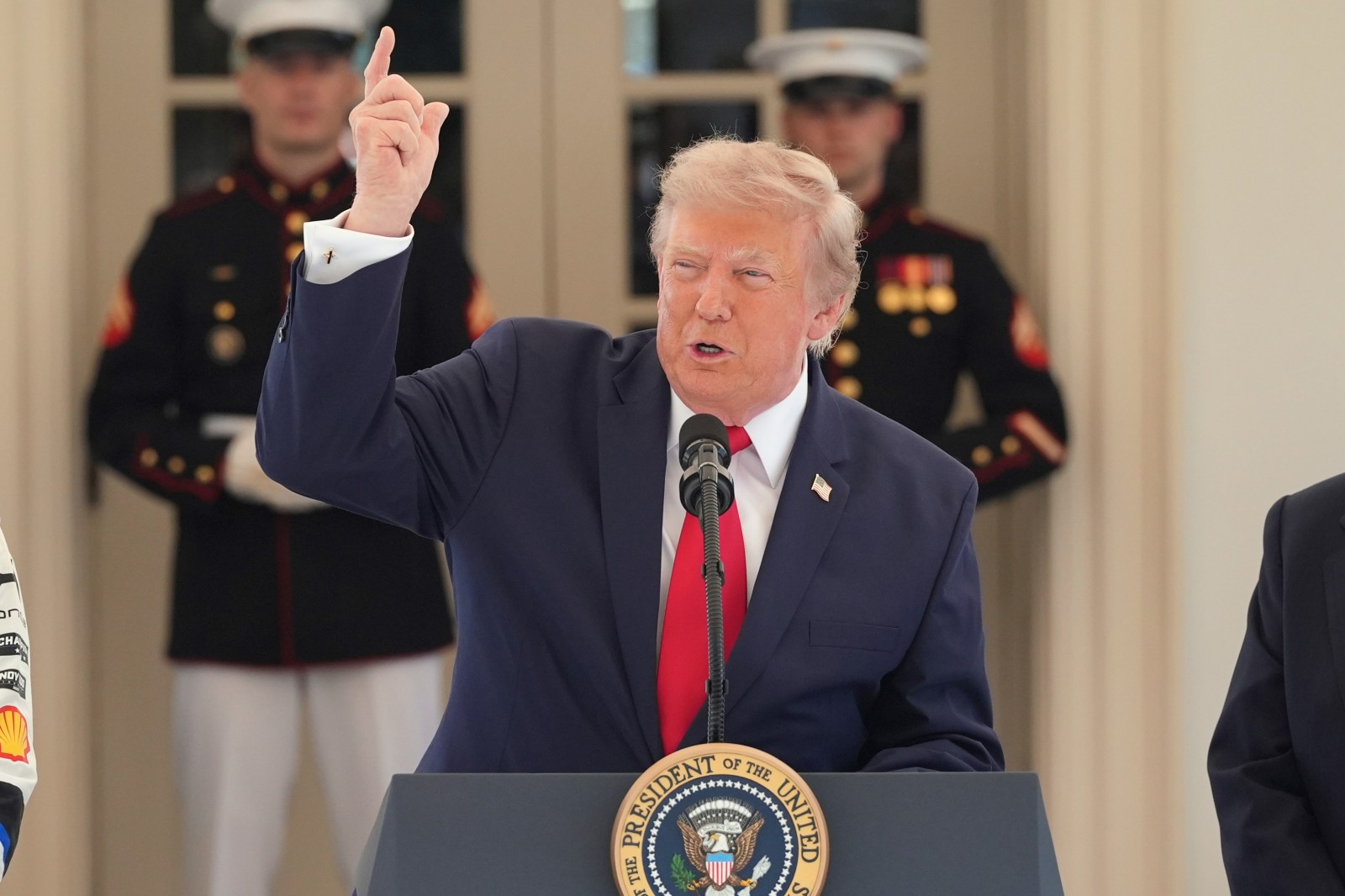
The Trump administration faced another legal defeat as efforts to access sensitive voter registration records hit a hurdle. U.S. District Judge Thomas E. Johnston dismissed the Justice Department’s lawsuit against West Virginia Secretary of State Kris Warner. Johnston, appointed by President George W. Bush in 2006, highlighted ‘factual deficiencies’ in the government’s arguments.
Legal Argument’s Weaknesses
The government sought West Virginia’s unredacted voter registration list, claiming a need under the Civil Rights Act of 1960. However, Johnston identified a lack of statutory ‘basis’ required for such a request. This decision adds to a series of losses for the administration’s initiative, which aims to secure voter data nationwide. This effort has faced pushback from election officials and privacy advocates who question the federal government’s authority in this matter.
Johnston noted his ruling is consistent with other federal court decisions. To date, eleven district courts and one court of appeals have dismissed similar lawsuits filed by the Justice Department.
Reasons Behind the Decision
The central question was whether the Attorney General’s demand included a statement of the ‘basis’ and the ‘purpose’ as per statutory requirements.
Johnston critiqued the request for lacking the necessary factual basis. The Justice Department’s letter merely claimed legal authority and expressed an intention to assess compliance with federal laws, namely the National Voter Registration Act and the Help America Vote Act. Yet, it provided no evidence suggesting noncompliance by West Virginia.
The demand did not mention any anomalies in voter registration data or suspicion of violations. Where ‘purpose’ was frequently mentioned, ‘basis’ or equivalent justification was missing.
Implications of ‘Factual Deficiencies’
The opinion rejected the view that courts should have a limited role in reviewing requests under the Civil Rights Act. Johnston argued for applying ordinary federal pleading standards, requiring a factual underpinning for claims. He insisted that allegations must be ‘plausible’ with sufficient factual support, rather than relying on bare assertions.
Johnston emphasized the lack of factual support in the government’s request, determining that this deficiency negated the need to address West Virginia’s privacy law concerns.
Widespread Legal Setbacks
Johnston’s decision reflects a pattern across the U.S., where similar lawsuits by the Justice Department have been dismissed. Courts in Pennsylvania, Maryland, Wisconsin, Maine, Arizona, Rhode Island, Massachusetts, Oregon, California, and Michigan, as well as the U.S. Court of Appeals for the Sixth Circuit, have all decided against such requests. ‘No court has ruled in favor of the United States to date,’ Johnston noted.
About Thomas E. Johnston
Thomas E. Johnston has served as a judge in the Northern District of West Virginia since 2006. Prior to his judicial appointment, he was the U.S. Attorney for the Southern District of West Virginia. Johnston, with a background in private practice and diverse case experience, is seen as a conservative judge. His recent ruling demonstrates how federal judges maintain independence and scrutiny, regardless of political affiliations or executive branch pressures.
Leave a Reply