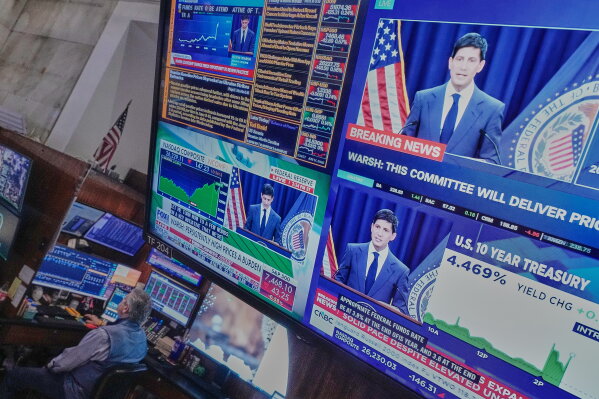
The Federal Reserve has shifted towards transparency over the years, moving from a secretive government entity to an institution willing to share information. However, new chair Kevin Warsh is changing this approach. Warsh, like many economists, believes financial markets rely too heavily on Fed guidance. He envisions using such guidance more in times of financial crises or economic downturns.
After taking office, Warsh made swift changes. The statement on the Fed’s interest-rate decision was reduced from 341 words in April to 132 words. Warsh emphasized the statement lacked any forward guidance regarding the Fed’s future actions. This move fulfilled his promise to cut back on the Fed’s communication to financial markets.
Yet this strategy could trigger more fluctuations in stock and bond prices. Analysts suggest it might lead to higher interest rates for consumers and businesses. George Pearkes, a strategist at Bespoke Investment Group, noted that forward guidance has helped suppress volatility and anchor market expectations, resulting in lower borrowing rates.
The impact on consumers may be minor overall, according to Pearkes, with mortgage rates potentially a quarter-point higher. Financial markets reacted with fluctuations. The 10-year Treasury yield, influencing mortgage rates, jumped to 4.49% from 4.43%. The yield on the 2-year Treasury rose to 4.16% from 4.05% before the Fed’s meeting. The S&P 500 dropped by 1.2% following the announcement.
“Forward guidance has served to suppress volatility and anchor market expectations.” – George Pearkes
Warsh looks back to the 1990s for inspiration. Previous Fed chairs made their moves predictable enough that markets anticipated actions. Warsh admires former chair Alan Greenspan, who preferred keeping investors guessing. Greenspan’s era initiated the practice of issuing statements post-meetings starting in 1994.
Warsh announced potential reforms to the central bank, including five task forces. These will review the Fed’s communications, balance sheet, analysis of economic data, impact of AI, and methods of analyzing inflation. The communication task force will consider changes to the Fed’s economic projections and innovations like press conferences.
Warsh’s actions contrast with the early 2000s when former chairs like Ben Bernanke and Jerome Powell expanded press conferences for communication. This shift may reverse the trend towards greater transparency since the 2008-2009 financial crisis.
Past Fed chairs valued forward guidance for its market directional influence. Although the Fed controls a short-term interest rate, rates affecting the economy are shaped by investors’ inflation and growth expectations. By signaling their moves, policymakers could shift these long-term rates before adjusting the Fed’s own rate.
Warsh believes markets should not rely so much on Fed guidance. He wants investors to interpret economic data and make judgments on potential Fed moves. David Andolfatto from the University of Miami supports curbing forward guidance. Yet, he urges Warsh to provide a contingency plan for unexpected events like geopolitical crises or inflation challenges.
Ironically, reducing forward guidance might empower the other 18 members of the Fed’s rate-setting committee. Their public speeches and remarks will gain attention as markets seek clues about future Fed decisions. A significant test for Warsh’s strategy will occur during financial crises when forward guidance aids market stability. The effectiveness of his approach over time remains to be evaluated.
Leave a Reply