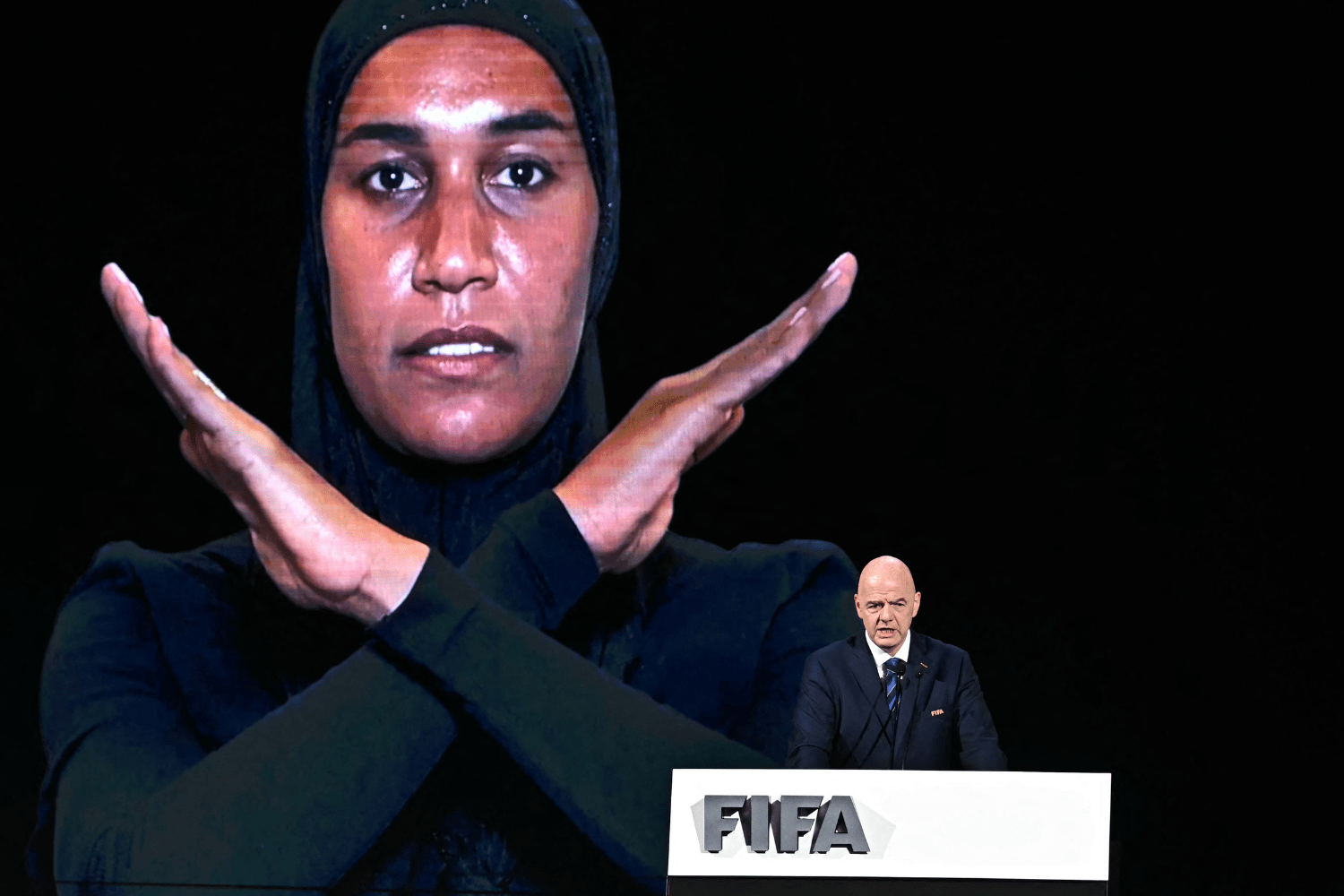
Players at the 2026 World Cup have a new method to report racist abuse. By crossing their arms to form an ‘X,’ they can activate FIFA’s anti-discrimination protocol and potentially halt the game. This gesture was first introduced at the 2024 Under-20 Women’s World Cup in Colombia and is now expanding to all FIFA competitions.
Soccer’s governing body faces ongoing pressure to address racism promptly and visibly. This gesture provides a standardized tool for players, referees, and team officials to report discrimination and trigger FIFA’s anti-racism measures during a match.
What Happens When a Player Makes the ‘X’ Gesture?
Under FIFA rules, the gesture is usable by anyone witnessing racist behavior, including players, referees, or team officials. The ‘X’ signals officials to begin soccer’s three-step anti-discrimination protocol.
The first step requires the referee to pause the game and make a stadium announcement demanding that discriminatory behavior cease. If abuse persists, players may leave the field, and the match may be suspended. Should the situation remain unresolved, the referee can choose to abandon the game altogether.
FIFA indicates that this gesture does not replace current procedures; rather, it acts as a clear and visible trigger for them.
How Is This Different From Previous Approaches?
FIFA’s anti-discrimination protocol has long existed, but its application often relied on referees recognizing abuse or players reporting it verbally. The new gesture aims to eliminate this uncertainty. It offers players a universally recognized sign to swiftly identify and consistently address incidents.
Criticism from players and anti-racism advocates has long targeted the governing bodies, pointing out that reactions to abuse have not always been decisive. By introducing the gesture, FIFA attempts to standardize anti-racism enforcement in preparation for the expanded 2026 World Cup in the United States, Canada, and Mexico.
The Racism Incidents Behind the Move
Racist abuse has frequently marred major tournaments and high-profile matches. A significant incident involved a Euro 2020 qualifier between England and Bulgaria in 2019, where play was halted twice due to racist chants directed at England players. The referee adhered to UEFA’s protocol and issued stadium warnings, nearly leading to game abandonment.
During the most recent men’s World Cup in Qatar in 2022, FIFA again faced discriminatory behavior, leading to sanctions against federations for offensive fan chants. Abuse now extends beyond the stadiums. Players Bukayo Saka, Marcus Rashford, and Jadon Sancho were targeted with online racist abuse after England’s Euro 2020 final loss to Italy.
These instances have led to police investigations and widespread condemnation, highlighting the need for decisive action against racism in sport.
Leave a Reply