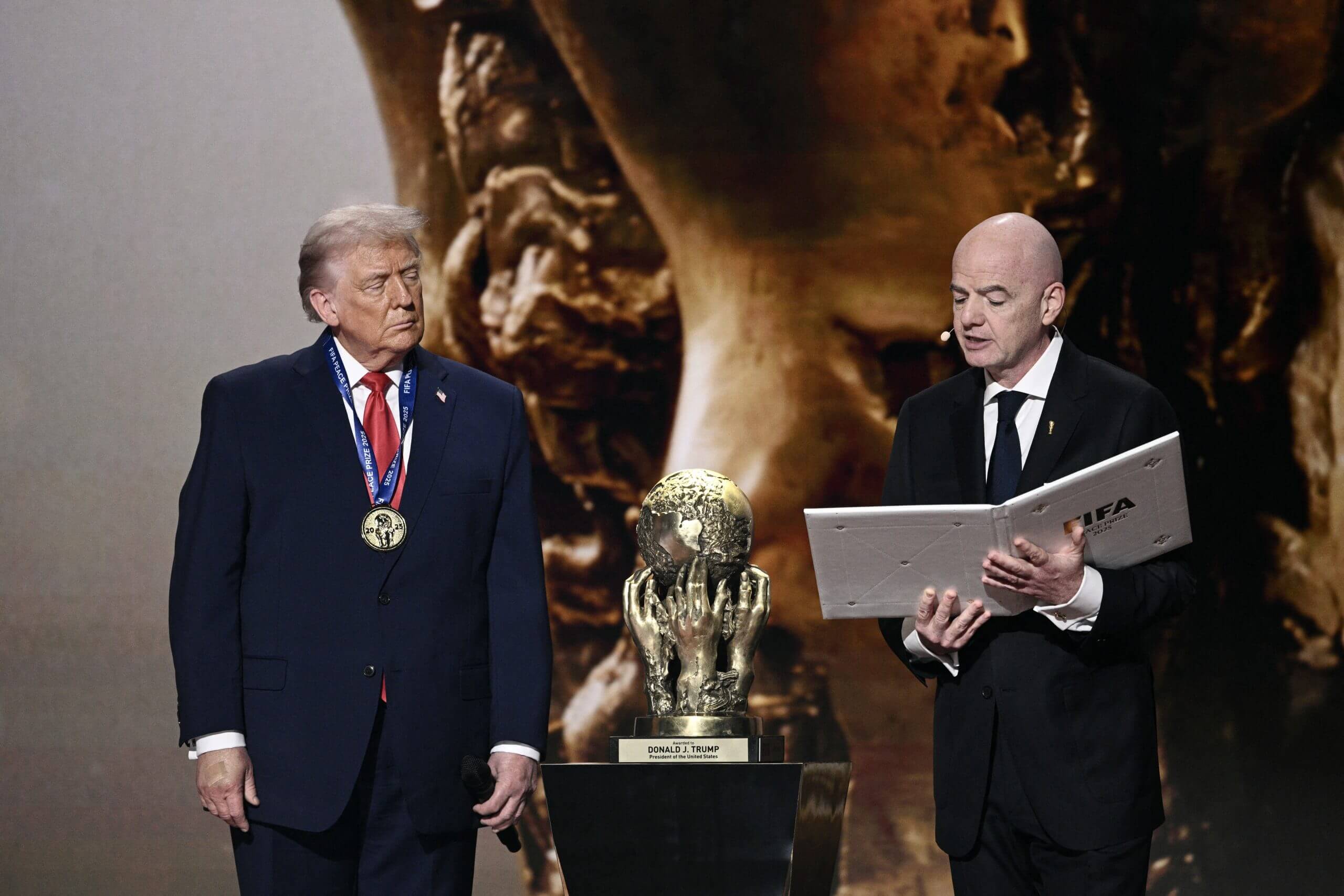
The days of Gianni Infantino bestowing fictional peace awards to world leaders, such as the President of the United States, often offered a spectacle that drew laughter across the globe. These awards came with peculiar trophies, humorously compared to inappropriate gestures. Soon after, Donald Trump began military actions in Venezuela, followed by tensions with Iran, leading to it being the first nation at war with a World Cup host.
FIFA has never shied away from breaking boundaries. During this summer’s World Cup, Trump reportedly influenced Infantino to overturn a suspension of a U.S. player. The decision was swiftly enacted. More recently, Infantino faced criticism following a lengthy, defensive social media post. Soon after, news surfaced about his plan to privatize aspects of FIFA, with speculation pointing to a fund connected to Trump’s circle.
Infantino lambasted the media for his treatment but enforced tight schedules for his unconsulted proposal. UEFA threatened to withdraw from FIFA tournaments unless the proposal was dropped. Subsequently, a FIFA email, missing Infantino’s signature, announced the plan’s withdrawal, admitting that it sparked unintended divisions.
Public developments raise questions about undisclosed issues within FIFA. UEFA expresses diminishing faith in Infantino, urging accountability for those involved in clandestine and rushed plans. As Infantino faces reelection, doubts about his leadership mount among influential confederations.
Amidst these challenges, discussions arise regarding football’s need for reform. The conclusion of another World Cup cycle and various controversies add to the momentum. Candidates must declare their interest in running for FIFA presidency by November 18. Victor Montagliani and Sheikh Salman are possible contenders, although both face challenges in presenting an appealing manifesto. Lise Klaveness, from the Norwegian Football Federation, emerges as an intriguing choice.
Attention also turns to UEFA President Aleksander Ceferin, whose term ends next year. His statement of non-candidacy leaves questions about his interest in greater roles. UEFA’s past Champions League final failures highlight issues within the organization. Internal reviews of these fiascos revealed poor ticketing and security controls by UEFA and local authorities.
The Paris event’s aftermath uncovered personal ties influencing UEFA decisions. For FIFA to maintain trust, it must establish clear boundaries for officials, avoiding the close relationships that currently exist. Infantino’s tenure has drawn comparisons to Sepp Blatter’s, whose controversial rule lasted five years despite criticism.
Infantino’s strategies emphasized global football growth, intensifying opinions and scrutiny. The recognized “division” is less among members but between leadership and their followers. Without meaningful change in FIFA’s priorities, governance might suffer irreversible damage. Prospective leaders must navigate diverse challenges and exploit Infantino’s ability to garner support as a learning opportunity. Reluctance among expected candidates underscores the toxicity associated with the role under current governance.
Leave a Reply