In Northwest Indiana, 39% of households find it difficult to afford six basic necessities: housing, childcare, food, transportation, healthcare, and technology, according to the latest ALICE report. This equates to over 114,782 households. Statewide, 38% of Indiana households, over a million in total, are experiencing similar financial stress.
ALICE households earn above the poverty level yet struggle to meet basic needs, meaning they do not qualify for assistance. Many of these households include workers such as childcare providers, nursing assistants, and cashiers. From 2007 to 2024, the ALICE essentials index in Indiana rose over 61%, compared to a 52% rise in the Consumer Price Index, which tracks broad inflation.
United Way Northwest Indiana President and CEO Chris White highlighted that while wages increase, costs rise at a faster rate. With U.S. consumer inflation at 4% in May, White pointed out the disparity between wage growth and inflation rates. Financial challenges span across urban and rural areas, affecting all counties in the region, the state, and the nation.
The minimum annual income necessary for a single adult to live and work in Indiana is $28,764, while for a family of four it is $74,028. This is almost double the poverty level, set at $15,060 for one adult and $31,200 for a family of four. In Northwest Indiana, which includes Lake, Porter, Jasper, Newton, and Starke Counties, 27% of households are above the federal poverty level but below the ALICE threshold. Another 12% of households live below the poverty line.
Lake County has the highest number of households below the ALICE threshold with 82,388 households, with Porter County next at 22,396. The report highlights racial disparities, showing 57% of Black households and 41% of Hispanic households living in poverty or below the ALICE line. Statewide, 55% of Black households, 36% of White households, 43% of Hispanic households, and a similar percentage of multiracial households fall below the ALICE line.
No single solution can resolve the diverse financial hardships faced by ALICE households. Although some interventions like food programs can provide temporary relief, long-term financial stability requires coordinated efforts across household support, community infrastructure, employer policies, and public policy to tackle the issues underlying persistent financial stress.
White noted some state-level measures that have helped, such as Governor Mike Braun’s temporary gas tax suspension. However, rent, groceries, and healthcare costs remain high. He emphasized that financial struggles affect people at all income levels, with families in Lake and Porter Counties requiring annual earnings of $81,000 to $83,000.
Federal funding for support programs has been reduced, which affects many families above the poverty line but lacking a sustainable income. White explained that crossing the poverty threshold often results in a sudden loss of benefits, leaving families without necessary support.
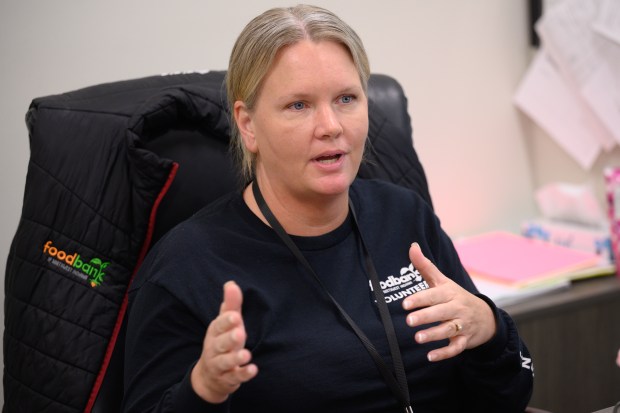
The Food Bank of Northwest Indiana is addressing these challenges by providing food to people regardless of income. Tricia Sheaks, Vice President of Operations and Community Impact, reported a rise in the number of beneficiaries due to higher gas and food prices. The Food Bank distributes around 900,000 pounds of food monthly and is on track to surpass last year’s total of 11.4 million pounds.
Sheaks emphasized that everyone should have access to nutritious food and shared that the Food Bank has over 150 pantries in its network, supported by donations from large retailers and local businesses. Despite federal grants fluctuating, community contributions have been crucial.
Lauren Zurbriggen from CoAction, an organization providing aid to those in financial hardship, noted an increase in requests for assistance. CoAction offers a community loan center to avoid payday loans and has experienced a rise in applications. Zurbriggen noted that more families depend on debt to manage living costs, reflecting budgetary stress.
Virginia Carter from the North Township Trustee’s Office and Cathy Lareau from the St. John Township Trustee’s Office both reported increased demands for assistance with utilities like NIPSCO bills and housing costs. Lareau expressed that many in the community remain unaware of the financial struggles faced by a significant number of families.
Leave a Reply