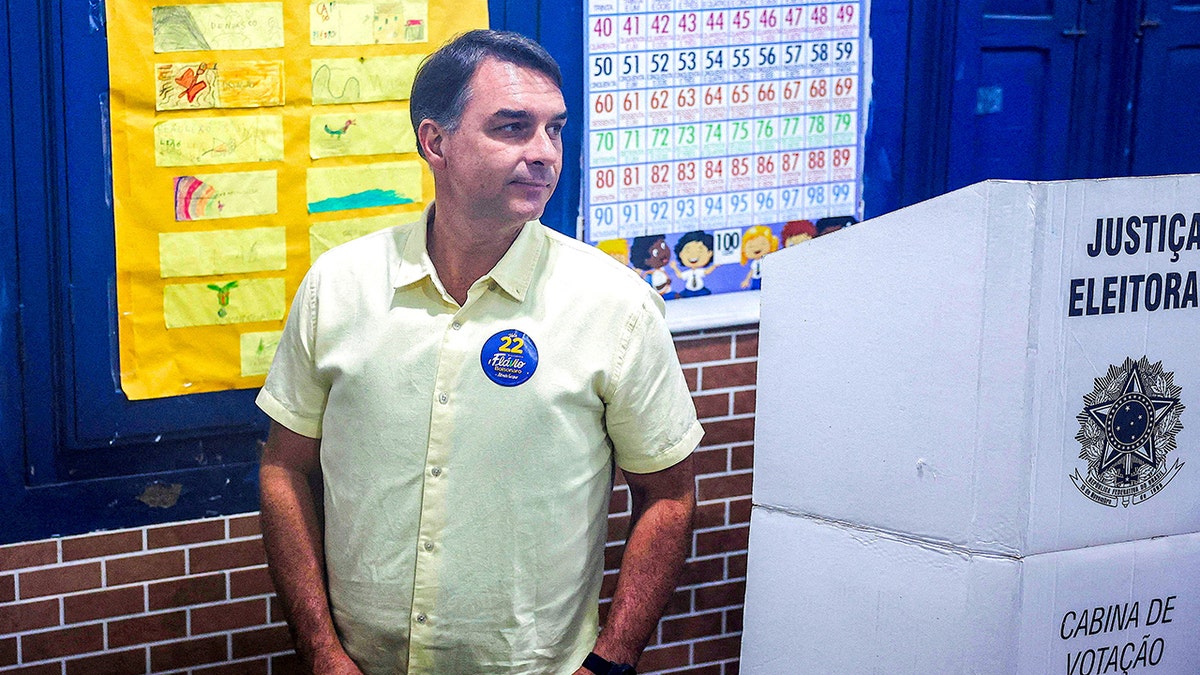
Brazilian Senator Flavio Bolsonaro accused the country’s political and judicial establishment of orchestrating his presidential election defeat. In an exclusive interview, he stated his departure to the United States was due to what he describes as political persecution. Bolsonaro insists he did not lose to President Luiz Inacio Lula da Silva, but rather to “the system.”
Following a narrow election, where Lula da Silva secured 51.8% against Bolsonaro’s 48.2%, the Brazilian Supreme Court voided Bolsonaro’s passports. This led him and his family to flee dramatically, crossing into Argentina before flying to Miami, where they received political asylum under Trump.
Bolsonaro explained he left Brazil to continue opposing Alexandre de Moraes and the Brazilian Supreme Court. He alleged election interference and political persecution. “I did not leave Brazil to run away,” he clarified, asserting the accusations against him were unfounded, originating from false media reports.
He criticized de Moraes, claiming he invents cases to target individuals. “He wakes up in a bad mood and decides to persecute someone,” Bolsonaro alleged. Days before the election, an investigation was opened, purportedly to damage his reputation and benefit his opponent. Seven minutes after the election results, passports were confiscated, barring his exit from Brazil.
Bolsonaro acknowledged lacking evidence of election fraud, yet criticized the electoral system for not allowing recounts. He compared Brazil’s elections to Venezuela’s previous fraudulent ones. He called for electronic voting with individual printed records to allow vote recounts.
Contrary to Bolsonaro’s claims, election experts like Karina Stange Calandrin argue Brazil’s voting system is secure. The machines operate offline, and tally results are cross-verified physically and digitally, making large-scale fraud detectable.
Bolsonaro hinted at a potential candidacy in 2030, contingent on electoral reforms and his father’s ineligibility. He noted Brazil’s right has strong leaders, unlike the left, which he claimed lacks emerging successors. Flavio Bolsonaro emphasized the right’s challenge of having many capable candidates.
He criticized the current Chamber of Deputies speaker, Hugo Motta, for unfulfilled promises, particularly regarding amnesty for those persecuted in Rio de Janeiro. A new proposal reduced sentences slightly but wasn’t a full amnesty. The Supreme Federal Court, under de Moraes, suspended it.
Bolsonaro asserted the Bolsonaro movement remains strong, highlighting the 2026 election results where right-wing candidates excelled. He vowed to continue advocating in the US, hoping for institutional change back in Brazil. He concluded with a wish for divine intervention to steer Brazil away from communism and restore functional institutions.
Leave a Reply